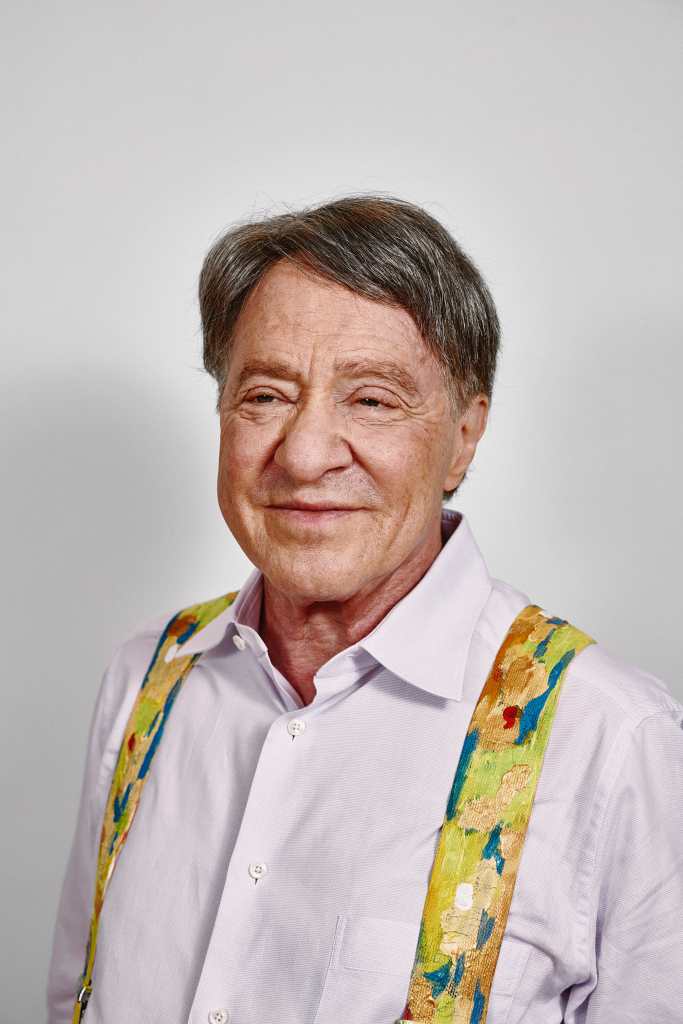
Faced with those who predict that artificial intelligence (AI) will mean a cataclysm for humanity, it is pertinent to go to one of the researchers who know it best. Ray Kurzweil, Google engineer and technological evolution expert, has seen many of his predictions exhibited in his book The singularity is close (2005).
Now, twenty years later, in his new study, The singularity is closer. When we merge with AI (Deusto, 2025), takes up those projections and expands them. It predicts that, by 2029, the AI will exceed the levels of the human mind and that, by 2045, it will multiply its abilities by connecting human brains directly to the cloud.
From a detailed evaluation of the latest technological innovations, Kurzweil explains how Progress in biotechnology, nanotechnology and robotics increasingly brings humanity to singularity: the creation of a superior being modified by genetic engineeringenhanced by AI and interconnected with other brains.
Among the themes addressed are the reconstruction of the world, atom atom, through Nanobots; the extension of life beyond the current biological limit of 120 years; The impact of 3D printing on industry and medicine, as well as controversy on autonomous vehicles.
The human brain will merge with AI
The singularity is the term used to refer to such a radical change that will transform the story completely and whose consequences are difficult to predict.
As the AI improves its capabilities and information becomes more accessible, Humanity advances towards the fusion of these new technologies with biological intelligence. Kurzweil insists that The pillars to achieve singularity are artificial intelligence, nanoscience and biotechnology.
Within a time, according to the engineer, Nanotechnology will expand human brain with additional layers of virtual neurons in the cloud. This will allow the fusion with AI and The processing capacity will increase to levels that will multiply by millions the current human skills.
This process will expand human intelligence and consciousness in such a deep way that it is difficult to understand. Kurzweil argues that the term singularity It is used as a metaphor for the inability of the human species to anticipate changes in such magnitude. However, it is confident that, as this transformation develops, knowledge will grow with the rapidity necessary to adapt.
Where the AI is directed
During the next decade, Kurzweil forecasts, lAs people will interact with an AI that will seem like a real human being. The simplest brain-orders will have a daily impact similar to that today smartphones.
The Biotechnology Digital Revolution will eliminate some diseases and prolong the good health of people, which will increase life expectancy.
“During the 2030s, the convergence between an AI capable of improving itself and an advanced nanotechnology will allow humans to connect with their mechanical creations in an unprecedented way,” says Kurzweil. This will expand the possibilities, but also the risks.
“The 2030s will mark the beginning of the third phase of the extension of life, in which nanotechnology will be used to overcome the limitations of biological organs. When we enter this stage, we will extend human life beyond the known biological limit, which is around 120 years”, Predicts the researcher.
If the scientific, ethical, social and political challenges that imply these advances, by 2045, humanity will have deeply transformed life into Earth in a positive way.
AI AND HEALTH: THE GREAT CHALLENGE OF THE FUTURE
The long -term objective is that medical nanorobots can examine each cell to detect if it is carcinogenic and eliminate malignant.
“Nanorobots will also be useful for neutralizing urgent threats, such as viruses and bacteria, stop autoimmune reactions or clean blocked arteries,” explains Kurzweil.
Currently, algorithms are already trained to detect tumors in medical images and accelerate the diagnosis of diseases such as dementia. Its application is also investigated in the detection of pathologies such as depression, through the analysis of facial or voice biomarkers characteristic of patients.
The technology necessary to use Nanobots for therapeutic purposes already exists, although its large -scale application will depend on the legal approval of these techniques.
The risks of AI for humanity
At present, artificial intelligence presents three major limitations, according to Kurzweil: It lacks contextual memory, social interaction and, above all, common sense.
Yes ok AI will bring advances that will improve millions of lives, will also generate risks to humanity. For example, the development of new more sophisticated nuclear weapons could destabilize the world. In addition, advances in synthetic biology and emerging nanotechnology will create challenges that must be addressed with responsibility.
Therefore, when AI equals or exceeds human abilities, it will be essential to establish ethical principles that guide their development. Designing it with great care and guaranteeing effective regulation will be key to avoid accidents or bad uses.
Kurzweil considers that there are reasons for optimism. “Artificial intelligence is us,” he says. “Today, we are already a person-machine civilization.”
In his opinion, the best strategy to guarantee the security of AI is to strengthen human governance and institutions. “The most effective way to avoid a destructive conflict in the future is to promote the progress of ethical ideals, which have already considerably reduced violence in recent centuries”, Concludes the researcher.
Ray Kurzweil Biography
Author of Super Surves, co -founder and Rector of Singularity University, Ray Kurzweil (New York, 1948) is director of Engineering at Google, where he specializes in artificial intelligence. It is recognized as one of the main inventors and visionaries of the technological future, with more than 35 years of experience.
Among its achievements are the invention of the first CCD scanner, the first text and voice reading machine for blind people, and the first music synthesizer capable of recreating the sound of the tail piano and other orchestral instruments. For his contributions to musical technology, he received a Grammy award.
His vision of the exponential growth of technology has been endorsed by the materialization of many of his predictions, which has made him one of the most influential figures in the field of artificial intelligence.
Bill Gates, founder of Microsoft, has said of him: “He is the best predicting the future of artificial intelligence.” Yuval Noah Harari, author of Sapienshe described his work as “a fascinating exploration of our future that raises the deepest philosophical questions.” The American magazine Inc. He considers it “the legitimate heir of Thomas Edison.”