

In the last four years, the Municipality of Villa Nueva has authorized 21 construction licenses for multifamily housing – vertical conditions – in this municipality, located 17 km, to the southwest of the capital, according to data from the Guatemalan Chamber of Construction (CGC).
In the same period, the new buildings – of all kinds – have reflected a notorious increase in construction licenses, which went from Q5.6 million in 2021 to the Q43.2 million in 2024, according to the local governments portal of the Ministry of Finance.
As for the Single Property Tax (IUSI), this municipality went from receiving Q123.5 million in 2021 to Q132.9 million in 2024.
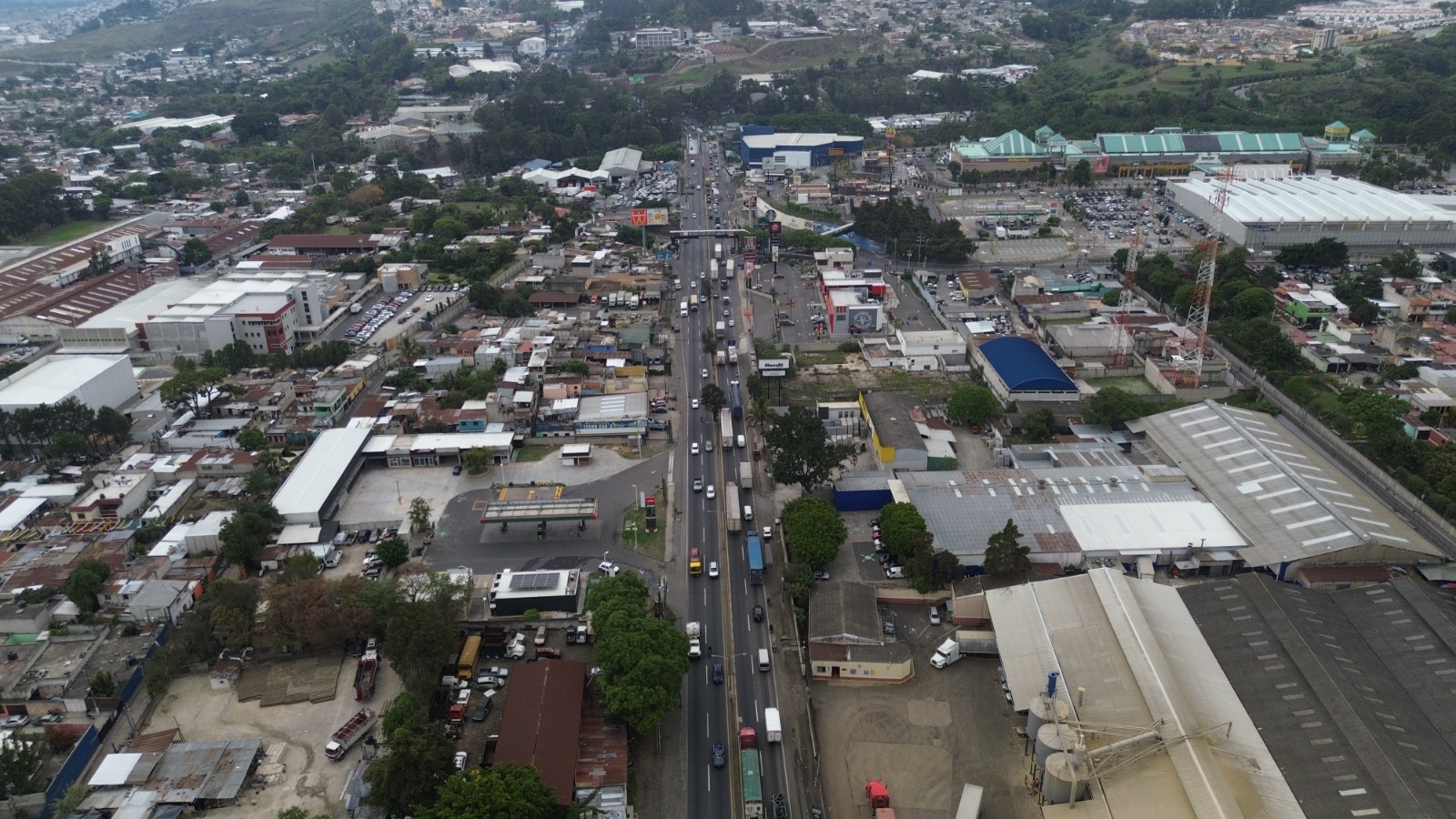
This growth is more than evident with just one example: every day work the alarm sounds at 3.30 in the morning. It is the time when the spokeswoman for the Municipal Traffic Police of Villa Nueva, Dalia Santos. An hour later the vehicular movement begins on the CA-9 route, followed by the monitoring of the traffic authorities, since it is the route by which thousands of settlers of that municipality who are going to work or study are connected.
“Before, the peak time began at 5.30; Now it’s an hour before. With the increase in housing, condominiums and apartments, there is a vehicular increase in this route and others, as many families have, on average, two to four vehicles, ”says Santos.
Housing dynamics
Among the residential projects on offer is one with 855 apartments, in zone 5 of Villa Nueva, and an 11 -story complex and a hundred apartments.
In 2023, the data collected by the CGC during the Expocasa indicated that 19.5% of the people who demanded Casa lived in the areas of the south of the metropolis; that is, Villa Nueva, Amatitlán, San Miguel Petapa and Villa Canales.
A year later, according to the same study, based on a sample of 35 projects presented, only three were located in Villa Nueva. Thus, the housing demand was 6%, against an offer of 14%.
The population growth of Villa Nueva has turned a rural landscape into urban, in a matter of five decades. It went from the 7,428 inhabitants to 355,901, according to the censuses from 1950 to 2002, according to data from the Center for Urban and Regional Studies (CEUR) of the University of San Carlos.
This population growth can be observed by construction licenses issued over a period of 20 years, from 1995 to 2015.
The single -family housing was 15,372 units, serial housing, of 10,124 units, and the multifamily registered 1,178 projects, according to the Southern Subregion document, of the CEUR, signed by Luis Olayo, Ronald Peláez and Jorge Aragón.
Another challenges is water supply. In this municipality, 96% of water sources are underground and only 4% are superficial, according to the study of the engineer Bayron González, of CEUR (2023).
The municipality counted 109 thousand 133 homes, of which 98,972 have a pipe in the house, 2,660 had perforated well and 1,637 are supplied with trucks or barrels, according to the 2018 Population and Housing Census, of the National Statistics Institute (INE).
No planning plans
Villa Nueva is the third most populous city in the country, with more than half a million inhabitants, distributed in a territory of 114 square kilometers – the second is Mixco. Five villages and 11 hamlets – hits – have been divided or dismembered to become more than 300 colonies, settlements and 11 areas of this jurisdiction, according to the official website of the municipality.
In December 2019, during the administration of Edwin Escobar, the Territorial Planning Plan (POT) was approved and published. However, in 2021 he was suspended by the Council, during the mayor of Javier Gramajo.
In 2022, the Constitutional Court decreed the suspension (3874-2022), but a next act, in November 2023, declared with place the action of unconstitutionality and is rolled back from what was previously acted on; That is, it leaves the POT of Villa Nueva in force and valid.
Subsequently, in February 2024, said Pot was repealed by the current mayor, Mynor Morales Zurita. “Because it is inoperative and has not worked properly, consequently, it has not benefited the municipality or its population,” reads the 5163-2024 municipal act point.
“It is unconstitutional to suspend or repeal, because it was the people, through Cabildos, which as a superior authority approved it. Although the CC suspended the council’s action in 2022, Morales ignores that sentence, ”he quotes an expert source in the subject that asks not to be cited. “Without Pot, everything is open to discretion, to the client’s taste,” he adds.
The real estate expansion
At 75, the architect Roberto Bianchi Milla leads to his credit around 15 real estate development projects. “Almost all of 200 housing units onwards,” he says.
Remember that the vertical housing trend began in the 1990s, in areas 10 and 14 E Guatemala City, for an exclusive population sector.
Most housing projects began as single -family and serial housing – Condominiums. However, the professional states that he was one of the first to break the taboo of vertical housing in the country. This was in 2008, with a project called “El Refugio”, in the Kennedy neighborhood, zone 18. “There were 298 apartments of 57 square meters, which were sold quickly,” he recalls.
In Villa Nueva, on the other hand, it began by single -family projects. Bianchi Milla says he does not know if a POT is fulfilled, then, at their discretion, the developers execute their own planning. Thus they must solve the water supply and infrastructure works, since municipal resources do not allow it. “It is part of the payment of the construction license,” he says.
In 1998, Bianchi Milla developed the El Frutal project, a farm with the same name. He was interested, being a cheap land and because he knew that an important road would pass through there. He built more than 800 houses and a shopping center. Later, the Prados del Tabacal condominium. The businessman is still active in his business.
They are silent
The mayor of Villa Nueva, Mynor Morales Zurita, elected by the Valor Party, did not respond to several calls or messages in which his opinion was requested, which has been sought since last February 3. Nor did his advisor Emanuel Erazo respond, who was starting to ask for a position since January 27.
The only member of the council that offered statements for Víctor Coyoy, from Seed, who justifies the suspension of the Pot with which he was inoperative, as he marked rural areas such as Bárcenas, when, in reality, he no longer applies.
“A year has passed since I gave my vote to repeal the current plan, conditioning that a new document would be worked, including all sectors. Mitigation plans are not enough, ”he said.