

After five years, the Guatemalans lived the pandemic. The prayers intensified and the expressions of faith manifested in other ways, in an environment where silence reigned and devotion images were not taken in processional courtships.
The photographic and visual record, as well as the memory of families, keep anecdotes and images How the Catholic people, that year, paused in their Lent and Holy Week traditions: Masses online, few people in the streets, prayers for the sick and another series of actions that were common in 2020.
An investigation by anthropologist Deyvid Paul Molina, from the Center for Studies of Cultures in Guatemala (CCEEG/USAC), called Lent and Holy Week during Pandemia 2020record details of that moment. The article described actions between February and April 2020, both in Antigua Guatemala and in the capital city and Villa Nueva.
The Government, during 2020, imposed restrictions in order to avoid infections, including the suspension of religious mass events, which affected the development of the remaining manifestations of the Lenten period, as well as those of Holy Week, one of the moments of transcendental importance for the Catholic people.
What happened to the processions during the Covid pandemic?
Through interviews and other sources, Molina discovered that, despite the fact that the traditions of Lent and Holy Week They were limited by the health emergency of the Covid-19 pandemic, alternatives were found to replace them, including viacrucis and prayers carried out in homes, as well as masses transmitted by social networks. For some, it was a spiritual experience and a new way of remembering the passion and death of Jesus Christ.
The 2020 Ash Wednesday lived naturally. It was on February 26, when solemn masses were held and ash was imposed on the fronts of the faithful. That day the procession with the consecrated image of Jesus Nazareno de la Justicia came out of El Calvario, and the next day, Jesus of Miracles, of the Temple of San José, also in zone 1.
In the population of Ayutla, San Marcos, the first Friday of Lent, with the traditional pilgrimage and fair in honor of the patron saint, Jesus of the three falls.
The first Sunday of Lent also left Jesús Nazareno del Consuelo, from the temple of the collection, and in the antique village of Santa Catalina Bobadilla.
The veins, pilgrimages and processions continued especially in the cities of Guatemala, Antigua Guatemala and Quetzaltenango.
“As Lent was advancing, in parallel the Coronavirus did. The different brotherhoods and brotherhoods of Passion were preparing to organize activities for the third Lenten weekend; But due to calamity and as a prevention measure, in Samayac, Suchitepéquez, local authorities decided to cancel the Romería Fair of the Third Friday of Lent in honor of the Just Judge, an image that enjoys great veneration throughout the region. ”
On Friday, March 13, the entrance of the Coronavirus to Guatemala was announced, And on the afternoon of March 14, President Alejandro Giammattei restricted the mass activities, including velments and quarters, measure that would govern for 15 days, which extended for almost two years.
One of the last processions was that of Jesús Nazareno de la Paz, of Don Bosco, in the capital, becoming the last neighborhood procession to leave during the Lent and Holy Week season.

What did Catholic temples do with the arrival of pandemic?
In the temple of Santa Marta, in zone 3, it was decided to take out the images of Jesús Nazareno Redeemer of the captives, the Virgin of Dolores and their children’s replicas in front of the Church to be revered.
In the same way, the rings in Jocotenango, of Jesús Nazareno El Dulce Rabí, but, by the presidential provisions, the procession was no longer carried out.
Through social networks, it began to be reported that the different activities began to be canceled. “The reactions through the digital platforms were not long in coming, especially in terms of the procession of Jesús Nazareno de la Falle, of the antique village of San Bartolomé Becerra, which, since the beginning of the 20th century, has traveled the colonial city the fifth Sunday of Lent,” recalls Molina.
The YouTube channel Edfelopi He documented part of what happened in images in the following video that has as background the piece of Men’s fisherman in piano.
https://www.youtube.com/watch?v=qi4z2ffim0u
What happened in the houses of the Guatemalans during the Covid-19 pandemic?
The faithful were hope that Holy Week processions would come out on their tours, but on the night of March 29, President Alejandro Giammattei expanded the restrictions for one more week, including the curfew.
This motivated that the Guatemalans live a different Holy Week, without processions. They had rarely suspended, or with the tragedy of the 1917 and 1918 earthquake, or on February 4, 1976, when they were carried out.
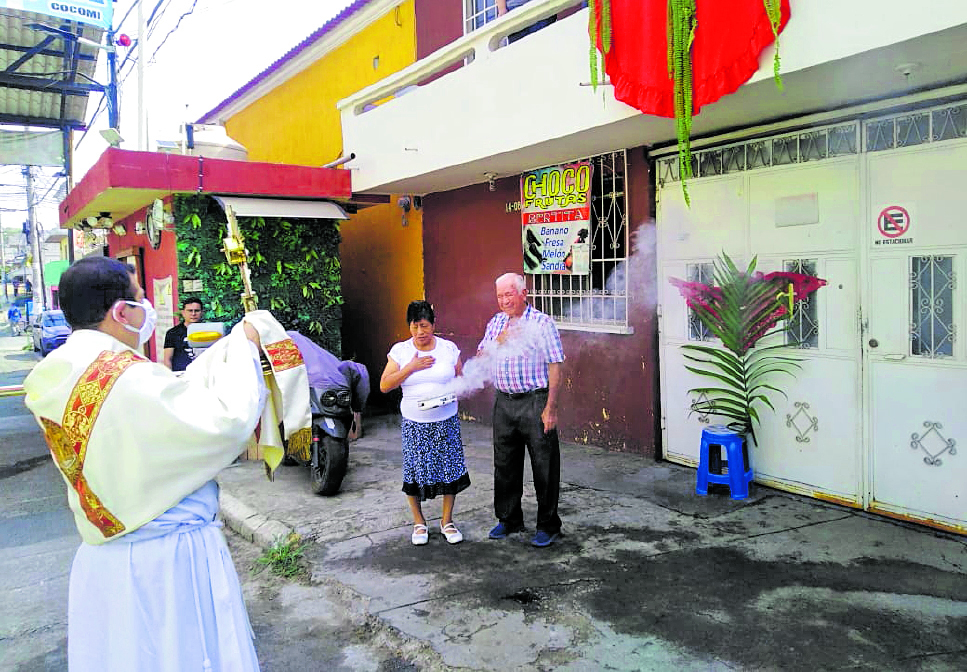
Many parishes used digital platforms to carry masses and other liturgical celebrations.
Some neighbors made carpets and altars in front of their homes. On Palm Sunday, some priests, as in the Jardines de Minerva 2 neighborhood, in Mixco and in the capital city they passed the blessing, while the houses were decorated.
During the Good Fridayone of the main days of the major week, pious acts were carried out and floral offerings were offered.
“The Holy Week concluded on Sunday, April 11 and will go down in history as the one in which there were no processions. For some, this was a blow, something they never imagined and that affected the deepest of the popular religiosity of Guatemalan Catholics. Many waited eagerly to commemorate 2021 “said the anthropologist.
When did Holy Week and processions return after COVID?
In the Holy Week of 2021 restrictions were still maintained. For example, religious temples could work until 9:00 p.m., respecting the ages, biosafety measures and recommendations of the health alert system. The use of mask at all times and place was mandatory for the entire population. Children under 2 years old and people with medical contraindication certified by a health professional were exempted.
In total, two years suspended Holy Week processions due to pandemic. In 2022, the country joined the return of this religious celebration.
With security measures, such as the use of masks, that year more than 25 processions were carried out that toured the streets of the capital and Antigua Guatemala.
One of the historical moments was the change in the tour of the procession of the Yacente Christ of Calvary, of the Parish Our Lady of Remedies, in zone 1 of the capital. On Good Friday of 2022, he passed the Church of Yurrita, toured until the 12th street of Reforma Avenue and then returned along the 7th avenue towards Calvary, a fact considered historical by those who lived it.
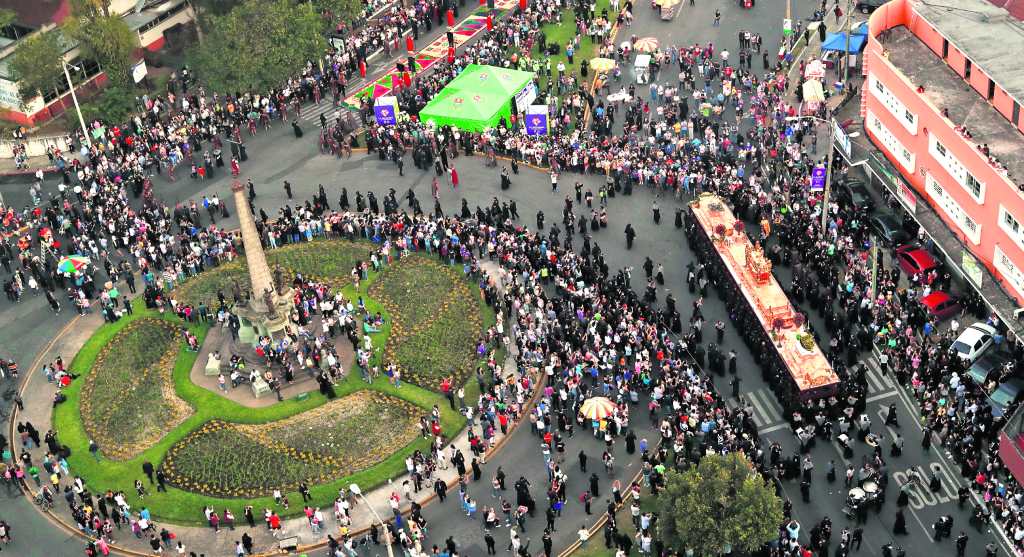
In February 2022, important news for this celebration was given: UNESCO declared Holy Week in Guatemala as a World Heritage Site, for being a unique event for its processions and carpets to commemorate the passion, death and resurrection of Christ.