

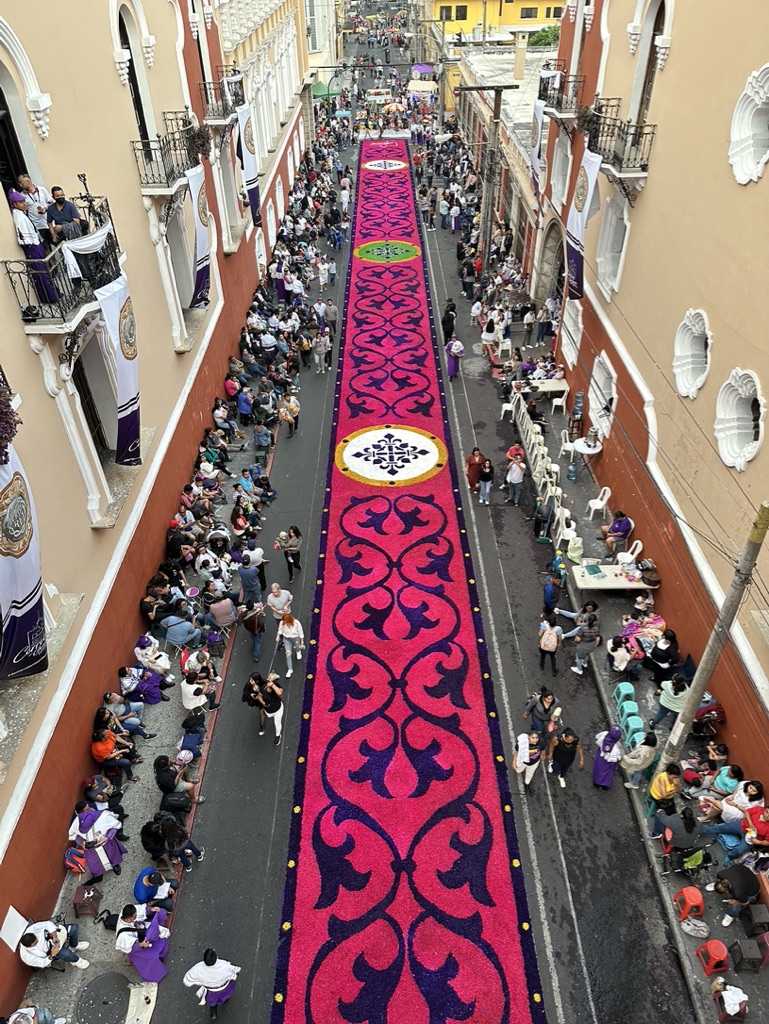
During the Lent And Holy Week, it is tradition to elaborate carpets that represent religious or folk figures in a way artisanal. These expressions of faith made art have experienced a surprising evolution from their first appearances to the present.
The creators of this ephemeral art They went from making carpets with palm leaves and feathers of Quetzal to elaborate true masterpieces, such as faces of religious images made with marble dust, material that shines at night.
The most common carpets, made with dyed sawdust, flowers and fruits, adorn the streets and avenues where the consecrated images are carried on shoulders by The faithful believers. Experts detail that this expression of faith, turned into art, has had an impressive evolution from its roots in the Mayan worldview, where the ancient pre -Hispanic peoples already used natural elements to pay tribute to their deities.
Today, the elaboration of carpets reflects the vibrant cultural identity of an entire people, maintaining alive a tradition that transcends generations and continues to transform over time.
Ancestral Origins: a pre -Hispanic and colonial legacy
To understand its evolution, we must go back to its origins, an issue that has generated debate among historians. According to the report that the Ministry of Culture and Sports sent to the United Nations Educational, Science and Culture (UNESCO) Organization in 2022, the Maya made ceremonial paths decorated with feathers, leaves and flowers for the passage of sovereign, as shown by ceramic pieces and graphites found in glyphs of archaeological sites such as Tikal In the early two thousand.
The culture report details that much more significant and complex is The sculpted scene in a wooden lintel of Tikalwhere the sovereign, promoted to the category of Divine Lord or Sacred Lord (in Maya Chol is K’ul Ahaw), appears clearly seated on a walk or a palanquin that was carried on the shoulders by several people, and It shows that the flat surface was decorated with flowers and feathers, highlighting the first official appearance of a carpet in the territory.
With the arrival of Catholicism, this ceremonial practice merged with the Spanish traditions of the 16th century, when the conquerors and missionaries carried out processions on flower carpets and leaves to honor the religious images that brought to Latin America.
Sawlin is the material that is most used for Guatemala carpets, which has allowed techniques to create carpets.
(Free press photo: courtesy carpets and ortiz molds)
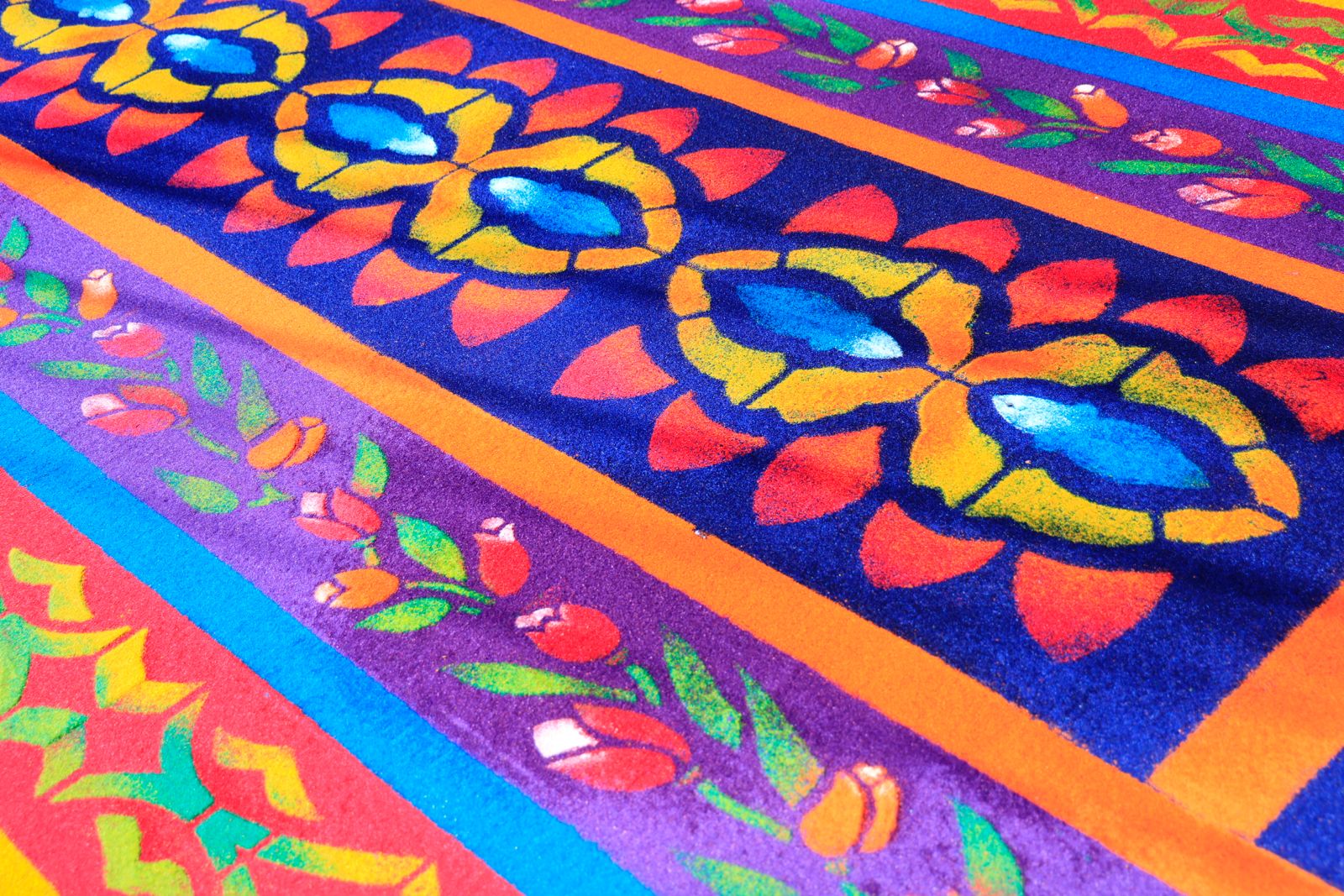
Each design embodied in carpets is unrepeatable, because the mixture of colors and designs makes each work of art.
(Free press photo: courtesy carpets and ortiz molds)
From that moment on, sand, Flores and Corozo carpets began to decorate Guatemalan streets, enriching the country’s cultural legacy.
Beginnings of carpets with flowers, sand and natural dyes
With the mixture of this culture, the first carpets dedicated to processions were generated, which were mainly made with natural flowers, smell and sand leaves.
Óscar Rolando Ortiz Castillo, carpet and artisan of Lent products, highlights that different types of sand were used to create shadow effects: white sand for details; And for ornaments, pink sand, which was commonly used to wash hit, and black sand brought from the coast, which was used to create the first patterns or bases of carpets.
Cano emphasizes that, to achieve intense colors, Natural dyes such as beets were used, which gave the color red, while a leaf called ink boiled to obtain the color black.
Materials like Corozoclover, stay and chopped pine were integrating over the years and were used to decorate carpets with live textures and tones.
It was after that that the native peoples incorporated the use of fruits and vegetables to perform patterns on carpets, an option that was viable for art, but excessive for monetary costs.
The arrival of sawdusts and anilines
With the passage of time, sawdust was introduced as a base material for carpets, which facilitated the elaboration and reduced costs.
But it was the arrival of the anilines, Ortiz stands out, which made them the main dye for sawdust, allowing the creation of sawdust with more intense and durable colors. This material, which is believed to be innovated at the time of the colony, still accompanies the creators of ephemeral art today.
However, this material, which allowed to make unimaginable creations, showed problems for its use. Elements such as wind and rain damaged carpets and faded colors, which represented a setback.
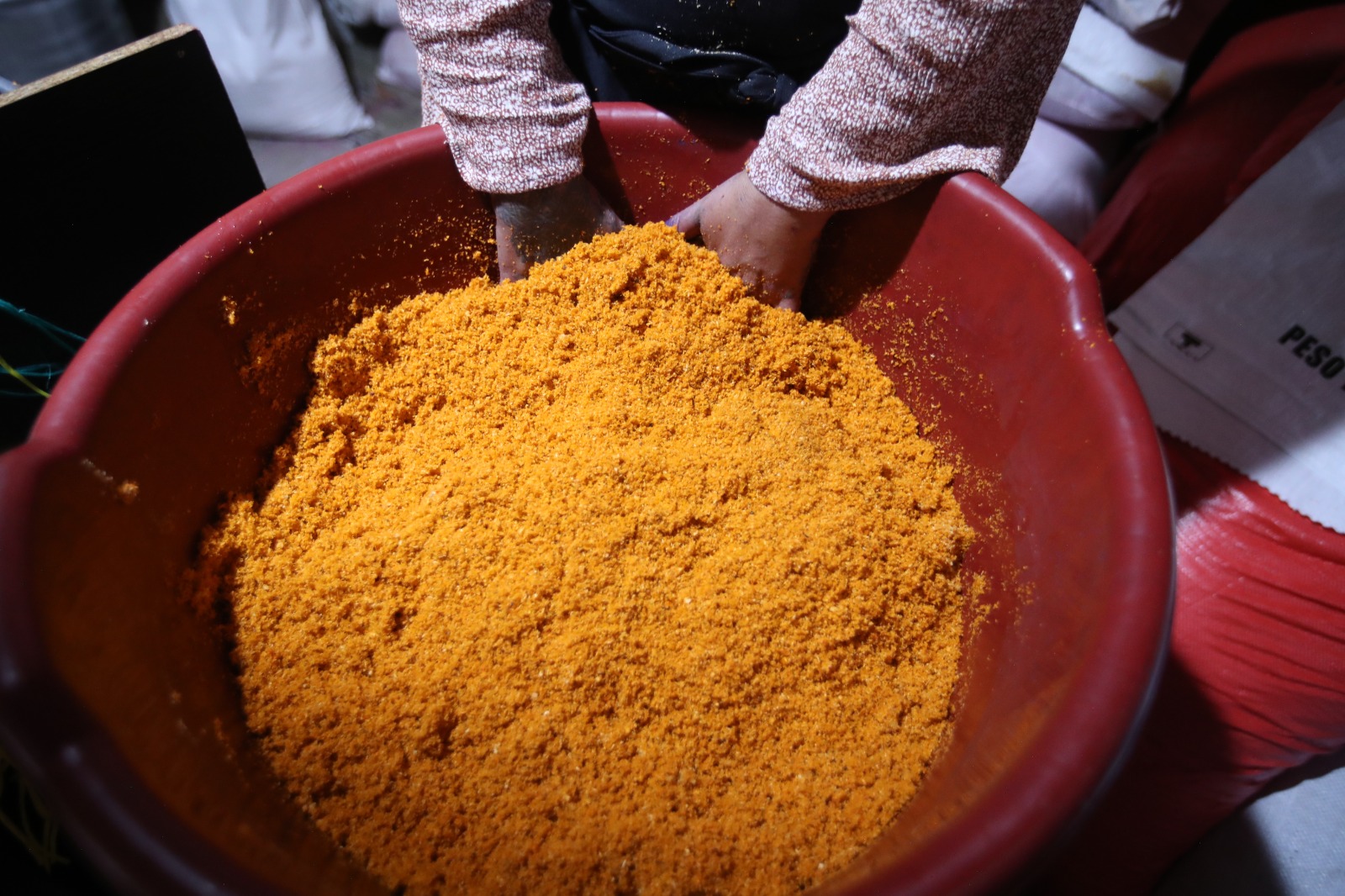
The use of anilines improves sawdust.
(Free Press Photo: Byron Baiza)
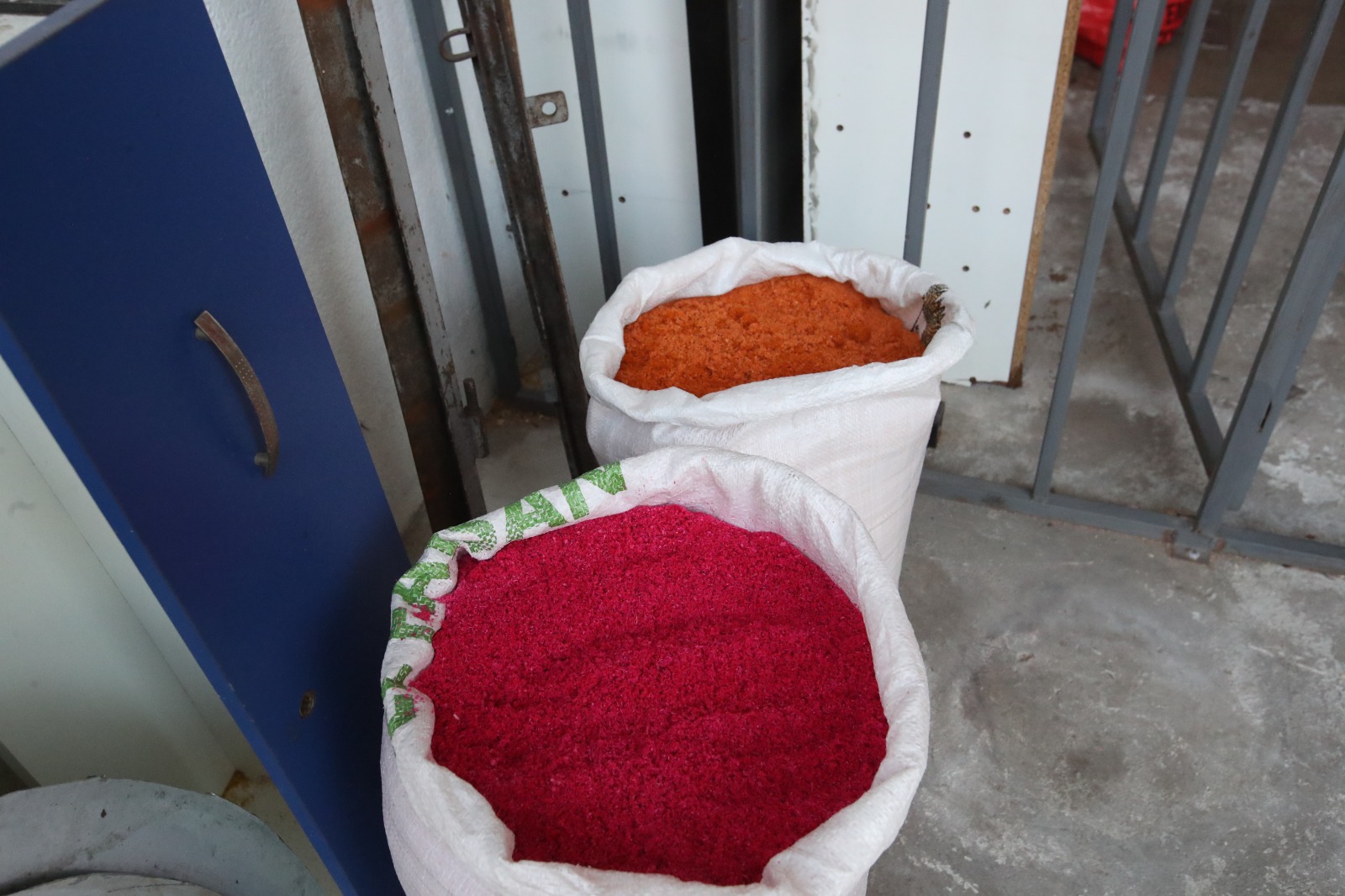
A sack of sawdust can be recorded between Q100 to Q300 depending on its quality.
(Free Press Photo: Byron Baiza)
To solve this inconvenience, artisans began using a mixture of acetic acid, hot water and alcohol to fix the colors in the sawdust, making the dye resist better the inclement weather, although their rival remained the wind.
Innovation and resistance: The arrival of the wooden chip and marble dust
In recent years, the introduction of the wooden chip, around 2015, marked a new stage in the evolution of carpets. This material, thicker and more moldable than sawdust, offered greater stability and resistance to wind and rain. In addition, the wet chip adheres to the ground, preventing carpets from disintegrating quickly.
“The chip does not take as easily as the sawdust and, when wetting, it maintains its shape better,” explains Aury Marroquín, merchant of materials for the elaboration of carpets. This innovation, adopted approximately eight years ago, allowed the carpets to keep their designs for a longer time and resist the climatic conditions better.
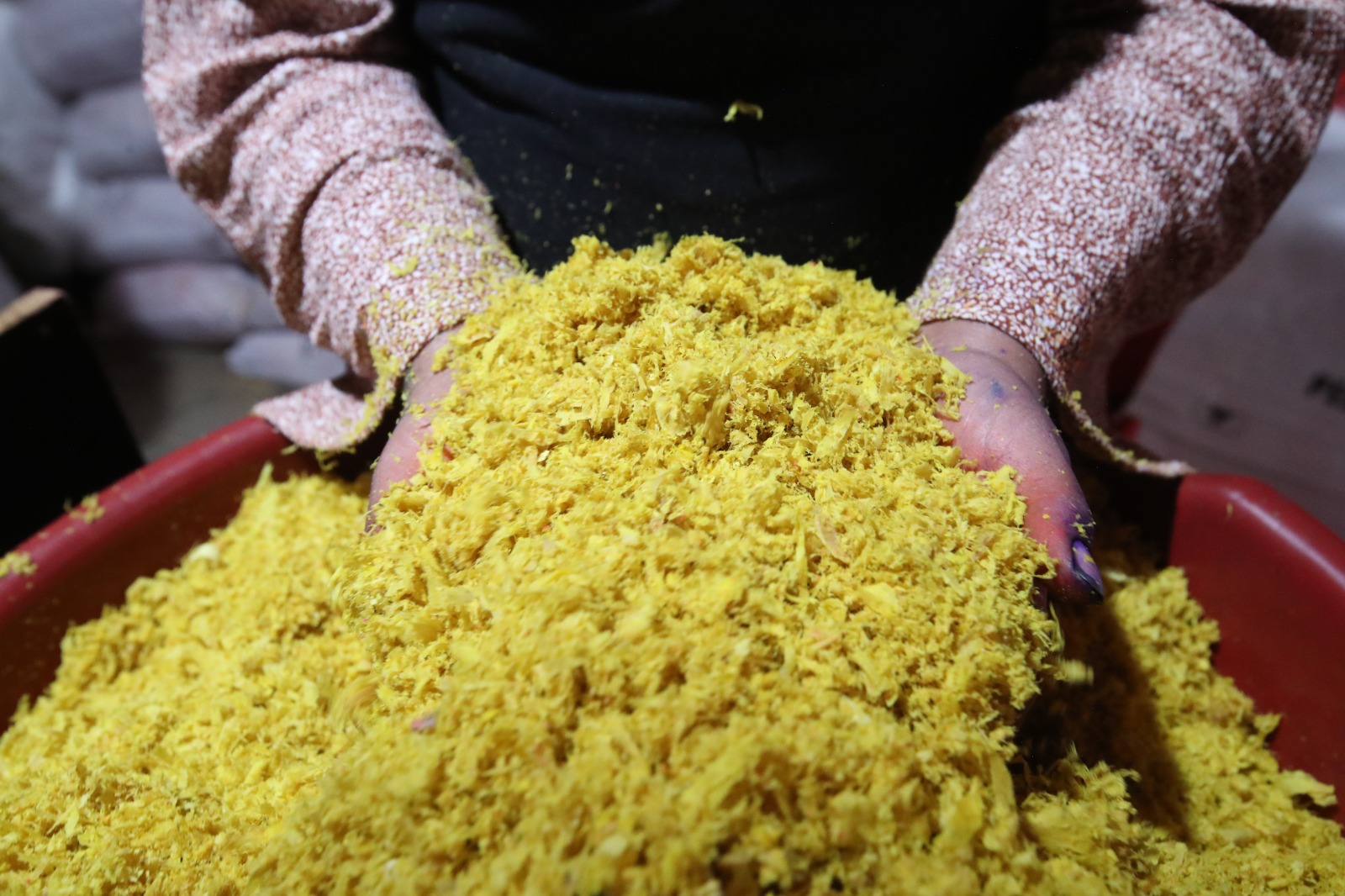
The moldability of the wooden chip has made this material the favorite of the artisans.
(Free Press Photo: Byron Baiza)
The final revolution came with marble dust, near the year 2020, a material that not only solved the wind problem, but also allowed to create shaded and blurred effects on the figures.

“Marble dust, being heavier, prevents carpets from moving easily, providing greater precision and detail to the designs.”
Óscar Ortiz
To fix the colors in this material, fluorescent aniline and a slight layer of Thinner are used, which results in intense and bright colors that even shine in the dark.
One of the challenges that this material represents is its cost. Marble dust, although expensive (a small 10 -pound sack can cost Q 200), allows you to achieve a unique effect on carpets, causing the figures to stand out and colors shine with intensity, Ortiz stands out.

(Free press photo: courtesy Erick Escobar)
(Free press photo courtesy Erick Escobar)

(Free press photo: courtesy Erick Escobar)
Thanks to this innovation, the carpet have managed to create more realistic and detailed portraits, raising the artistic quality of the carpets.
Use of dyed salt, a new product to make carpets
Another material that has gained popularity is the salt dying to make carpets, a technique inspired by the traditions of El Salvador.
The process to dye salt is less complex than that of sawdust, the expert details. For carpets, thick salt is used mainly that, when mixed with acrylic paint, it is completely stained. Its difficulty is that this mixture needs to stand for one or two days so that the color does not detach.
“Salt maintains intense colors due to its natural humidity, although its performance is lower compared to other materials”
Aury Marroquín
It is believed that a sack of this material could cost until that 200, depending on the season.
The paper of the molds: from the wood to the PVC and the CNC
Another significant advance in the evolution of carpets has been the incorporation of molds to define symmetrical and precise figures. For decades, these molds were made of wood or cardboard, but their durability was limited due to moisture and water.
Ortiz and his equipment make cardboard molds 100 by hand, without resorting to machinery or electronic cut. The molds are varnished and painted to prevent water from deteriorating, allowing their reuse year after year.
The molds have different prices according to their size: the centrals cost Q80, those of Q40 shores and the smallest Q20. These molds are essential to keep tradition alive and allow more people to learn the art of carpets.
With technological advances, digital cut with CNC machines and the use of PVC revolutionized the mold processing process. These molds are more durable, precise and reusable, allowing the designs to be more elaborate and detailed.
“PVC molds do not deform or absorb moisture, which allows them to use for several seasons. Although there are still those who prefer to work with cardboard, little more people are adopting this technology,” says Ricardo Chinchilla, a member of the carpet group of the Atrium of the collection.
The impact of contemporary art: three -dimensional carpets and paintings on the ground
In 2015, the Chucho street collective, led by the visual artist Jorge Corleto, innovated when creating artistic carpets that simulate paintings painted on the ground using traditional materials. These carpets, which combine contemporary visual techniques with the ephemeral art of Holy Week, reached great popularity when they were viralized on social networks.
“We make artistic portraits of Guatemala’s images, maintaining the traditional structure of sawdust, corozo and flowers, but adding a more modern and artistic visual perspective”
Jorge Corleto
These three -dimensional carpets create effects of depth and perspective, making the figures seem to come alive on the ground.
The cost of ephemeral art: investment and sacrifice
Prepare a carpet is an expensive and laborious process that involves design, planning, materials and time. A carpet of 10 meters by 3 meters may require up to 14 bags of dyeing sawdust, whose cost ranges between Q 60 and Q 80 per bag, raising the total cost to approximately 1,500 only in materials.
When natural flowers, chip or marble dust are incorporated, the cost can increase significantly. A carpet made with marble dust can cost to Q 6,000, due to the precision and detail that this material requires.
The cultural legacy: a tradition that joins communities
Beyond technical advances and materials, Holy Week carpets are a manifestation of faith and devotion that unites families and communities. During those work nights, neighbors and family gather to create ephemeral works of art that adorn the streets and celebrate Guatemalan spirituality.
“The carpets are not only a spiritual offering, but also an artistic manifestation that unites entire communities. Despite technological advances, the essence of this tradition remains intact: an act of faith, devotion and creativity that is renewed every year”
Ricardo Chinchilla
The recognition of Holy Week in Guatemala as Intangible Cultural Heritage of Humanity by UNESCO reaffirms the importance of this tradition, which continues to adapt to modern times without losing its spiritual and cultural essence.
The evolution of materials and techniques ensures that this artistic expression remains a symbol of identity and devotion to future generations.