

Scenery
Among the echoes of the Historic Center resonates the legend of Jesus Nazareno de la Merced, the Christ who not only travels the streets every Holy Tuesday, but, manifests itself before pure souls. A story embroidered with faith and mystery throughout generations.
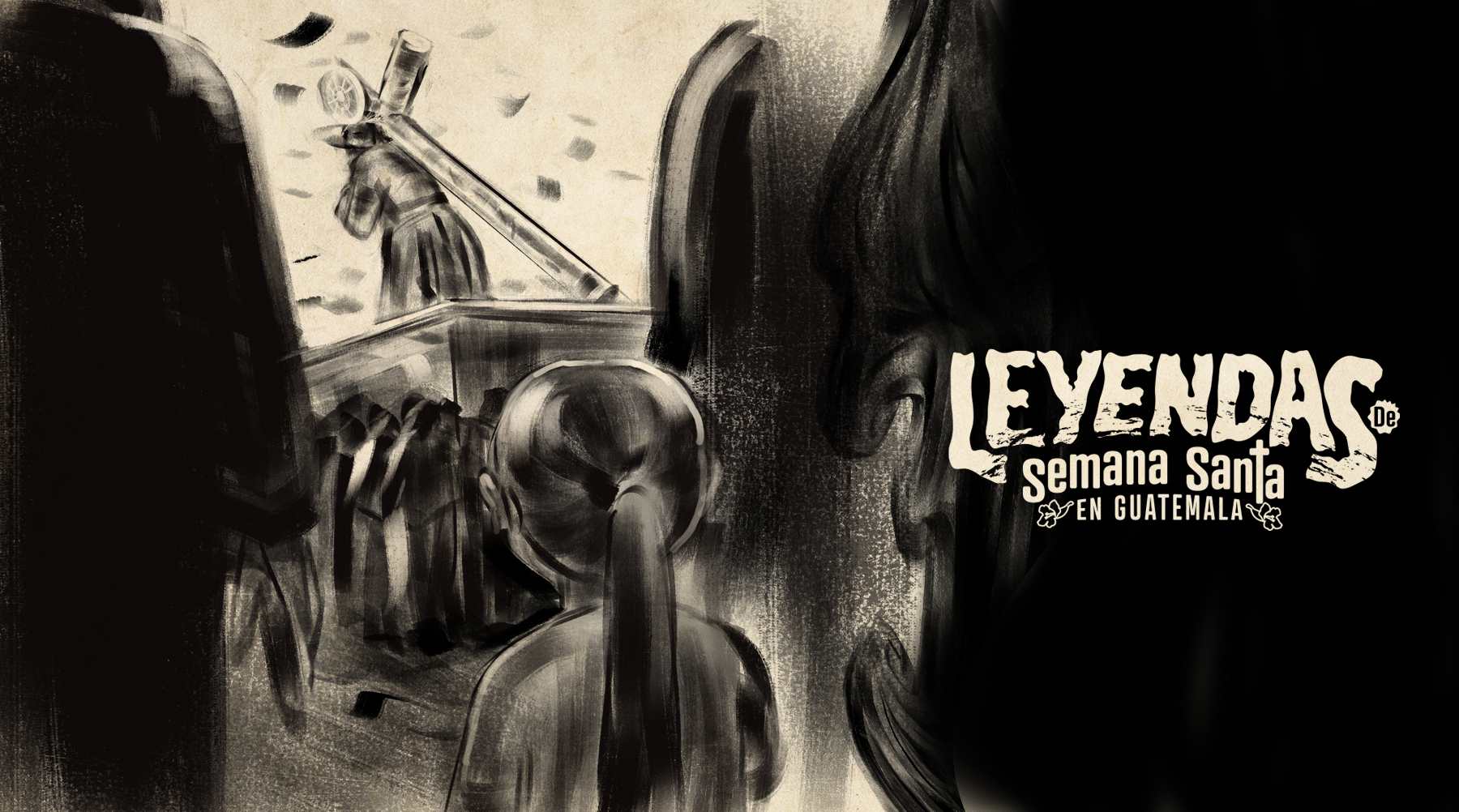
Easter legends: The tears of Jesus of Merced. (Illustration Free Press: Marcos Gálvez)
Between myths and legends, it is said that Jesús Nazareno de la Mercedknown as the lord of the review, not only Walk every Holy Tuesday between marches and devotees. They ensure that his face – the most similar to the true Jesus – manifests between incense, dreams and nightgotten, visiting the purest souls before his processional exit.
Myth, faith or mystery? The truth is that, generation after generation, the legends about their appearances persist in the runners of the Mercedario neighborhood and in the whispers of the historic center. Some say that it still appears in the dark streets, fading like a sigh in the wind; Others claim that his spirit travels the city on the night before Holy Tuesday.
The legends describe him as the saint who came by Rafael Carrera, the president who died just after the procession passed in front of his house. It is also said that a nun, in fervent prayer, begged to see the true face of Christ, and it was Jesus of the review who appeared to him in dreams, revealing his divinity.
But who really is this Nazarene who walks between faith and mystery? How was your legend in Guatemala? What other stories are hidden behind his red robe and his serene gaze?
Discens and include yourself in the living legends that still resonate in the streets of the Mercedario neighborhood. Because when the incense rises … some say he has already passed.
Legend of Jesús Nazareno de la Review
Among voices of faithful, stories of grandparents and memories of yesteryear, he travels through the legend of the Lord of the review, one of the most remembered versions that is still heard in the echo of the words of Héctor Gaitán, who used to say: “As they told me, I tell you”, by sharing the oral tradition of Guatemala.
It is said that it all started in 1934, when the houses in the neighborhood dressed in lilac and yellow, cat nail flowers adorned the balconies and the smell of fresh pine perfume the sidewalks. In the midst of that Sacred atmosphere, Mrs. Josefina Grajera Méndez and Bustamante, faithful devotee, organized in his residence a choir to pay tribute to the Nazarene in his solemn pass.
That Holy Monday arrived home a humble young woman from the interior of the country: Anselma, a simple girl who came to work and to receive education. I did not know how to read or write, much less understood the religious customs that wrapped the city. As the grandmothers said: “The poor man was as bought chicken, not knowing where to stop or what to do.”
Doña Josefina, with firmness but good heart, immediately integrated it into the preparations. At the end of the day, he asked him to rest. Anselma wandered through the old housebashes of the house until reaching a room full of old portraits and bunches. He sat in silence, with the lost thought among the green mountains of his land, the birds that used to sing in his village and the echo of the coyotes in the starry nights.
It was then that he felt someone watched her. When looked up, he saw a man of medium height, fine beard, sourdust hair, red robe and sandals. He approached slowly, stroked his head and spoke to him with a serene voice:
-What is your name?
—Seelma, sir … I’m from Tulum. They brought me to work with Mrs. Josefina … And you live here?
“Yes,” he replied, with an enigmatic smile. I live here … and everywhere. I thought you knew me.
She shook her head.
“You will know me,” the man added. And what you need, ask me, that I will give it to you.
And he disappeared slowly through the corridor, melting in the gloom and mist of the first patio.
At dawn, preparations for the procession began. Anselma, even without understanding tradition, received the instruction of throwing flowers into the Nazarene from the balcony. The harmonium was placed in the window, the sopranos refined their voices and the air was filled with incense and solemnity.
When the Anda arrived in front of the house, the songs of the choir rose strongly. In the midst of fervor, Anselma was paralyzed to see the image of the Nazarene: he was the same man who had visited her the night before. The same serene look. The same red robe. The same face.
Mrs. Josefina, seeing that the girl did not react, snatched the bouquet of flowers and threw it to the Lord.
“What’s wrong with you, mika?” You were mute! He said, without understanding.
Anselma could only look at how the image slowly moved away between incense, murmurs and funeral marches. Finally, in a trembling voice, Mrs. Josefina confessed what happened the night before.
The lady, like many adults in the face of the inexplicable, attributed the story to the imagination of a peasant girl. But Anselma was no longer the same. Because that procession was no longer just a tradition … it was a revealed mystery.
Since then, in the neighborhood of the review it is said that Jesus of Merced still walks among the living, visiting pure hearts, appearing between the fog and the incense, speaking with those who still have the soul clean to listen to him and grant them a request.
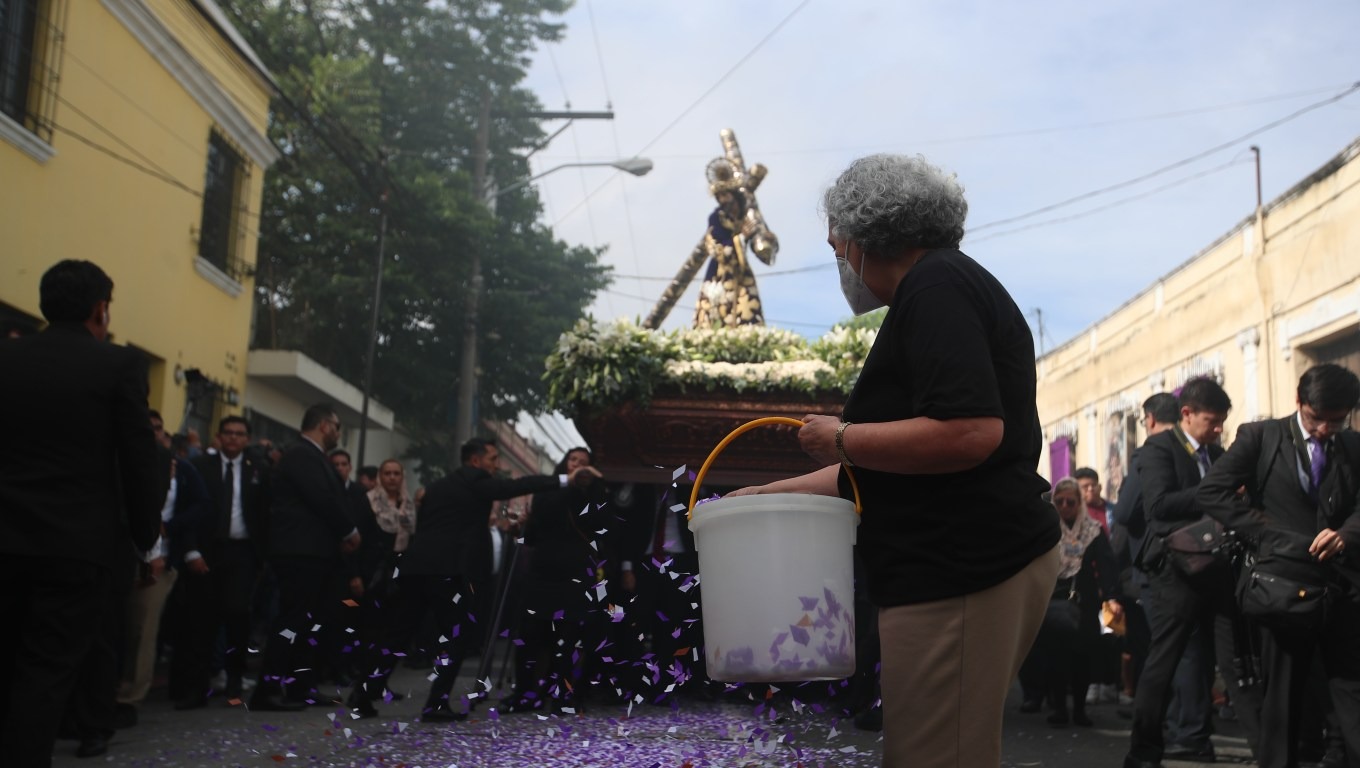
Neighbors make carpets to decorate the processional jurtern tour during their solemn step this Sunday. (Free Press Photo: Byron Baiza)
The beginning of the Nazarene of the review: its first appearance
Like every legend born of oral tradition, there are variants and stories that connect a saint with different eras, people or forms of appearance. Walter Gutiérrez, historian and professor of the School of History of the University of San Carlos de Guatemala (USAC), details that this is due to the context in which it arises: it is the most important image of the city of Guatemala, in part because its brotherhood has been historically linked to the Guatemalan elite. That makes it a powerful symbol, and very particular stories have been woven around it.
It is said that the first legend around the Nazarene dates back to 1717, when the image of Jesus was consecrated in Santiago de Guatemala – ancient Guatemala – and affirmed that it was the most similar to the true face of Christ.
According to tradition, in the mid -seventeenth century, a nun in Europe requested in prayer to contemplate the real face of Jesus. In a dream vision, a serene and compassionate face was revealed. Upon awakening, he heard a voice that said: “That is the face of the Jesús Nazareno de la Merced, in Guatemala. ”
It is said that the nun ordered to request a portrait and, seeing it, it was deeply amazed.
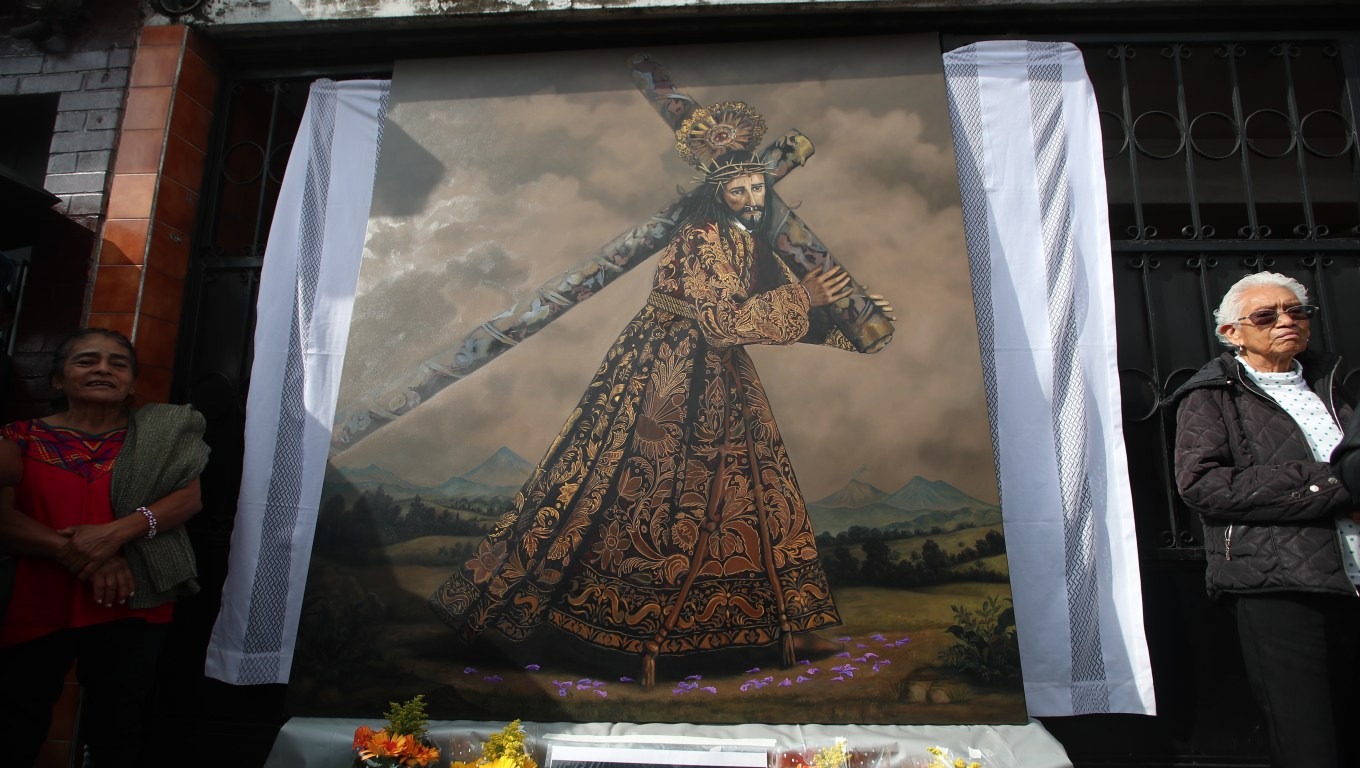
On February 18, 1721, Jesús Nazareno de la Merced was proclaimed protector and defender of the city of Guatemala, entrusting the safeguard against earthquakes and other calamities. (Free Press Photo: Byron Baiza)
Óscar Cano, journalist, director and founder of Portico Duende, shares a variant of this story: a Guatemalan nun would have been sent to Europe to serve in the work of the Nazarene. According to his investigation, there are divergences about fate: some claim that he was sent to France, others to Italy; However, Cano argues that he could have been destined for Spain, specifically to Ávila, for the connection with the Carmelites and the tradition of the Virgen del Carmen, which also keeps a link with Guatemala.
The story tells that the religious prayed fervently to know the image more similar to the true face of Jesus Christ. In dreams, Jesus appeared to him, who told him that his face was embodied in the image of the Nazareno de la Merced, the same Jesus of the review.
The grandparents reported that this nun, from heaven, was ordered to return to his homeland. Thus, he returned to Guatemala and settled in the convent of Santa Teresa, located in the ninth street, where today is the headquarters of the Guatemalan Red Cross, in zone 1.
It was a Good Friday when, seeing the procession of Jesús de la Merced pass, the nun passed out to recognize in the image the face that had been revealed in dreams, who carried. Two tears on her face.
Since then, miracles began to be attributed to the Jesus of Merced, and with them, the legend of the Lord of the Review was born.
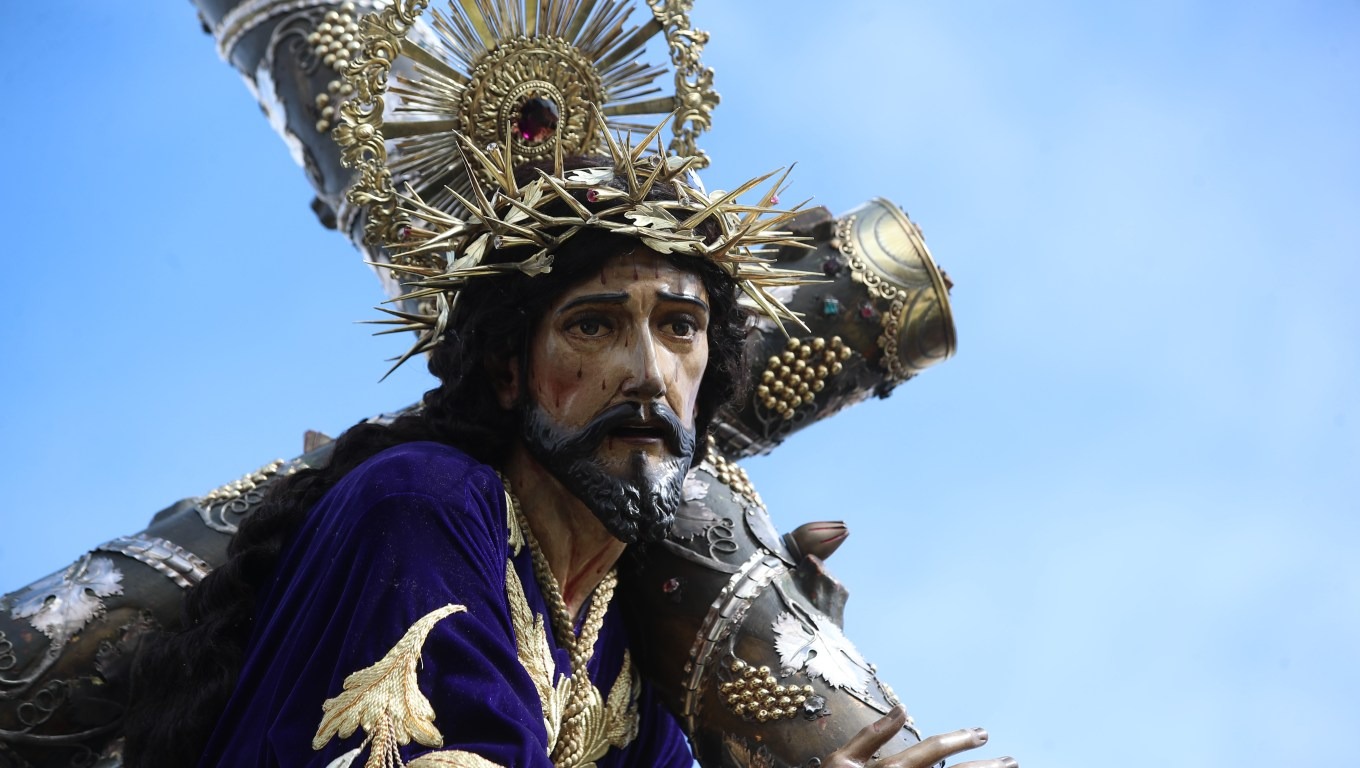
The sculpture of Jesús Nazareno de la Merced, carved by Mateo de Zúñiga and embodied by José de la Cerda in 1654 and 1655. (Free Press Photo: Byron Baiza)
President Carrera’s robe
Another legend has a political and spiritual dye. According to oral tradition, President Rafael Carrera, fervent devotee, would have given a special robe to Jesús de la Merced, in gratitude for his protection.
Gutiérrez tells that this is another well -known legend. It is said that during the war against the filibusters, President Rafael Carrera appointed Jesus of the Merced “Army Colonel”, and that he was even granted a ceremonial swords.
The historian detmma that voice to voice among the devotees and citizens said that President Carrera would have presented a red tunic that was used in 2022, when processions were restarted after pandemic.
The popular chronicle details that thanks to this love and devotion, a Good Friday, Jesus of La Merced Paso step next to his procession to collect the president, who died that day after the procession
“The most curious thing is that, on the day of the death of the career – a Good Friday of 1865 – the procession passed in front of his house. The popular chronicles say that, when he arrived at the president’s residence, the funeral march stopped, as if Jesus had gone to collect his soul. A few minutes later, Carrera died. Cano detailed.
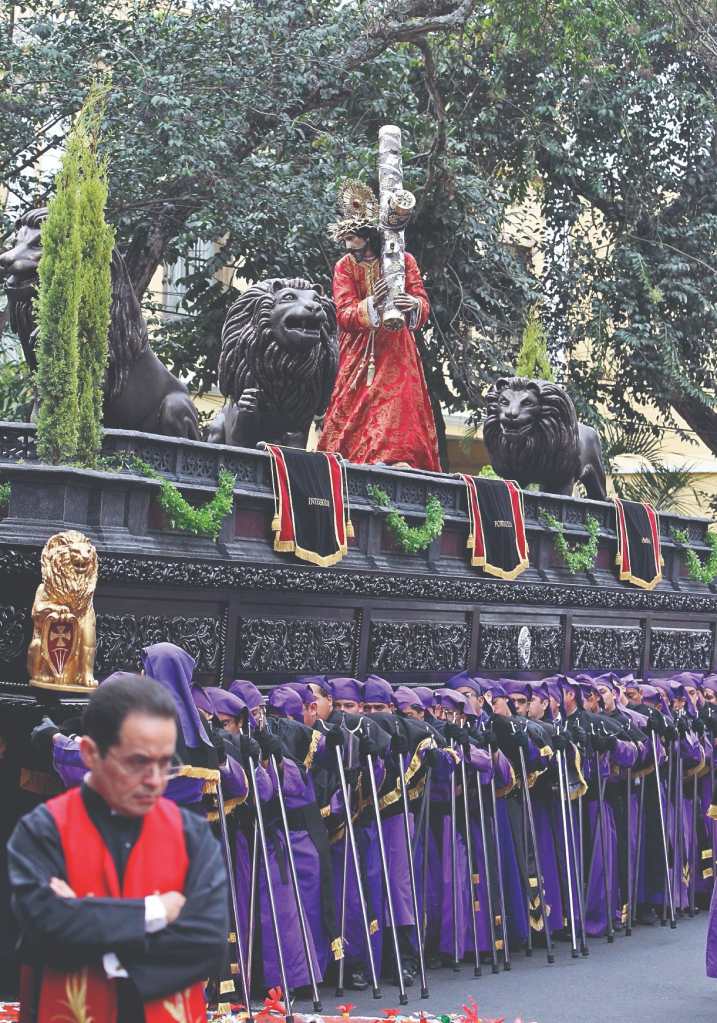
Jesús Nazareno de la Merced travels in procession the capital carrying his red robe. (Free Press Photo: Edwin Castro)
Image creation legend
The make of his face, the details of his compassionate gaze, was counted in the neighborhoods of the old Panchoy Valley that was created between 1654 by the sculptor Mateo Zúñiga and his apprentice, who had a speech disorder to whom the face of Jesus was revealed.
It was said that it was a night of intense darkness that Zúñiga exhausted retired to rest, and when he woke up, the apprentice had finished the sculpture, making the realistic face that is known today of the saint.
Therefore, it is said that the image is so beautiful, because it was created by an innocent soul and pure detailed Gutiérrez ..
Cano emphasizes that the procession began to take to the streets in 1702 in what is now known as Antigua Guatemala.
The procession began when the city was still in the Panchoy Valley, in the very noble and very loyal city of Santiago de los Caballeros de Guatemala, today Antigua Guatemala. From there the historical and devotional link with the review stands out.
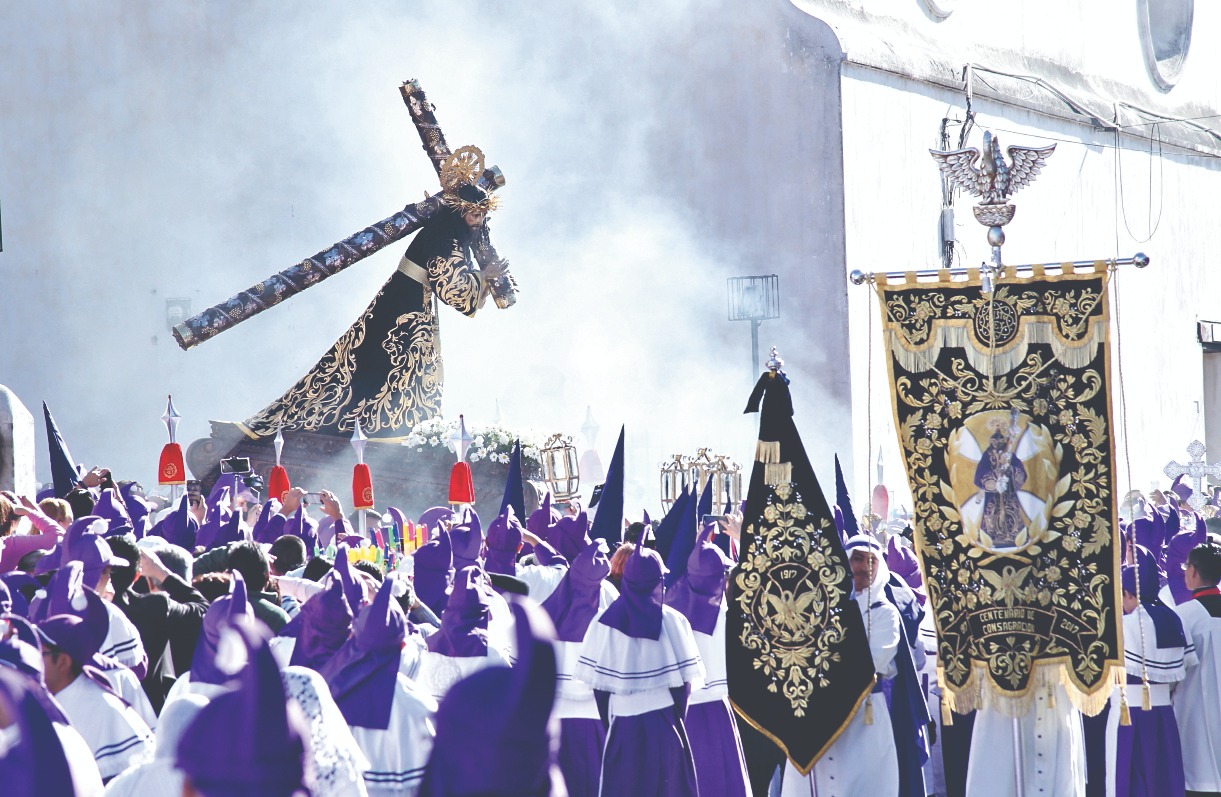
Among clouds of incense and accompanied by faithful, Jesús Nazareno de la Merced travels the historic center every year. (Free Press Photo: Edwin Castro)
Jesús de la Merced moved an entire city
Oscar Cano detailed that more than the legends, Jesús de la Merced is of importance in the history of Guatemala, because it is said that after the earthquakes of Santa Marta in 1773, when it is decided to transfer the city to the Valley of the Hermitage, the then Captain General Martín de Mayorga did not find a way to convince those who wanted to stay in the former Guatemala.
Mayorga had the idea of moving the image of greatest devotion: Jesús Nazareno de la Merced. The strategy was effective: when moving the image, the people mobilized with it. It is said that in 1778 the transfer is made, making stops in San Lucas and in the town of Mixco ..
Thus, the image not only accompanied the geographical change, but was deeply linked to the history of the country concluded Cano.