

Community
The season monitors the progress of the actions and ensures that it will issue alerts when the rhythm reaches a risk point.
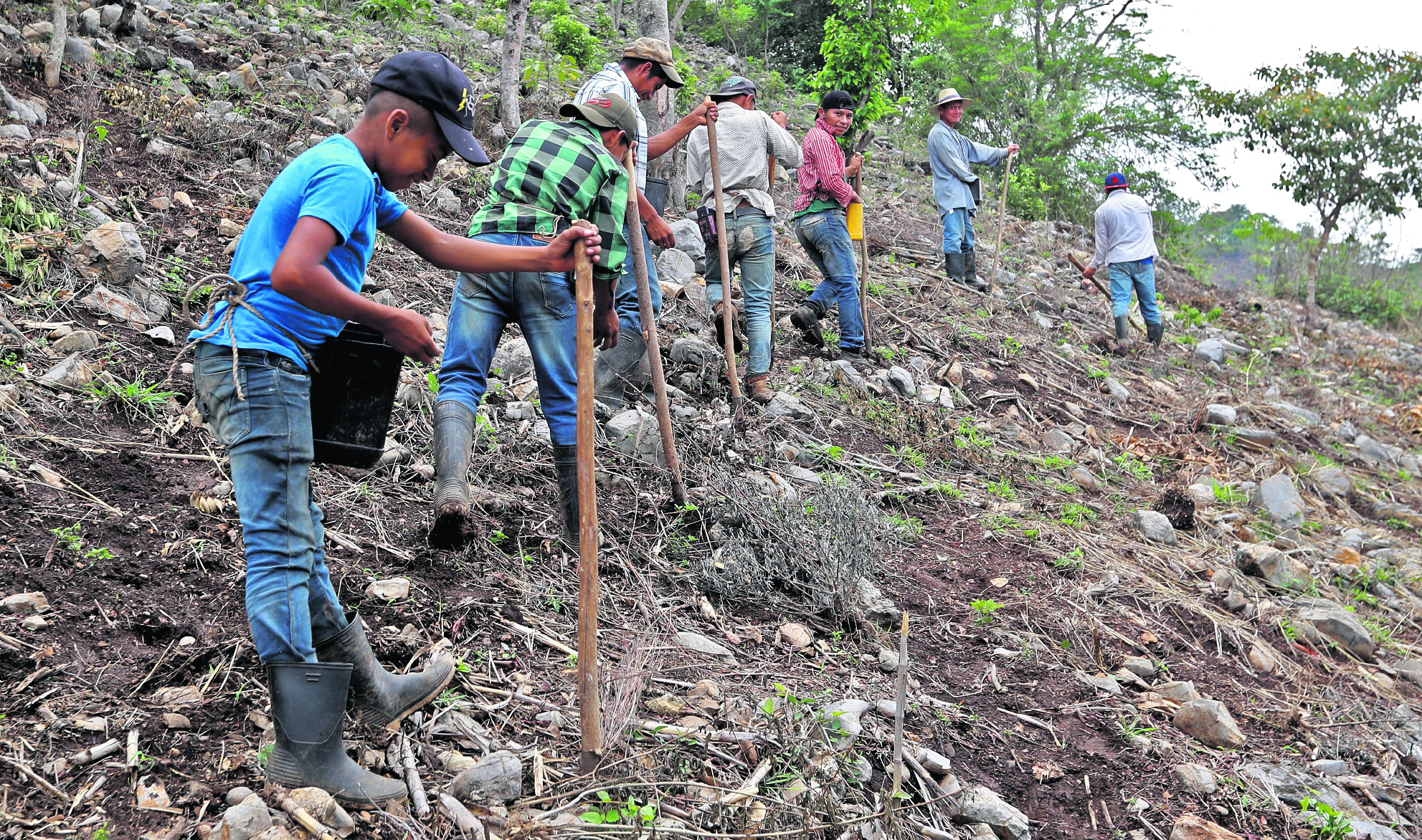
The execution of the Maga in the support programs for families that are dedicated to agriculture is low. The risk is that, with the beginning of the season of seasonal hunger, food insecurity is acute and the aid does not arrive. (PHOTO FREE PRESS: PL hemeroteca)
The first quarter of the year passed and the execution of the programs of the Ministry of Agriculture, Livestock and Food (MAGA) to address food insecurity in the country reached 6.25%, one from one of the lowest among the nine ministries that must develop actions in that area.
The advance is reflected in the Food and Nutritional Security Operational Plan (POASÁN), which links the programs, the budget and the execution of the actions focused on improving the health and nutrition of the population.
The Maga has four programs related to food insecurity. One of them is the access and availability of food, oriented – according to institutional documents – to serve family farmers and rural population in a situation of extreme poverty and poverty, with priority in indigenous and peasant communities with limited access to land.
Among the actions contemplated by the project is the support for food access for households that practice family agriculture and that have lost their crops or are at high degree of vulnerability. The Ministry has Q283.5 million to support these families, But it has only executed Q5 million, and about half was used in management and coordination activities.
A similar situation occurs with activities focused on food availability, for which They have disbursed Q58.6 million of a current budget that amounts to Q529.4 million. With these funds, the magician must support families in sustainable agriculture practices for food production and storage, promote local production, post -harvest management of basic grains, as well as the implementation of family and community orchards, so that households consume what they produce.
The other ministry programs included in Poasan also report a low execution. In total, the portfolio has a current budget of Q1 thousand 414 million to address actions aimed at combating food insecurity in the country, of which Q88.3 million has executed. This represents 6.25%, percentage close to 7.52% registered in the same period of 2024, but less than 15.53% reached in 2023.
The Ministry of Food and Nutrition Security (Sesán), an entity responsible for coordinating the actions contemplated in Poasán, indicates that, despite the fact that the execution of the magician is below expected, during the first quarter of the year the institutions They are in a reprogramming phase of the production and the assigned budget. For this reason, the development of activities and projects takes time.
He adds that this low execution does not impact food and nutritional insecurity, because the human resource of the Maga provides technical assistance in the programs that compete, as is the case of food assistance.
The Siean maintains monthly monitoring to the execution of Poasan, he reported, and when the rhythm is lower than expected it issues alerts and coordinates meetings with the institutions to analyze the situation.
Repercussions
Jorge Pernillo, professor at the School of Nutrition of the Pan American University (Upana), points out that the effects of the low execution of the magician on food assistance actions aimed at vulnerable families do not materialize in a timely manner, which is worrying about the imminence of the aggravation of the seasonal hunger period in the country.
“They continue to do the same, without extraordinary actions or different from those of previous years to serve the population in food insecurity, and now it is more critical, because they do not execute, this crisis adds the suspension of the USAID projects in the dry corridor, in the middle of seasonal hunger period,” says Pernillo, who also questions the magician’s ability to identify homes at greater risk.
Food insecurity
At the moment, 2.8 million people They are in a crisis situation or emergency of food insecurity, a condition in which they will remain until May, according to the most recent report of the integrated Food Safety Classification (CIF).
The departments with the highest number of people at food risk are Alta Verapaz, Huehuetenango, Guatemala, Quiché and Chimaltenango.
The CIF Report attributes this situation to the decrease in food reserves in homes, especially in those dedicated to subsistence agriculture, since the scarce available economic resources are usually used to cover food needs.
The report also indicates that these months mark the beginning of the season of seasonal hunger, during which many families are left without food reserves and lack income to acquire them. LHouseholds of small farmers are the most affectedbecause their crops are affected by the lack of rain.
That is why Maga is recommended to identify families who lost their crops, mainly due to agricultural drought, to provide food assistance.
According to the plan for seasonal hunger, 2019, of the National System of Food and Nutrition Security, Acute malnutrition is one of the most serious indicators The impact of this food shortage on the population, and affects children.
Between January 1 and March 29 of this year they have been reported 6,095 cases of acute malnutrition, which represents an increase of 9.8% compared to the same period last year, according to data from the Ministry of Health. The report also warns that the departments with the highest risk of identification of children in this condition are Suchitepéquez, Sacatepéquez and the Southeast of Petén.