

China has suspended exports from a wide range of critical minerals and magnets, threatening to obstruct the supply of fundamental components for car producers, aerospace manufacturers, semiconductor companies and military contractors around the world.
Magnet shipments, essential to assemble from cars and drones to robots and missiles, have stopped in many Chinese ports while the country’s government writes a new regulatory system. Once implanted, the new system could permanently prevent supplies reaching certain companies, including US military contractors.
The strong official measure is part of China’s reprisals due to the strong increase in the tariffs of President Donald Trump, which began on April 2.
On April 4, the Chinese government ordered the export restrictions of six heavy metals of rare earths, which are refined entirely in China, as well as rare earth magnets, of which 90 percent occurs in China. From now on, metals and special magnets manufactured with them can only leave China with special export licenses.
But China has barely started establishing a system to issue licenses. This has caused consternation among industry executives because of the possibility that the process is extended and the current supplies of minerals and products outside China are exhausted.
If Detroit factories and other places remain without the powerful rare earth magnets, that could prevent them from assembling cars and other products with electric motors that require these magnets. Companies vary greatly in the size of their emergency reserves for such contingencies, so it is difficult to predict the calendar of production interruptions.
A worker dressed in a celestial work uniform goes back while opening an industrial oven that plays to toast heavy metals of rare earths.
The so -called heavy metals of rare earths included in the suspension of exports are used in essential magnets for many types of electric motors. These engines are crucial components of electric cars, drones, robots, missiles and spacecraft. Gasoline cars also use electric motors with rare earth magnets for critical tasks such as direction.
Metals are also used in chemicals to manufacture reaction engines, lasers, car headlights and certain spark plugs. And these rare metals are vital ingredients of the capacitors, which are electrical components of computer chips that feed artificial intelligence and cell phones.
Michael Silver, president and executive director of American Elements, supplier of chemicals based in Los Angeles, said that his company had been informed that it would take 45 days to issue export licenses and resume exports of rare earths and magnets. Silver said his company had increased his stock last winter in anticipation of a commercial war between the United States and China, and that he could comply with his current contracts while waiting for licenses.
Daniel Pickard, president of the Critical Minerals Advisory Committee of the Office of the Commercial Representative of the United States and the Department of Commerce, expressed concern about the availability of rare earths.
“Do you have control or prohibition of exports potentially serious effects in the United States?” Pickard, director of the International Trade and National Security practice of the Buchanan Initersoll & Rooney law firm, said that a rapid resolution of the question of rare earths was necessary, because a sustained interruption of exports could damage China’s reputation as a reliable supplier.
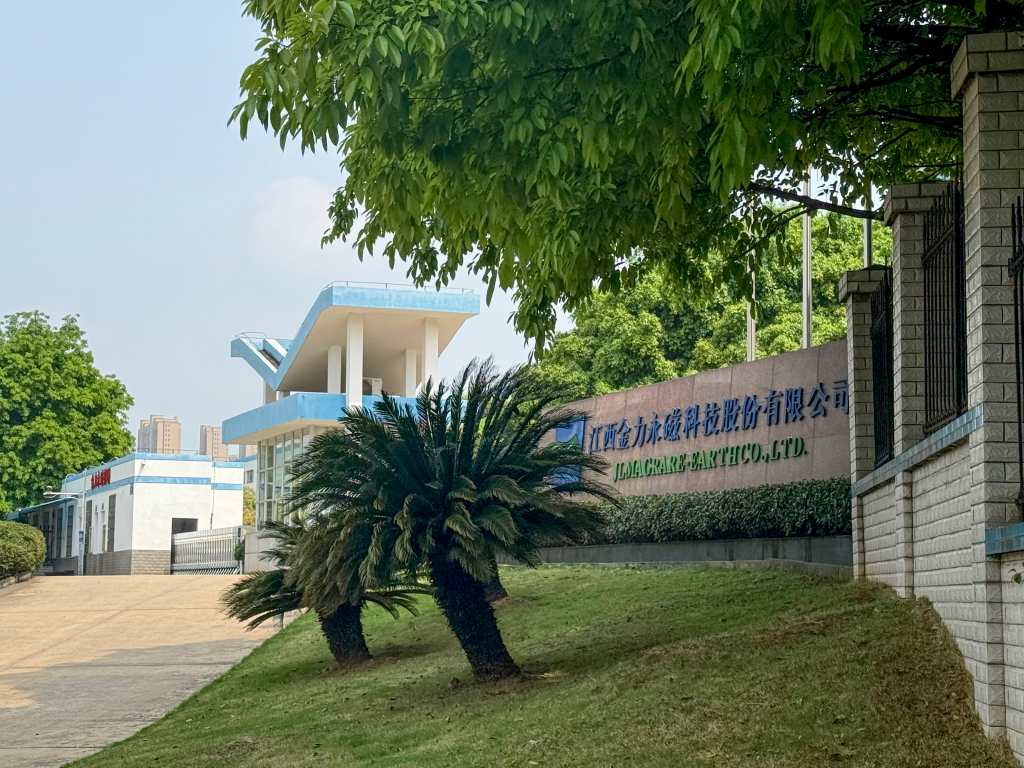
A low-altitude office building with a Chinese and English sign of JL Mag Rare-Ath Company, in front of a careful grass area and trees.
To further complicate things, the Chinese Ministry of Commerce, which promulgated the new export restrictions together with the General Customs Administration, has forbidden Chinese companies with an increasingly long list of US companies, in particular military contractors.
An American mining leader, James Litinsky, executive president and general director of MP Materials, said that rare earth supplies for military contractors were a reason for special concern.
“Drones and robotics are considered widely the future of war, and based on everything we are seeing, the critical supplies for our future supply chain are closed,” he said. MP Materials has the only rare land mine in the United States, that of Mountain Pass, in the California desert, near the border with Nevada, and hopes to start the commercial production of magnets in Texas at the end of the year for General Motors and other manufacturers.
Some Japanese companies maintain rare earth inventories of more than a year of supply, after having been harmed in 2010, when China imposed a seven -week embargo on rare earth exports to Japan during a territorial dispute.
But many US companies have little or no inventory because they do not want to immobilize effective in extenders of expensive materials. One of the metals subject to the new controls, the disposium oxide, is quoted at $ 204 per kilogram in Shanghai, and much more outside China.
Rare earth magnets represent a very small part of the total exports of China to the United States and other countries. So that the interruption of shipments causes minimal economic pain in China, but can have large effects in the United States and other countries.
Chinese customs officials are blocking heavy metal exports of rare earths and magnets not only to the United States, but any country, including Japan and Germany. However, the application of the new export license requirement has so far been unequal among the different Chinese ports, executives of the rare earth sector said.
Most rare earth magnets, although not all, include heavy rare earths, necessary to prevent magnets from losing their magnetism at high temperatures or in some electric fields. Some rare earth magnets are manufactured only with light rare earths and are not subject to export restrictions. Customs officials of some Chinese ports tolerate the export of magnets that only contain minimal traces of heavy metals of rare earths and do not go to the United States.
However, officials from other Chinese ports are adopting a stricter posture, demanding that exporters perform tests to demonstrate that no magnet batch contains heavy metals of rare earths before magnets can be charged on a ship for export.
Chinese export restrictions began to take effect before the Trump government announced on Friday night that would exempt many types of electronic consumption products from China from its latest tariffs. Magnet exports were still blocked over the weekend, according to five executives from the rare earth sector.
Like most goods from China, magnets are also subject to President Trump’s last tariffs when they reach US ports.
Two people on a motorcycle, one of them with a child in a portabebés tied to the front, wait near a pedestrian crossing from a wide double -meaning road.
A rare earth magnet factory in Ganzhou. China produces 90 percent of the almost 181,000 tons per year of rare earth magnets, which are much more powerful than conventional iron magnets. Credit … Keith Bradsher/The New York Times
Until 2023, China produced 99 percent of the world supply of heavy metals of rare earths, with a very small production from a Vietnam refinery. But that refinery has been closed during the last year due to a fiscal dispute, leaving China with the monopoly.
China also produces 90 percent of the almost 181,000 tons per year of rare earth magnets, which are much more powerful than conventional iron magnets. Japan produces most of the rest and Germany also a very small amount, but depend on China to obtain raw materials.
The Chinese Ministry of Commerce did not respond to a request for comments.
The richest sites in the world of heavy rare earths are in a small wooded valley on the outskirts of Longnan, in the red clay hills of the province of Jiangxi, in the center-south of China. And most of the China’s refineries and factories are found in Longnan or its surroundings and in Ganzhou, a city located about 130 kilometers. The mines of the Valley send the mineral to the Longnan refineries, which eliminate the pollutants and send the rare earths to the Ganzhou magnet factories.
The most famous factory of these magnets in China is the JL Mag Rare-Arth Company, whose headquarters is in Ganzhou.
This factory supplies the two main electric cars manufacturers in the world, Tesla and China byd, the magnets that operate their cars, executives of the rare earth sector said executives. Byd has said that he buys JL Mag some of the most modern and powerful magnets in the world, with 15 times more magnetic strength by cubic inch of volume than a conventional iron magnet.
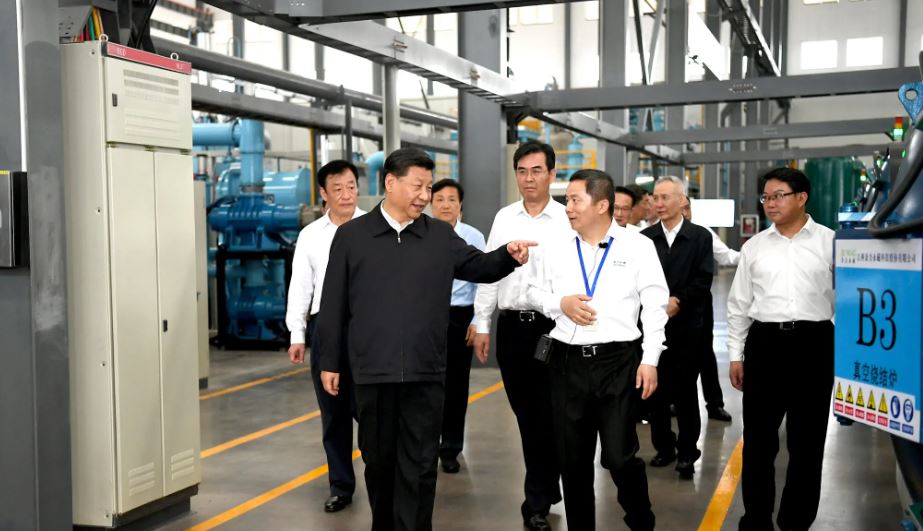
Xi Jinping, the top Chinese leader, made a special inspection visit to the JL Mag Factory in Ganzhou in 2019, during the resurgence of commercial tensions in the first mandate of President Trump.credit … Xie Huanchi/Xinhua, via Getty Images
Xi Jinping, the top Chinese leader, made a special inspection visit to the JL Mag Factory in Ganzhou in 2019, during the resurgence of commercial tensions in Trump’s first mandate. The trip was interpreted as a insinuation that China was willing to use its control over the materials to disturb US supply chains, a step that did not take then, but that it is giving now.
A few years ago, China interrupted the extraction of heavy rare earth near Longnan because it caused serious chemical pollution.
On Friday, in the site of a mine near Longnan, a diesel generator built and gorgoteed liquids through plastic pipes, which indicated that at least some mining operations had probably resumed. Heavy rare earths are extracted pouring strong chemicals into holes excavated at the top of a hill. Chemicals dissolve the mineral and drain through the base of the hill, where they can pump closely for their initial processing.