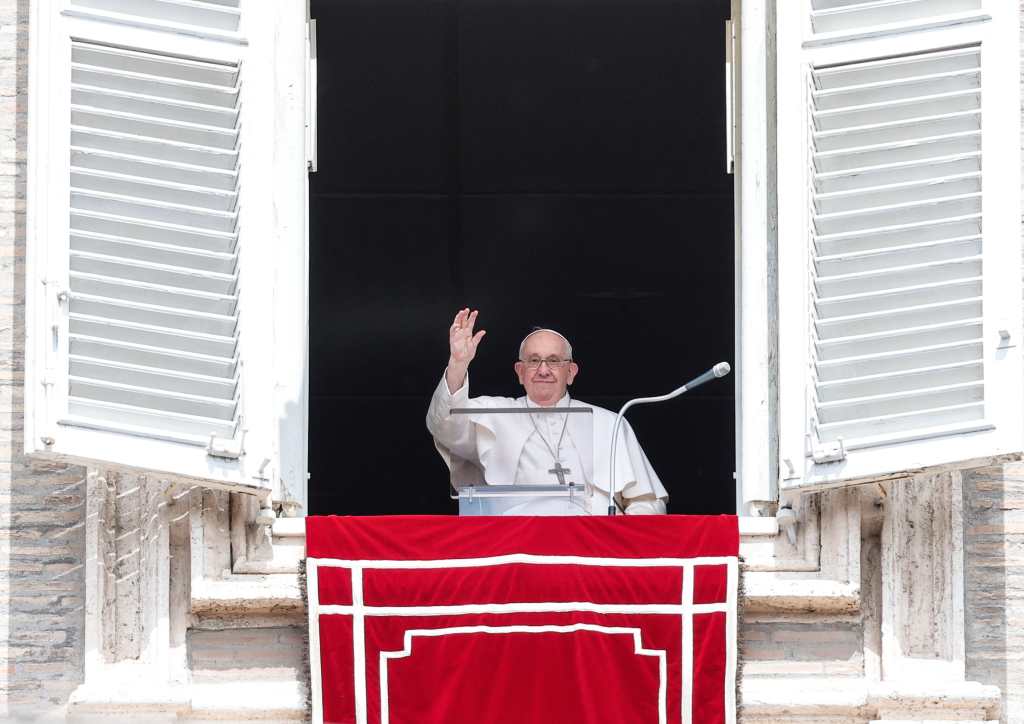
On March 13, but 2013, Argentine cardinal Jorge Mario Bergoglio was chosen Pope with the name of Francisco, becoming Pope number 266 and the first pontiff of Latin American origin.
Today, 12 years after being appointed Pontiff, the Church is mourning due to his death.
After this confirmation, The Vatican begins a series of protocols and a long process for the Church to choose a successor.
These protocols were established by Pope John Paul II on February 22, 1996 in the Apostolic Constitution of the Catholic Church known as Universi Dominici Gregis.
The city of the Vatican must implement them From the sudden death of the Holy Father.
Time is still indefinite; This will depend on the deadlines agreed by consensus among the cardinals.
1. Death confirmation
At the time of the Holy Father, Cardinal Camarlengo – a cargo that Kevin Joseph Farrell— DIt will officially verify the death of the Pope in the presence of the chancellor of the Apostolic Chamber, who must extend the Authentic Death Document or Act.
According to Father Luis René Sandoval Quinteros, Director of Communication of the Archbishopric of Guatemala, Camarlengo is accompanied by a member of the Dicastery for the Service of Integral Human Development, usually a doctor, and by relatives or relatives of the Pope if they are present at the time of doing this certification.
Once death is certified, Cardinal Vicar will perform a ritual before starting the burial of the Pope, taking into account that he must remove the “fisherman’s ring” used by the pontiff and then destroy itsince each Holy Father carries a ring made with the remains of the previous one. This will allow to record a new seal and completely close the apartment and the papal office, which will open again to the election of the new Pope.
After confirming the death, The Holy See must announce the death of the Supreme Pontiff to the world. In addition, the bells of the Basilica replace in mourning and respect.
The announcement of the death of Pope Francis was released on the morning of Monday, April 21 (7,35 hours in Rome, 23.35 hours on Sunday 20 in Guatemala), through a statement and a video released by Camarlengo.
https://www.youtube.com/watch?v=_2qgo25kd-g
2. MUSTOO AND VACANCE HEADQUARTERS
After the world knows the news of the death of the Holy Father, The period known as vacant headquarterswithout a prevailing pontiff, while the Church is provisionally governed by Camarlengo.
The duration of this period is indefinite and will depend on the times chosen for their organization and the promptness with which the cardinals choose a successor in the future conclave.
From the death of the Pope, the Church enters a nine -day mourning period called novelty.
During this same period, the funeral protocol begins, which is generally celebrated in the Plaza de San Pedro, where the Pope’s body is exposed to the faithful.
3. Sepultura of the Holy Father
He protocol establishes that the funeraldirected by the Dean of the Cardinal College – currently occupied by Giovanni Battista Re – is held between four and six days after the death of the Pope. This means that the funeral of Pope Francis must be held between Friday and Sunday of this week, as stipulated in the rules.
However, according to Sandoval, Pope Francis changed this protocol in 2024 and decided to simplify the funeral rites. Among the novelties, he decreed that his body was not veiled in his room but in the chapel, and that he was not exposed on a catafalco in the Basilica of San Pedro, but inside an open coffin.
Vatican’s master of ceremonies, Diego Ravelli, reported through a statement that The coffin will be veiled in the chapel of his residence, by disposition in life of the Pontiff. Previously, this was done in the chapel of the Apostolic Palace.
According to tradition, the body of the pontiff should be buried in the Vatican Grutas, under the Basilica of San Pedro, But Francisco decided to be buried in a crypt of the basilica Roman of Santa María la Mayor, outside the Vatican.
For his grave, a procession headed by Camarlengo, the dean of the Cardinal College and all the cardinals, explains Sandoval.
Currently, the burial date has not yet been confirmed.
4. Conclave
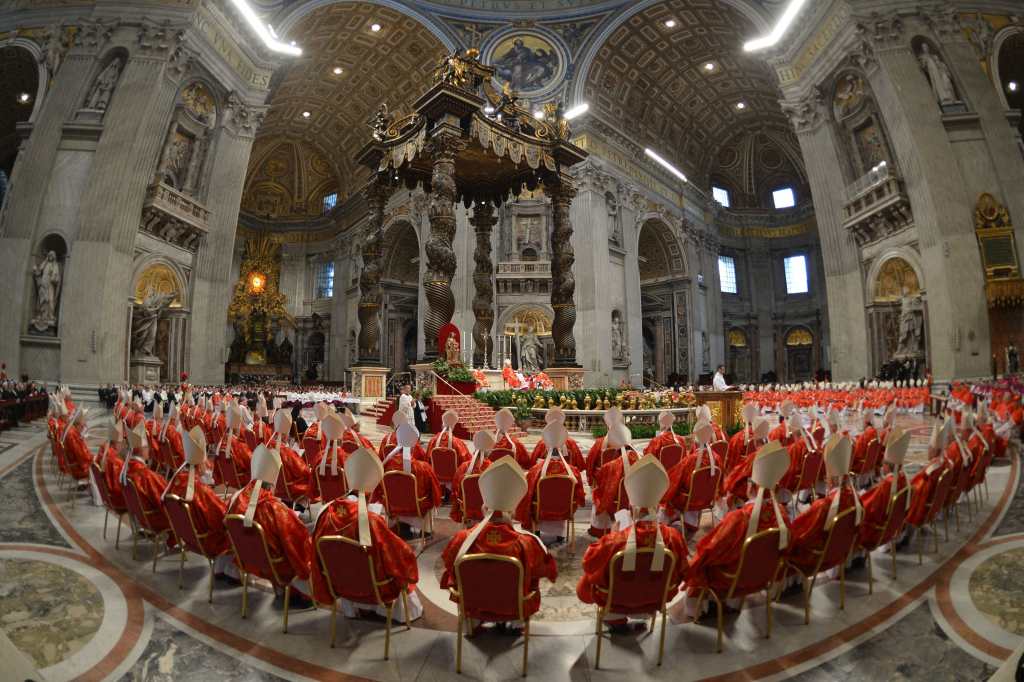
Approximately 15 days after confirmed the death of the Pope, Start the conclave process: The solemn and secret phase in which the new Pontiff is chosen, responsible for continuing the spiritual and administrative conduction of the Catholic Church.
During these 15 days, cardinals must travel to Rome not only for exequial activities, but also for the choice of the new Pope.
According to Sandoval, conclave means “key” and It is a reserved process in which, under strict confidentiality, one of the most transcendental decisions for the Catholic Church is taken: choose the new Pope.
This term refers to the closed nature of the encounter, in which the cardinals remain isolated, in an environment of prayer and reflection, until reaching a consensus that allows the new Pontiff to name.
During this process, all cardinals enter the Sistine Chapel. When the door closes, the ceremony pronounces the words Extra omnes – “Out” – and there the voting starts.
If the Pope is not chosen during the voting, from the chimney of the Sistine Chapel comes out black smoke.
According to Sandoval, the Cardenalicio College is made up of 252 cardinals, of which 135 are voters. Among them, the Holy Spirit will choose the new Pope, and among the possible is Cardinal Guatemalteco Álvaro Ramazzini.
Although there is no certain period for the conclave, according to the recent trend, it has not exceeded a week since its inception.
5. Habemus Papam
When the chimney of the Sistine chapel emits white smoke, it means that the Catholic Church has a new leader.
When chosen, the new Pope goes to the so -called “Chapel of Tears”, adjacent to the Sistine Chapel, to cry and thank this new task that God entrusts him.
After this, the cassock and stole are placed. All cardinals are located on the balconies of the basilica.
The Pope goes out to the lodge of blessings – the main balcony of the Basilica of San Pedro – and there is presented with the name he has chosen.
“I announce with great joy that we have Pope,” “I initiate the announcement. “The Holy Roman Church, the Cardinal [apellido del elegido]has decided to be called [nombre pontificio]”, Continue.
After that announcement, the new Pope goes out to the balcony to give his first apostolic blessing.