

PL explains
|
Subscribers
The Argentine Pope sought to make the Church a more cozy and global place, unlike their predecessors, who adopted more traditional and doctrinal approaches.

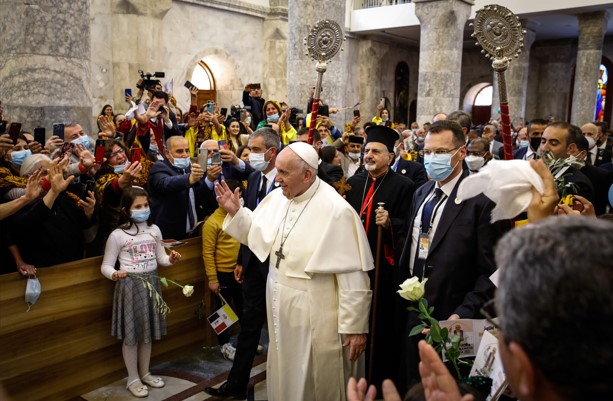
Pope Francis in Bajedida, Iraq, in March 2021.
The cardinals who will choose the successor of Pope Francis face a critical decision: will they continue on their way to a more cozy, global and collegiate church or restore the most doctrinal and traditional approach to their predecessors?
That will be the focus of an intense debate among the cardinals, and Francisco leaves them a complicated legacy to discuss.
The first hopes that a “Francisco” effect attracted back to the faithful to the benches did not materialize largely, since church assistance continued to decrease in the secularized West, even when it grew in the global south.
Although Francisco made considerable advances by attending the crisis of sexual abuse of the Church and addressed his murky financial culture, the path in which he put the Church for the future will be the most controversial issue.
His willingness to discuss important theological issues such as divorce, the possibility that priests marry, the acceptance of same -sex couples and a greater role of women excited liberal Catholics after more than three decades of conservative gaps. However, many complained that Francisco only launched a process that a less reformist successor could eliminate, while others accused him of diluting the church doctrine.
In many ways, Francisco used his mandate to change the course established for his predecessors Benedict XVI and Juan Pablo II. Despite having been canonized by Francisco, John Paul II was judged hard in an important report of the Vatican that showed that he had been dangerously observed before sexual abuses to minors in the Church. Francisco tried to fix that and to accommodate the conversation and opposite ideas in a church that for decades repressed the dissent.
That does not mean that it was a faint -hearted. He dismissed or isolated senior conservative officials, including the leader of the Church’s doctrinal surveillance office, for not adhering to his program.
After Benedict’s comments enraged the Islamic world, Francisco held out the Muslim leaders, often in lands where his own flock lived in danger. He signed important agreements with Muslim spiritual leaders aimed at recognizing the rights of one and the other and to protect vulnerable Catholic minorities.
Subscriber content
However, all the advances that Francisco sought in his dozens of travel abroad were ultimately, less transcendental than the transformation of his own church. He created thousands of bishops and appointed more than half of the Cardinal College, often choosing prelates who shared their priorities of being close to the poor, welcoming the marginalized and putting in the foreground hot issues such as climate change.