

Community
To address the emergence of Guillain-Barré outbreak, the Ministry of Health received as loan 125 immunoglobulin vials that has not yet returned.
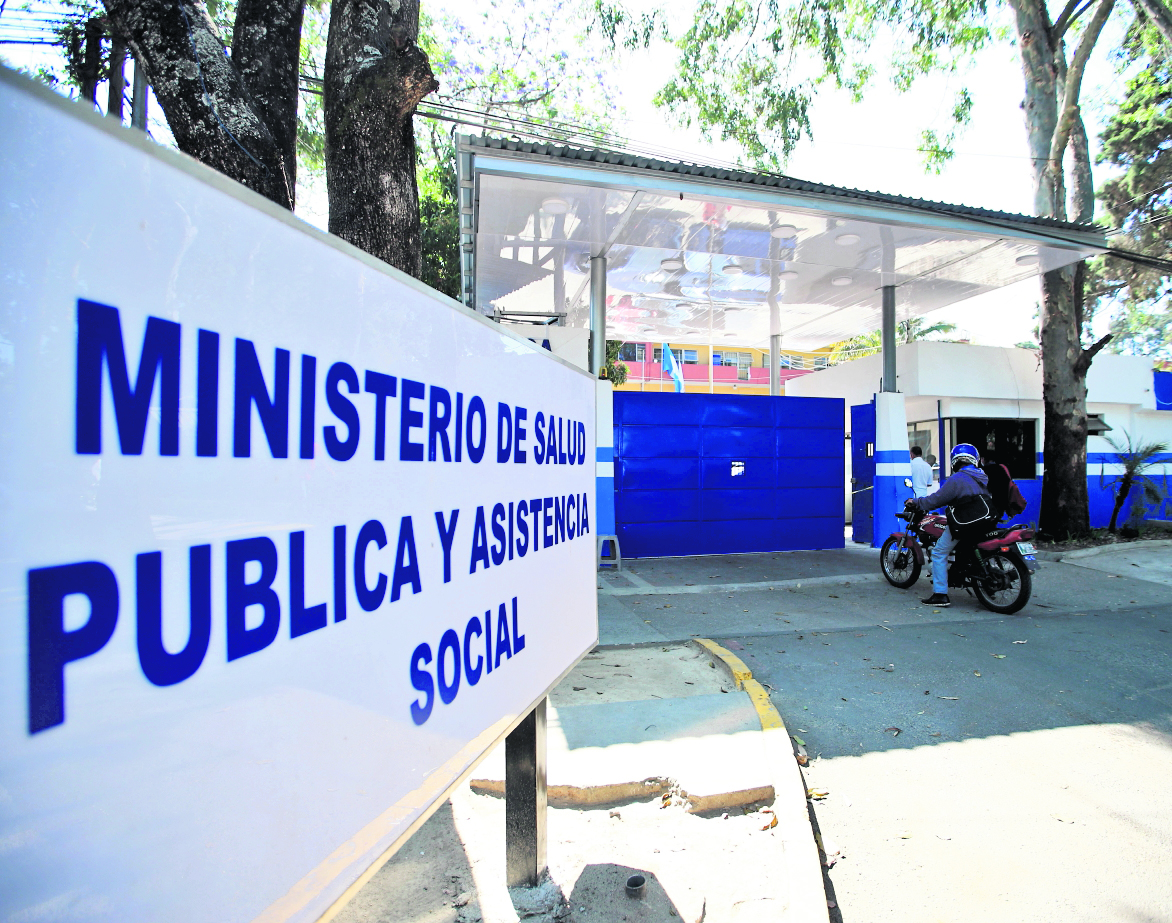
The Ministry of Health received as a loan 125 immunoglobulin roads to address the emergence of Guillain-Barré outbreak last year. (PHOTO FREE PRESS: PL hemeroteca).
On February 12, 2024, the Guatemalan Social Security Institute (IGSS) lent to the Ministry of Health 125 human immunoglobulin vials to serve patients affected by the sprout of Guillain-Barré syndrome. 14 months have passed and the product has not been reinstated.
Health received the medicine in an injectable solution of 10 grams in 200 ml jars, each with an approximate price of Q13 thousand 392, so the total value of the medicine would be Q1 million 674 thousand.
The loan occurred due to the shortage of the drug in the public health system and the urgency of serving patients with the disease, whose cases were detected in a outbreak that began in November 2023 and extended until March 2024.
Neurological disease causes muscle weakness or paralysis, and is a condition present in the country, but the alarm was due to the number of patients diagnosed in a short period and in a very focused area: Suchitepéquez.
While national hospitals maintain existence of human immunoglobulin, the outbreak exhausted the supply in a few days. The demand for the drug shortages the public hospital network, and it was necessary to make a 125 road loan to IGSS.
According to health, the delay in the refund is because the medicine with the specific specifications requested by Social Security has not been obtained.
The portfolio reported on March 1 that it was analyzed to make a centralized purchase of the product with the same characteristics that they received, to be able to reintegrate it.
For that date, the National Hospital Network had 2,326 roads of human immunoglobulin 10 grams injectable solution; However, although there were stocks with different specifications, it did not match that of the product borrowed.
The IGSS sent a letter to the Ministry of Health at the end of March, which indicated that The temporal loan has requirements that must be metand that are supervised by the Comptroller General of Accounts. The deadlines for the return have been extended, according to the document to which Free press He had access.
Meanwhile, twice the IGSS responded that health notified that it carried out the administrative processes to comply with the return.
On April 24 it was reported that both parties held a meeting and that the portfolio is waiting for the product to reintegrate it.
Read also: Hospitals spend Q3.6 million in medication to treat neurological disease
Treatment
The human immunoglobulin It was one of the treatment alternatives to address the cases of Guillain-Barré. The medicine is also used for other pathologies, such as immune purple – when the immune system, by mistake, attacks platelets.
Guillain-Barré syndrome is the most frequent cause of non-traumatic acute flaccid paralysis in the world, according to health. An incidence of between 0.81 and 1.89 per 100,000 inhabitants in adult population is estimated, being a heterogeneous group of diseases in which the peripheral nervous system is damaged by the immune system.
The immunoglobulin dose is calculated according to the weight of each patient. For example, a 70 kilos person may require up to 14 jars of the medication in five days, which is the time that the treatment lasts to stop the progression of the disease and avoid reaching a respiratory failure or other complication.
Outbreak
He First case of Guillain-Barré outbreak It was detected on November 24, 2023 in the IGSS hospital unit in Suchitepéquez. It was a male patient, over 15, who had muscle weakness in legs and/or arms, a characteristic symptom of the condition, which was initially called as acute neurological disease, because there was no certainty of what was happening.
The cases were increasing and, on February 16, 2024, the authorities of the Ministry of Health confirmed that it was the Guillain-Barré syndrome, which is triggered after an infectious process.
It may interest you: Guillain-Barré Syndrome: What is, its symptoms, risk factors and treatment factors
The last report occurred on March 10, 2024, with An accumulated of 87 cases. 80% were recorded in Suchitepéquez, and the most affected municipalities were whosetenango and samayac, with 22% and 14% of cases, respectively. There were also patients in San Bernardino, Mazatenango, Chicacao, San Francisco Zapotitlán, San Lorenzo and Santo Tomás La Unión. Other places were San Andrés Villa Seca, in Retalhuleu, and Tecitán, in Huehuetenango.
There were patients of all ages, but the most impacted age group was 30 to 64 years, with 66% of cases. 64% were men.
Due to the outbreak of the disease, five people died, as reported at that time the Directorate of Epidemiology and Risk Management of the Ministry of Health. The other patients recovered.
The results of research on the origin of the outbreak indicate that there is an obvious relationship with a history of gastrointestinal processes, associated with the consumption of raw foods or in poor conditioncaused by bad manipulation. Analyzed laboratory tests showed the presence of bacteria Campylobacter; However, it cannot be defined that this is the cause of the disease, the Directorate of Epidemiology of Risk Management of the Ministry reported.