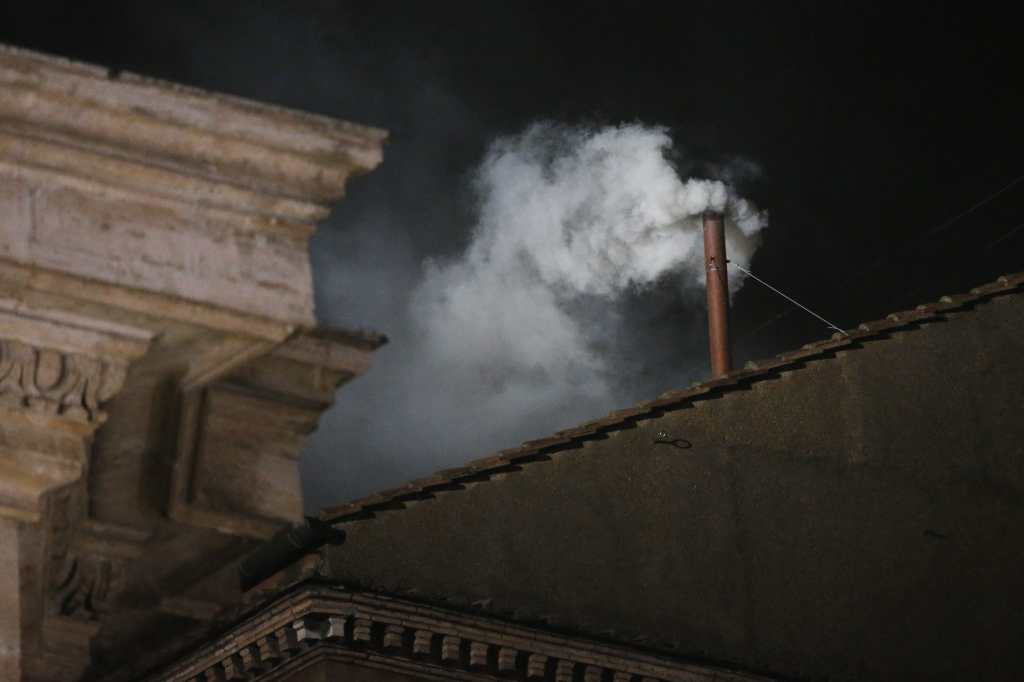
The secret election where the next leader of the Catholic Church will arise already has a date. The Vatican Cardinals College reported that The conclave will be held on May 7 and It will be extended according to the results of each votesince the new Pontiff must get the support of two thirds of the votes to be proclaimed.
The conclave will be held eleven days after the funeral of Pope Francis, who He died on April 21, at 88because of a stroke and heart failure.
As the Apostolic Constitution stipulates Universi Dominici Gregispromulgated by John Paul II in 1996, Cardinal Camarlengo, Kevin Farrell, officially announced the vacancy of the Apostolic Headquarters and the call to the cardinals suitable for choosing and being elected, who must congregate in the Vatican to participate in the secret election.
The session of the conclave, which must traditionally be carried out between 15 and 20 days after the death of the pontiff, extended a few days to allow the cardinals to organize their affairs before entering the Sistine Chapel and start the choice process. From this conclave will arise on the 267th Pontiff in the history of the Catholic Church.
In the midst of speculation and Theories about the possible choice of a “black pope”the analysis of The candidacies of the most influential cardinals And worldwide attention placed in the process, the 135 voters will enter a period of prayer, fasting, isolation and reflection, from which the new church leader will emerge, the new leader of the Church.
Conclave rules: Thus the new Pope is chosen
The papal choice is one of the most important events of the Catholic Church, since it marks a period of change: each Pope gives a different course to the administration of the Vatican and the spiritual leadership of the Church.
Considered a duty, responsibility and an honor, the cardinals under 80 years – approves to vote, as established by ecclesiastical regulations – participate in the conclave, a process that is governed by a strict set of rules designed to protect the secret of the choice and avoid external influences.
Since the fifteenth century, the conclave is characterized by the complete isolation of the cardinals within the designated enclosure, locked up, celebrating up to four daily votes in the Sistine Chapel.
One of the fastest processes was the choice of the predecessor of Pope Francis, in just five voting rounds. In contrast, some elections in history were prolonged for months; Even an election in the thirteenth century extended almost three years, which led Pope Gregory X to establish, in 1274, severe rules, such as confinement and food restriction, to guarantee transparency and speed in the election.
The 2025 conclave process
On May 7, 135 Cardinals – considered princes of the Catholic Church and recognizable for its red capelo – will enter the Sistine Chapel, where the doors will be closed and the choice process will begin.
In the morning, the Cardinals, under the presidency of Giovanni Battista Re and Cardinal Camarlengo, will celebrate a special mass before formal entry into the conclave. Subsequently, the voters will meet in the Paulina chapel to sing the anthem Veni Creator Spiritusinvoking the guide of the Holy Spirit.
When the song is completed, they will enter the Sistine Chapel, where, after the order Extra omnes (“Everyone out!”), Every person outside the conclave will be expelled, leaving only the cardinals, who must take an oath of secret and commitment to act with wisdom.
That first day a single vote will be held. To do this, nine cardinals will be chosen at random: three will act as scrutineers, three will collect the votes and three will verify the count.
During the vote, each cardinal will write on a ballot, in Latin: “I choose as the high pontiff”, followed by the candidate’s name. The vote will be deposited in an urn as it is pronounced: “I witness Christ Lord, who will judge me, that I give my vote to whom, in the presence of God, I think it must be chosen.”
Once the scrutiny is finished, the scrutineers will count the votes to determine if the required majority of two thirds were reached.
If there is no immediate choice
If a consensus is not reached on the first day, from the second up to four daily votes will be held: two in the morning and two in the afternoon. If after three consecutive voting days the election is not achieved, a day of permanent prayer and reflection will be ordered.
If after 33 voting rounds there is still no consensus, there will be a ballot between the two most voted cardinals in the last round.
Once one of the candidates obtains unanimous support or at least the necessary two thirds, it will be proclaimed potato. If he accepts, the chosen one will swear to lead the church, and the traditional white smoke will announce to the world that a new Pontiff has been chosen.