

For a child who is not vaccinated against the measlesone of the most contagious viruses in the world, no classroom, school bus or grocery store is safe. Nine out of ten not vaccinated people That they are exposed to an infected person will contract it, and once the measles is rooted, the virus can damage the lungs, kidneys and brain.
With the fall of vaccination rates in the United States and outbreaks that have caused more than 580 cases and at least two deaths, Health experts expect measles to infect hundreds or even thousands of people throughout the country. Below is explained how measles seizes the body.
In the air
Unlike viruses that require contact between people, measles stay in the air Up to two hours after the carrier has abandoned the space.
A child can inhale droplets that contain the virus in a room where another child, which is infected and may not know, has been studying or playing an hour before. The virus can enter your body through the mucosa of the nose or mouth, or when you rub your eyes.
Inside the body
During the following 24 hours, The virus is rooted Albeaning in the Nasopharynx cells, at the top of the throat, and begins to spread to the lungs.
The propagation
Then, The virus comes into actionmultiplying inside the cells and forming an army for the attack.
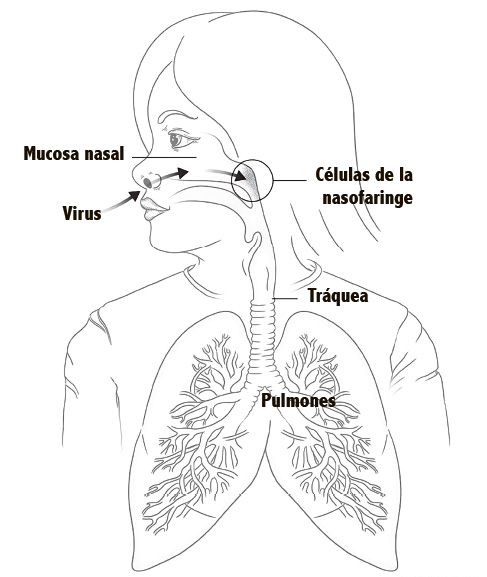
The virus invades the immune cells of the lungs using special proteins to join the receptors of the guest cells and enter them.
Once inside the cell, the Libera RNA virus with instructions to create copies of itself.
The new copies are released, ready to invade new cells and continue multiplying.
In a few days, The virus begins to spread to infect nearby lymphoid tissues. Approximately one week after the initial exposure, infected cells begin to travel to other organs throughout the body. (At this time, the immune system of a vaccinated child would recognize the virus and fight it).
In general, during the replication and spread of the virus, the child does not feel ill. The average incubation period is approximately two weeks, although it can vary from one to three. When the viral load has increased significantly, it begins to infect other cells of the lungs and eyes, which makes the child feel ill.
The symptoms
A couple of weeks after the unaccinated child inhales the droplets, Start feeling bad.
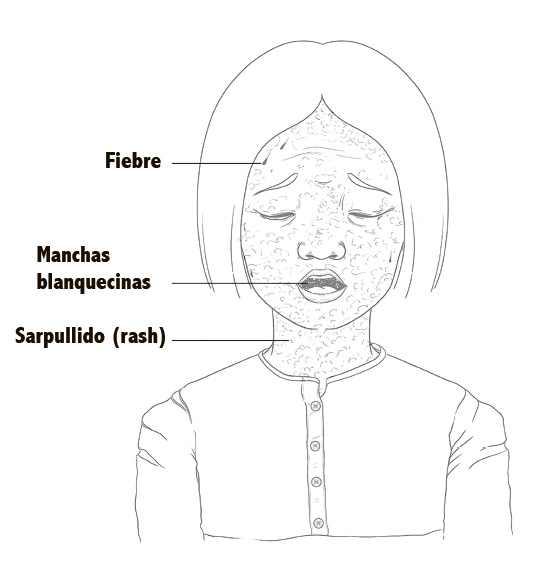
The child can have Fever and symptoms similar to those of flufollowed by whitish spots inside the cheeks and a cutaneous eruption.
Children usually present signs of discomfort and fever, followed by reddish and irritated eyes, nasal cough and congestion as mucous membranes and nostrils become inflamed.
Some children at this stage develop gray -white millimeter protuberances in the internal coating of the cheeks, to the molar area. In some cases, spots go unnoticed or do not appear at all.
Then the characteristic symptom appears: a red cutaneous eruption that begins in the face and extends through the neck, trunk and extremities.
Many of these symptoms should disappear for themselves. The eruption can last up to a weekit is often faded following the same route that appeared. The cough can last up to two weeks after the disease has sent. However, if the fever persists beyond the third or fourth day of the eruption, it is possible that a complication is being developed, and that is when the cases can become dangerous.
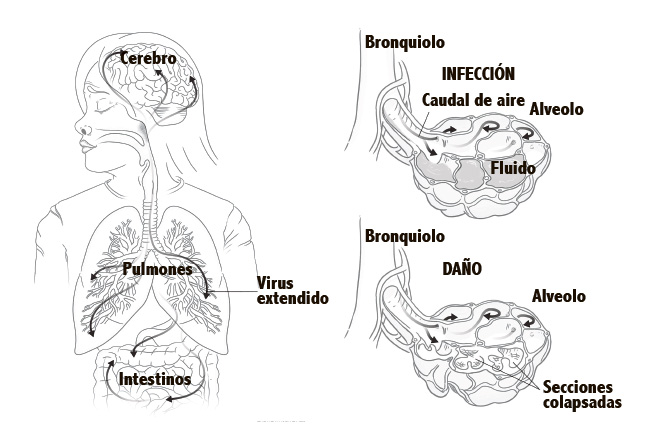
Even when the eruption disappears, infection can spread to lungs and other organs.
Children is usually taken to the hospital after several days with body eruption. The majority have low levels of oxygen, difficulty breathing and needs assisted breathing, according to Summer Davies, which serves children in the Covenant Children’s Lubbock Hospital, Texas, and has been dealing with measles cases since the outbreak began at the end of January.
“Many families are surprised, they say things like: ‘My son was fine and, suddenly, he is no longer,” he said.
That mild disease evolves towards a fever up to 40 or 41 degrees for two or four days. Insufficient fluid intake, throat pain and diarrhea can cause dehydration, which over time can begin to endanger renal function.
Young children run more risk due to their smallest anatomy and their inability to clearly articulate symptoms, according to Lara Johnson, medical director of a group of Covenant hospitals in the area.
Lung infection
Approximately 1 in 20 children with measles will develop pneumoniaan infection in the lungs. Serious cases can be mortal.
The infection damages the small bags of air called alveoli, which reduces respiratory capacity.
Davies said that many children recently admitted to their hospital had cases of pneumonia caused by the measles virus or by a second pathogen that attacked while their immune system was weakened.
The 6 -year -old who died recently of measles in Texas had a case of pneumonia that caused a fluid accumulation in the left lungwhich made it difficult to breathe, according to a video interview with his parents that was published on the Internet. Finally, it was sedated and intubada, but its condition was too serious to survive.
One of the distinctive characteristics of measles is what researchers call “Immune amnesia”, The temporary weakening of the immune system. Measles eliminates the protection that children have acquired against other infections, which leaves them susceptible to other infections for several months or even years.
Inflammation in the brain
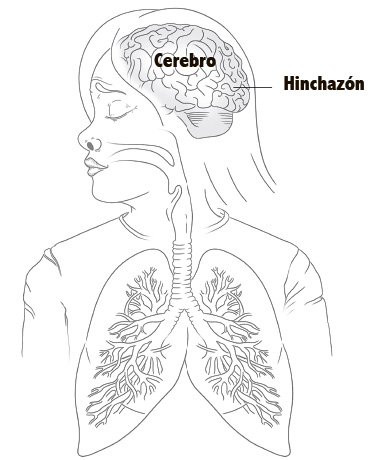
Approximately 1 in 1000 children who contract measles also develop encephalitisor inflammation of brain tissue, which can cause permanent damage.
In babies or children who already have the committed immune system, when the child cannot eliminate the infection, a condition called encephalitis of measles inclusion bodies occurs. It can cause mental changes and seizures, which in most patients lead to coma and death.
Another guy, called subacute sclerosing panencephalitis, is a degenerative condition that can appear until a decade after measles infection. Children often show changes to academic behavior and deterioration, followed by seizures, motor problems such as lack of coordination and balance, and finally death. The mortality rate is close to 95 percent.
Erica Finkelstein-Parker, a mother of Pennsylvania who lost her daughter Emmalee, 8, because of this disease, did not know that the girl had had measles before she adopted her in India when she was little. But one day he realized that Emmalee stumbled and fell, collapsed to the side of the chair and had trouble raising his chin while he ate. The doctors explained that there was no cure. Emmalee died about five months later.
For a child who is not vaccinated against measles, one of the most contagious viruses in the world, no classroom, school bus or grocery store is safe.