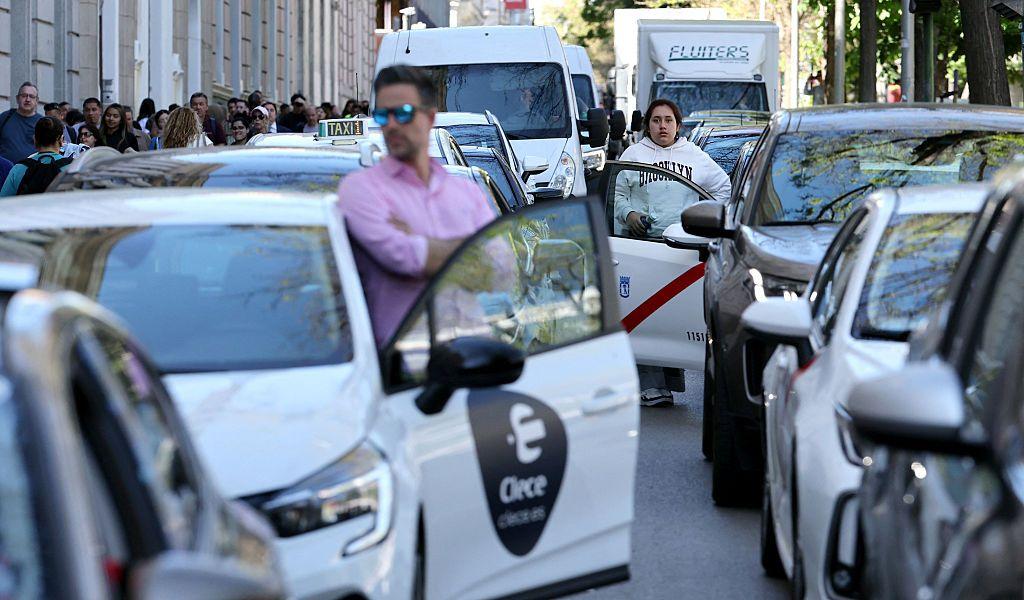
Spain and Portugal lived on Monday the largest blackout in their history, with a massive interruption of the electricity supply.
Millions of people ran out of electricity, the trains and meters stopped working, the traffic lights went out, telephone and internet services were interrupted and numerous daily activities were paralyzed.
While the authorities worked to clarify the causes and restore the service, the data collected in real time give an idea of the scope of the crisis in different areas.
From energy consumption to air traffic, through the demand for gas, internet and telephony, the indicators attest to the severity of the historical blackout.
Blackboards: “National Zero”
At 12:30 in Spain and 11:30 in Portugal, the electric grid of the Iberian Peninsula suffered a generalized collapse.
Red Eléctrica de España (REE) registered a “national zero” – a generalized blackout – in the system, a situation that had never occurred before, as confirmed experts and authorities in energy matters.
Spanish energy consumption happened only in a few minutes of 25,184 to 12,425 megawatts (MW).
Non -peninsular areas of Spain, such as the Balearic and Canary Islands, were not affected by the blackout.

Ree’s real time data show that the national electricity service was slowly recovering throughout the afternoon and night.
Red Eléctrica initially calculated that the complete recovery of the service could take between six and ten hours, although in some areas the replacement was more agile thanks to the support of operators such as the French Network RTE, which contributed 700 megawatts To Spain.
Portugal, whose electricity network imported 33% of its consumption from Spain, saw its demand fall of 8.16 gigawatts (GW) barely 0.6 GWthat is, a disconnection of 93% of its consumption, according to REN (national energy networks).
The southern France also suffered brief interruptions, but restored the service quickly.
The blackout had immediate effects on basic services, from the Internet to gas consumption.
In Madrid, data traffic fell more than half regarding the usual, 588 to 252 GBIT/Saccording to Deutscer Commercial Internet Exchange (DE-CIX) data disseminated by the newspaper El País.
In telephony, the incidents reported in the main operators (Movistar, Orange, Vodafone, Jazztel) were shot from the moment of the electric interruption, said the specialized Downdector website.
Companies reported failures in fixed and mobile internet services, although some critical infrastructure, such as data centers, could continue to operate thanks to backup systems.
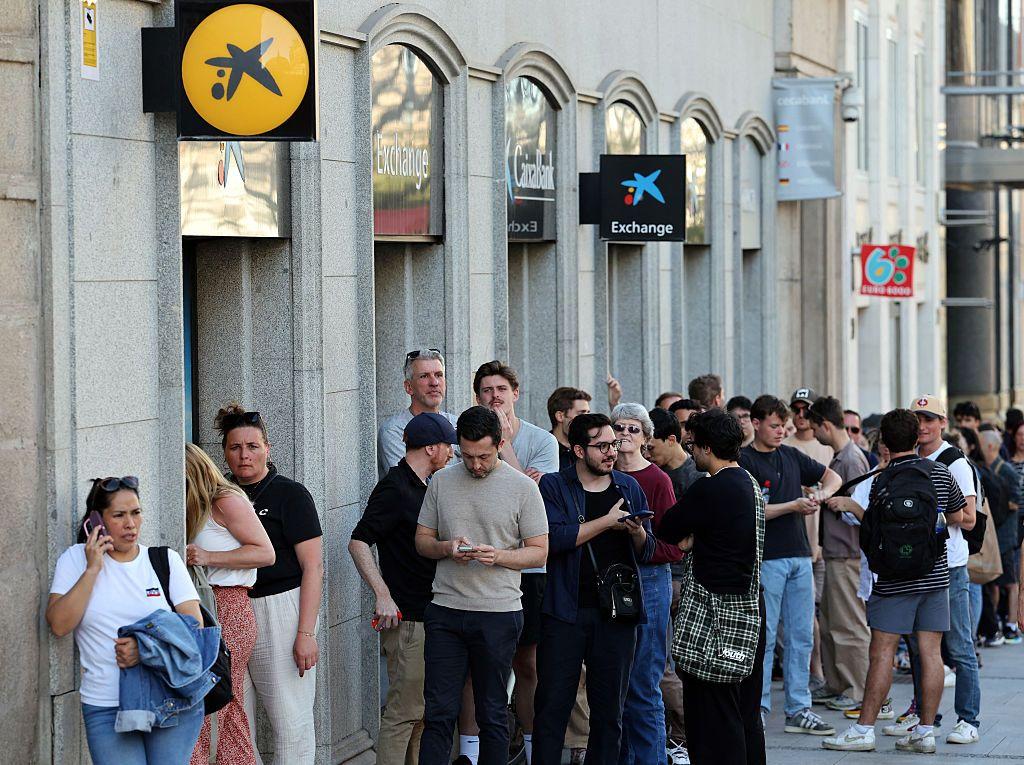
The “Bru what” consultations on Google Trends multiplied for ten in five minutes, reaching their peak shortly after the blackout and turning this word into the most typed of the day with More than 5 million Searches.
The demand for natural gas in Spain also suffered an abrupt fall, of 27 GWh/hour barely 8 GWh/hour coinciding with the electric collapse, according to Enagás data.
Transportation, in figures
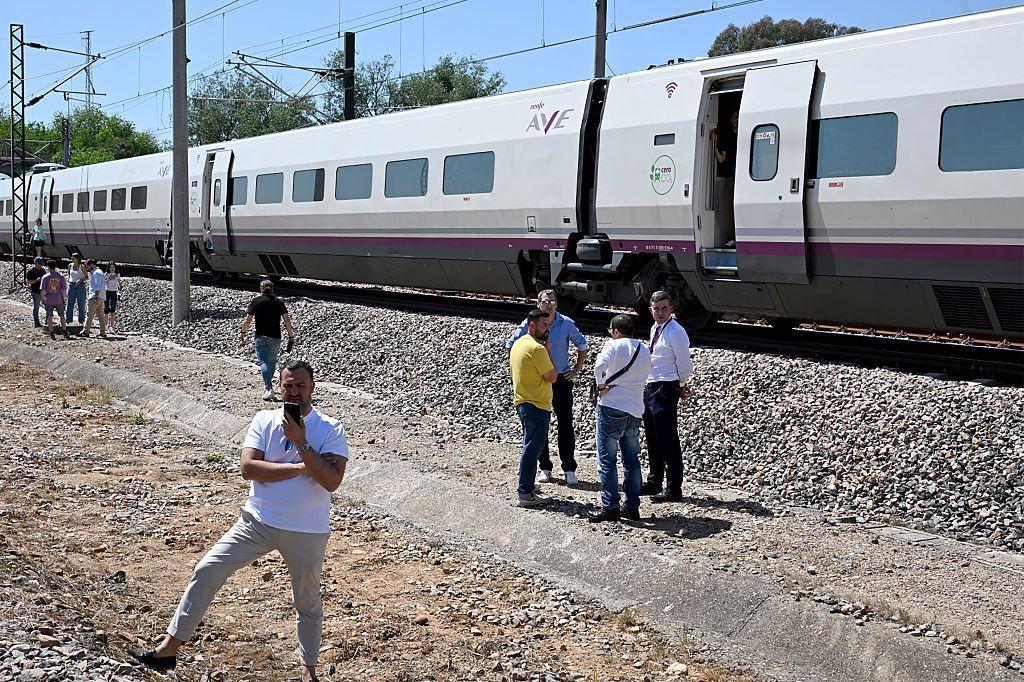
The blackout caused a collapse of rail transport throughout Spain: the company Renfe suspended the circulation of long -distance trains, near and high speed (AVE).
Some 35,000 passengers They were trapped in more than 100 trains and had to be helped by emergency services.
Metro and Barcelona networks also suspended their operations, while the General Directorate of Traffic (DGT) asked to avoid road displacements due to the lack of operational traffic lights.
In addition, interruptions in traffic information systems were recorded, which stopped updating in real time.
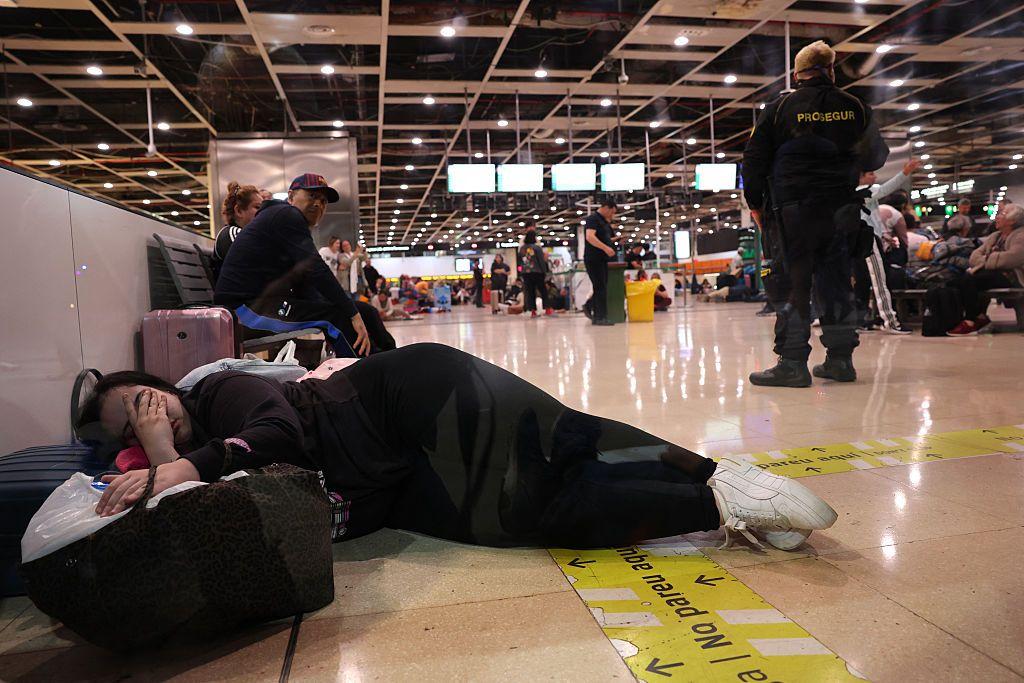
They also occurred, although to a lesser extent, cancellations in air traffic.
In Portugal, 96 flights They were canceled and Lisbon airport was the most affected, with the 29.63% cancellations In the outputs.
In Spain, however, they were only canceled 45 flightswith minor impacts on the airports in Barcelona (2.98%) and Madrid (2.56%), according to AENA data.
Although the specific causes of cancellations were not detailed, airports worked with certain restrictions due to lack of electricity.
President Pedro Sánchez appeared twice to request calm, recommend the minimum use of the Internet and mobile telephony, and reduce displacements.
He explained that the causes of the blackout were still investigated, without ruling out any hypotheses.
In Portugal, Ren suggested that the cut originated from “an unusual atmospheric phenomenon” related to “extreme temperature variations” that caused “induced atmospheric vibration” in very high voltage lines (400 kV), a phenomenon that could have generated anomal oscillations and the collapse of the electrical system.
This Monday’s blackout is described by experts and authorities as an unprecedented event for its extension and simultaneous impact in all vital sectors: energy, transport, telecommunications and basic services.