

Guatemala has innovated its exportable offer in its preparations and frozen and has been incorporating more options.
Although the authorization is waiting for the fresh avocado produced in Guatemala to be imported in the United States, it is already exported to that pulp or prepared country.
However, the largest buyer of the volume of pulp and guacamol produced in Guatemala is currently Chile, according to Josué Soto Girón, general manager of the Conyers plant, commenting on the markets to which they are directed.
The firm has three main product lines: avocado pulp, guacamol and avocado as a mature fruit. One of its innovations consists of the bites segment (“pieces or bite”), such as bananas slices bathed in chocolate, which they call “Banana Bites”, and in development are pieces of mango and strawberries – frozen environment and with chocolate coverage – among other products.
Pulp and guacamol are natural products that have a differentiating process and consists of the high pressure process or High Pressure Processing (HPP), with which there is no need to use preservatives, Soto explained.
“That is a differentiating plus by not having preservative,” and this is achieved with that process that allows life time to prolong above a year, without adding preservatives if it remains packed and frozen, he added.
In the segment of manufactured products, the first or original avocado pulp, whose production began 10 years ago, and emerged from the need to take advantage of the fruit that is not exported fresh, and then the guacamol or pulp prepared based on various recipes was incorporated.
The plant directed by Soto is located in Sumpango, Sacatepéquez. The firm handles the trademark Highland Fresh Foodand belongs to the Palo Blanco group. In that group there are several farms that provide them with fruit as raw material for pulp and guacamol, although there are also independent producers.
To form their offer, both national and exportable, develop their products through an area of research and, together with the area of quality and production, are creating, testing and developing the recipes, as well as adapting them to the market or the requirement of the client to which they are intended.
They contemplate at least three phases: the product development process, validation with customers, and the procedures and requirements – as the sanitary record, licenses and legal issues. Together, it takes them about a year to complete the process, from the idea to the finished product, which includes the developments in machinery and line configuration.
For example, recipes are developed, ingredients and profiles are modified, sensory panels are made to reach the profile of the product that the customer expects, Soto said.
Guacamol arose not only to take advantage of the raw material in the group, but to be able to deliver a finished product to the customer; The idea is to generate value to the raw material, the executive said.
Destinations
From Guacamol production, 20% is in the national market and the remaining 80% is exported. Currently, they dispatch around 120 containers a year of finished avocado product.
Of the total export, 50% is sent to Chile, a country that has the highest per capita avocado consumption in the world. It is followed by the United States, where 30% of the pulp and exported guacamol is sent, and then there are Europe and the market of the isthmus (such as Panama and Costa Rica).
The biggest volume sent is avocado pulp, but it is also exported prepared. In a whole of the products they have 87 recipes, both of those that are already offered and of those that are being developed. Of these, only avocado are 56 different recipes.
The pulp is packed with the same technology, which allows the packaging, the product to keep its flavor as if an avocado is opened, Soto added. “Many customers receive the pulp and they themselves add the ingredients they consider for their recipes and dishes,” said the executive.
Apart is the segment with recipes, with various ingredients according to the market or the client that is sent.
The base is the pulp, but mentioned as an example the one they have called “Mint”, which contains peppermint and gives it a touch of mint, in addition to that of Guacamol that contains oregano, and the “Western Style”, among whose vegetable ingredients it carries chili pepper.
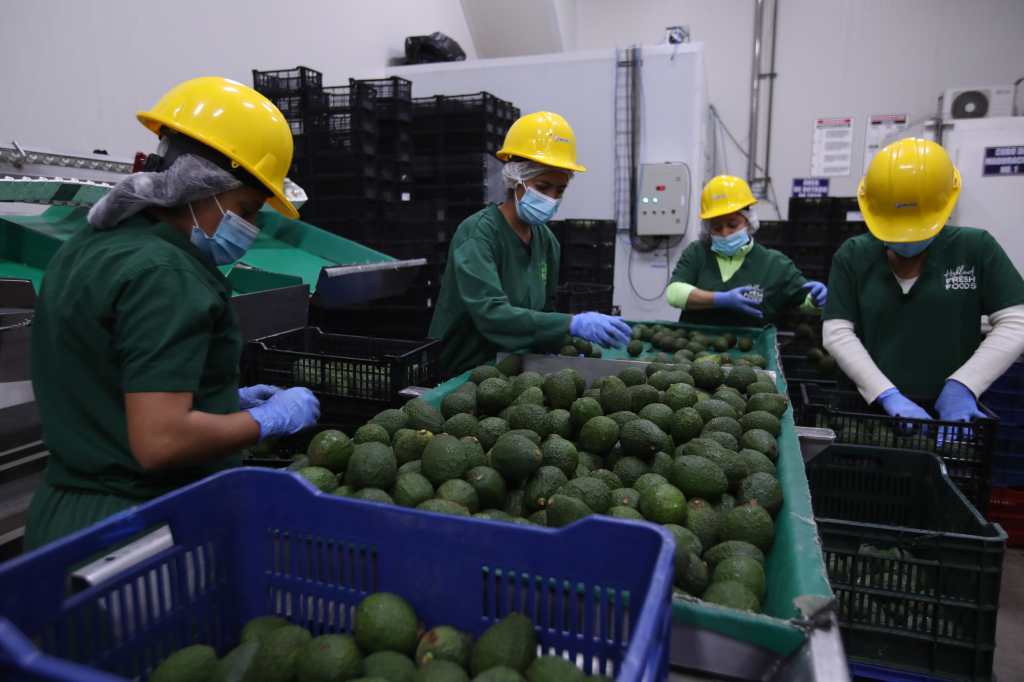
The process
It is a high pressure system, which takes around 84 thousand psi (pounds per square inch) with HPP technology, which refers to cold pasteurization. This pressure allows you to eliminate all the microorganisms found in the product and reduce microbiological growth, which extends life time.
If it remains frozen and in the original packaging, the life time is one year; When opening the packaging, the oxidation time at room temperature is around five hours; And, if it is refrigerated (at a temperature of between 4 to 8 degrees Celsius, but not frozen or uncovered), it can last between 15 and 20 days.
The United States began to export the pulp and guacamol four years ago, and work with customers to develop the recipes they expect. They are sent show and decide if any change is required to reach the final product.
The US market is very attractive and has advantages such as the short distance; In three days the product arrives, which facilitates the cold days, an aspect that in frozen or refrigerated products is decisive, Soto explained.
They are now expectation, because of the new tariffs established by the United States for Guatemala products. They are currently in the process of negotiating new contracts to establish who absorbs that part of the tax, since it does directly affect the profitability or price of the product.
The company consulted generates around 150 to 200 jobs, in high season, and about 30 indirect jobs in the packaging and processes. The country is waiting for the United States authorities to approve the Work Operational Plan (POT), in order to start the processes for export Hass Avocato En Fruut.
Pulp and handle pieces
Other products that are exported are pulp and mango pieces. This has advanced in the area of the product added value chain, to take advantage of the fruits in good condition, but that due to their cosmetic conditions – as color, size or presence of some scar or stain – the fresh market does not demand them. Of the total mango produced for export, between 15% and 25% work as a frozen mango and pulp.
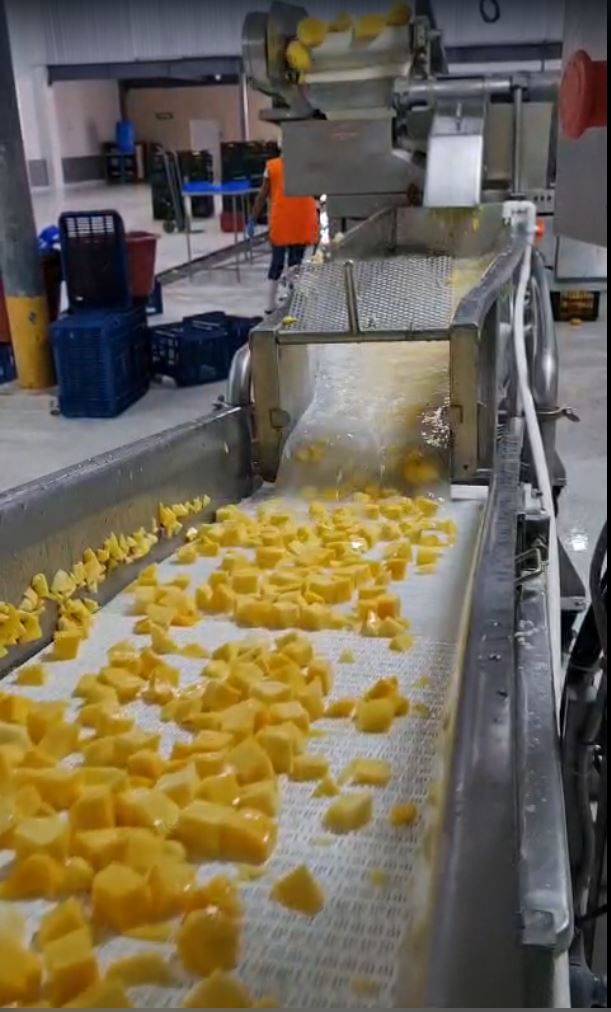
In 2019, the frozen mango project began in pieces, and from that year to this date an average growth of 15% per year is reported. This entails a maturation process: their peel is removed and, of the part known as the slips (cheeks) of the handle, cubes known as chunks (pieces) are cut, explains Luis Utrera, administrative manager of Agroindustrias of the tropics, SA and president of the Mango Committee, assigned to the agricultural sector of AGEXPOR.
Trocitos freeze in a process called IQF (individual quick freezing). And in one of the phases, on average of 12 minutes, they pass from 28 to 32 degrees Celsius atmosphere to -22, and then pass to the packaging phase. This gives them a useful life of two years frozen; And yes, the product is fresh or not frozen, 21 days.
As for export, they report that the entrance door to the European Union is Holland, but the product arrives in Germany, the United Kingdom, Spain and other countries. They also export to the United States.
The mango pulp project began in 2016, occurs mainly with the Ataulfo variety. It is exported, but is also sued in the national market.
They are also in the test phase for production possibilities, that is, the mango slice with a stick to return Chocomango, among other plans. Utrera said that in Guatemala there are four mango export companies, of which an export frozen mango through its affiliate Fresh and Frozen Foods, SA o Frozen products, SA frozen mango is used in other countries for fruit salads, ice cream shop, drinks such as smoothies and smoothies, pastry and elaboration of juices and nectars.
Of the annual frozen mango production, 45% is exported and the other 55% is sold in Guatemala. The pulp is also exported, but most of it is sold in the country.
Other exporting supply products
Apart from the avocado and guacamol pulp, the country exports to several destinations other products, such as mango pulp and pieces of this fruit and frozen bananas. The frozen bananas already has enough demand, especially in the United States, where it is used to prepare smoothies and other drinks.
Josué Soto, general manager of Conyers, explained that his company is already exporting bananas slices bathed in chocolate, which the Chocobanans remember and those called “Banana Bites”. In the Bites Products segment (small portions or pieces of food to be consumed in a single bite) they are mango development in pieces and strawberries, both frozen and bathed in chocolate.
The banana puree is developing with a view to sending it to Canada.
Another export product is the prefrito banana, which is also offered in Guatemala, mainly demanded by restaurants. They have other individual presentations for detailed sales, aimed at the final consumer.
Subscriber content
There are other companies in the country, such as preserves and frozen, Sa (Coco SA) that produce preserves of several fruits such as peach, guava, jocote, green mango, Nance; In frozen they have joocote, green mango, Nance, and as pulp are mango, nance and mamey, according to data from their electronic page.
In 2024, the exported amount of fresh, dry or frozen fruits reached US $ 1,593.9 million according to AGEXPORT data. In detail, US $ 430.6 million of various fruits and US $ 966.1 million bananas, as well as US $ 184.3 million banana, refer to data from the Bank of Guatemala. Apart from fruit preparations with US $ 134.8 million, according to figures from that institution.