
Scenery
The Huipil brocades of the Mayan clothing suit of Nebaj, Quiché, which is part of the “Mayan textile tradition” series and which is published in Magazine D, represent characters from a romantic legend of that municipality.

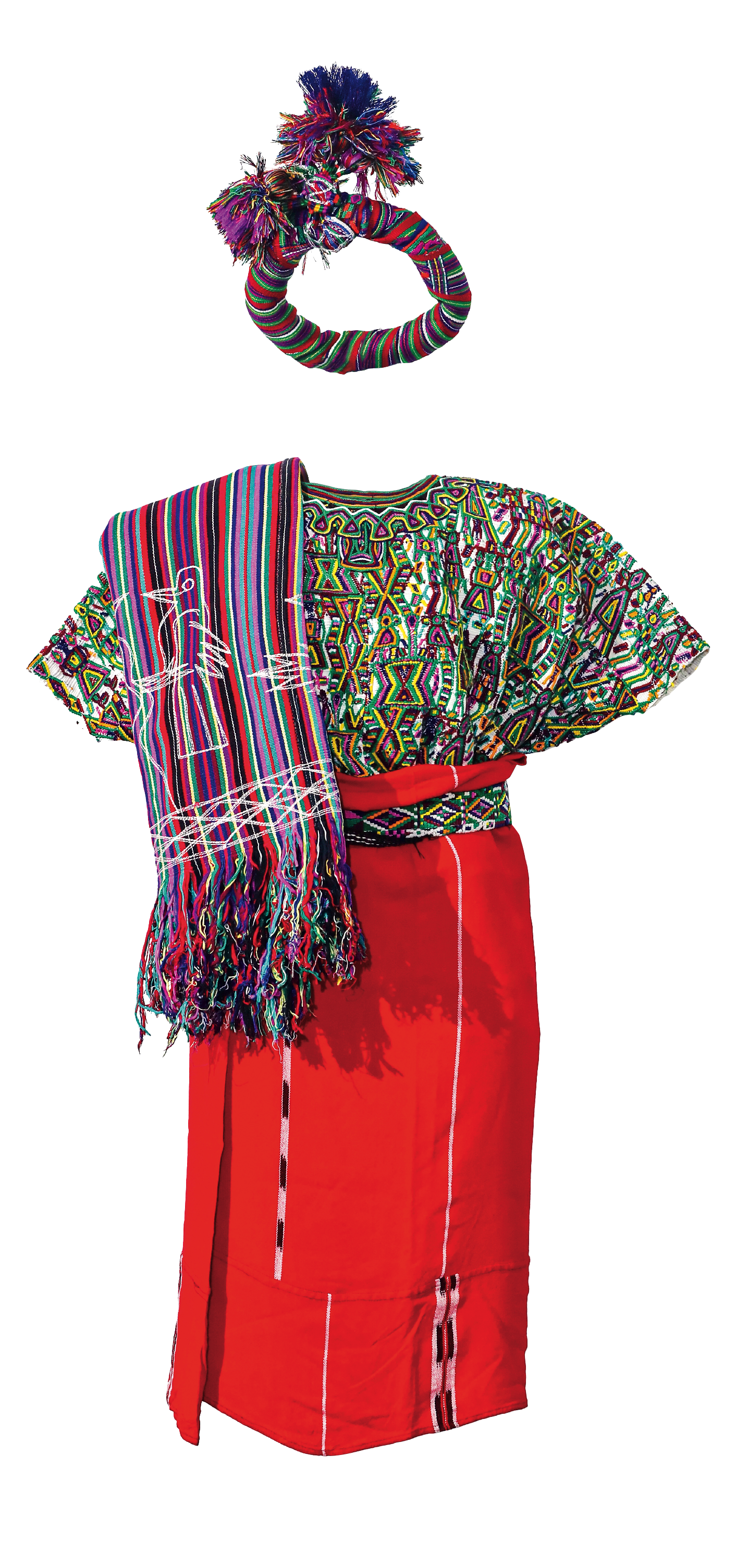
Nebaj’s Mayan clothing suit, Quiché is part of the series “Mayan Textile Tradition” that is published in Magazine D, (Photo Press Libre, Juan Diego González)
Most of the garments in this suit are woven in waist loom, with the exception of the cut, which is made in looming and is red. It has color change designs in the plot that, in this case, is received as vertical lines, when the skirt is set.
The daily use huipil, acrylic fibers, It is composed of two canvases, both richly broken with supplementary plots.
Its neck presents a chain strip application, handmade with the crochet technique, which merges with the figures broken into similar colors. The dog, which is carried on the shoulder or wrapped around the torso, exhibits geometric designs, zoomorphs and florals made by machine. The headdress stands out for its striking pompones at each of its ends.

Designs
- Linguistic community: Ixil
- Daily use suit
The Huipil Broocados They represent characters from the Legend of Nebaj, who tells the story of a princess in love with a young man with a lower lineage. His father, the king, tried to spy with a flea, a louse and, finally, a bird, who, recognizing the love of the couple, helped them escape on him as a donkey.
This narrative is reflected in Huipil’s designs, highlighting figures like the protective bird and elements that evoke the trip of lovers.
This is one of the costumes that belong to The collection of IXCHEL Museum of the indigenous suit, whose support for the publication of this series is fundamental, especially that of its director and curator, Violeta Gutiérrez.
- The information on Mayan clothing costumes presented in this space depends on the temporality and context of the documents and people consulted by the Ixchel Museum.
- In the Mayan textile tradition, elements such as trends in each community influence the personal taste of the bearers and creators of this tradition. In some cases, the data is scarce or vague.