

Your hips are the engine of your body. They depend on them to jump, run, collect the shopping bags and enter and leave the car. But if your hips or muscles that surround them are tense or weak, other parts of your body – from the ankles to the lumbar area – have to intervene to support the load. That imbalance can make even the simplest activities difficult or painful.
“It’s like driving a car with the emergency brake on,” said Ryan Matisko, a New York physiotherapist. This can cause inefficient movements and a greater risk of injuries.
Sitting for long periods of time is a common cause of weakness in the hips. In that position, the muscles of the buttocks are turned off, the blood flow is restricted and the hip flexors are shortened and tense. Mobility exercises can help counteract that rigidity and tension carrying the hip joint for all its amplitude of movement, said Nicole Thompson, personal trainer and instructor of fitness in San Diego group.
To maintain the health of the hip for a long time, you must also strengthen the muscles that move it, such as buttocks, hamstrings, hip flexors and adductors. “Mobility without strength is like a bridge without support beams,” said Matisko.
The routine that we are going to explain includes a combination of mobility exercises and hip strength. Practicing it with constancy can help you move with more efficiency in daily life and to pay better in training, said Thompson.
Summary
Time: 15 minutes
Intensity: Average
What you will need
- A foam roller or a tennis ball
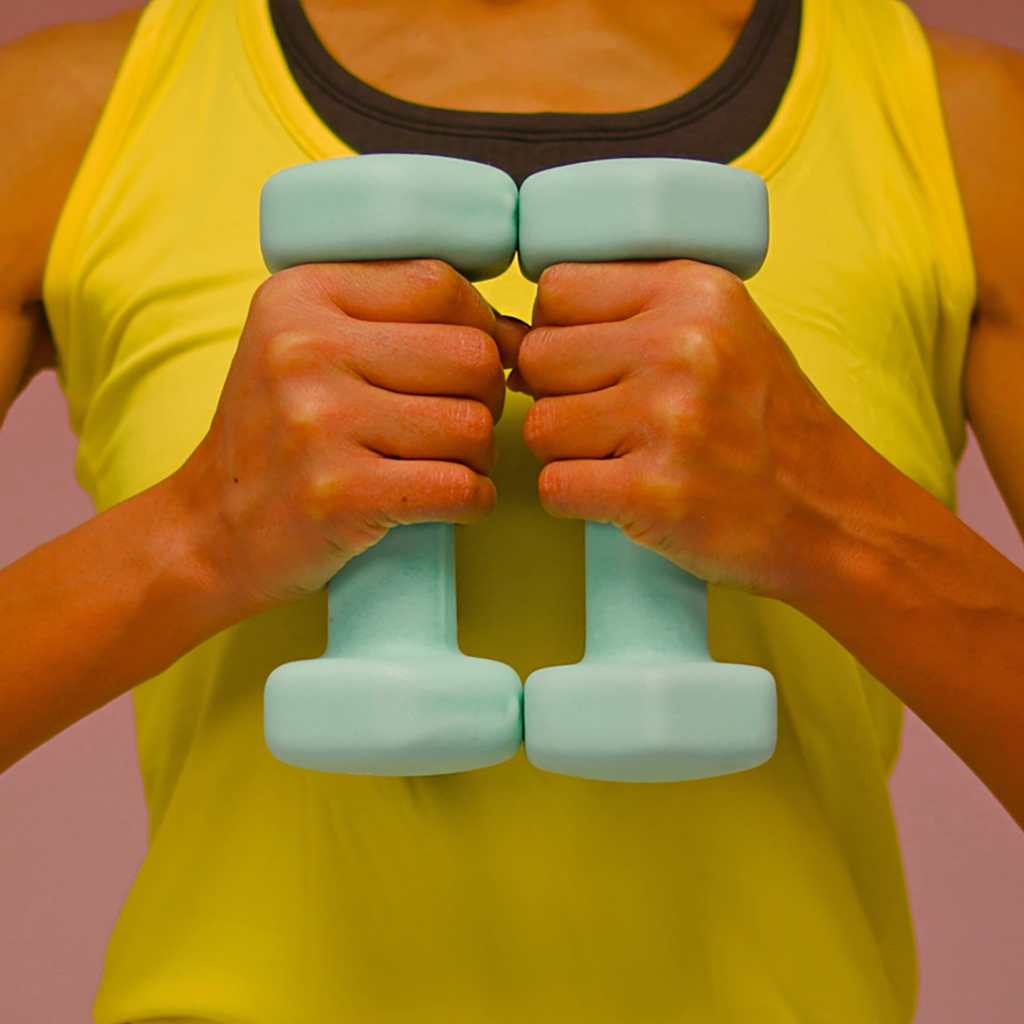
- A pair of light dumbbells, from 2.2 to 6.8 kilograms (optional)
- A mini resistance band (optional)
How often
Many people could benefit from doing these exercises daily, Matisko said. If you don’t have time to do all the routine, choose one or two exercises to do them when you have time. You can also do this routine as dynamic warming for another exercise.
Hip control joint movement
Repetitions: Two series of five repetitions per side
Start cats with stretched and separated arms to the width of the shoulders. Your fingers should point forward and your shoulders must be thrown back and down. The knees must be close to each other and directly under the hips.
Contract the trunk and lift the right knee of the ground. Slowly the knee approaches the right elbow and then take it towards the side, moving it from the body everything you can without bending your elbow or leaning your torso towards the opposite side. It starts to wear the knee back, turning the hip in. Slowly low the knee to the initial position and perform the movement in reverse. Bring the knee down and to the knee in a deep flexion, then return to the initial position and change his leg.
For this movement to be effective, the rest of the body must remain completely motionless while toured the leg.
Hip rotations 90/90
Repetitions: A series of 10 in each direction (alternating the sides)
Start in sitting position and create 90 degree angles with your legs on the floor in front of you. Place your hands on the floor behind you, slightly incline the torso back. Raise your knees to the center and then let them fall to the other side. Then take them back to the other side, moving them to one side and another as if they were windshield wiper. When you feel comfortable with this movement, you can do the deepest stretch putting your hands in front of the chest.
Try not to turn the tors too much, so that the movement comes mainly from the hips.
Hip displacement in lateral recumbency
Repetitions: Two to three series of eight to 10 repetitions on each side
Mush on the right side with both knees bent at an angle of 90 degrees in front of you. He rests his head on the right arm. Place a foam roller or a ball between your knees. Keeping your legs flexed at right angles and pushing your right knee to the floor, slide your left knee back as much as you can. Keep the upper body still throughout the movement. Pushing down while you carry your knee back, so you feel a stretch in the left buttock and in the inner face of the thigh. Then slide the left knee forward everything you can. Repeat the movement on the other side.

Lateral stake
Repetitions: Two to three series of eight to 10 repetitions on each side
Stand with your feet separated to the width of the hips. Take a big step to the left and bend the left knee at right angles while sending your hips back. The right leg must remain straight. Most of your weight must be on the flexed leg. Press with the left leg to boost the hips up and return to the initial position.
You can make this movement more difficult holding a dumbbell in the chest or a dumbbell in each hand.
Romanian dead weight
Repetitions: Two to three series of eight to 10 repetitions
Stand with your feet separated to the width of the hips and slightly flexed knees. Place your hands on the thighs. Flexion begins by pushing your hips back everything you can, allowing your hands to slide down your legs. Fix the look at a floor of the floor about 60 cm in front of you to avoid forcing the neck, and keep your back straight while the torso moves forward. Continue flexing until your hands are in half of the pimples and feel a stretch in the hamstrings. Pause and tighten the buttocks while standing up.
Once you can perform this movement with the appropriate posture using your body weight, you can add resistance by holding a light dumbbell in each hand.
Buttock bridge
Repetitions: Two to three series of eight to 10 repetitions
Start lying on your back with your knees flexed and your feet resting on the ground and separated to the width of your hips. The arms must be on the sides with the palms on the ground. Contract the trunk, press the heels against the ground and start lifting your hips towards the ceiling. Continue pressing your hips up, as high as you can, keeping the shoulder blades on the floor. Pause and squeeze the buttocks while they are raised before slowly down again.
To make it more difficult, try the buttock bridges with one leg, lifting one leg from the ground and concentrating on preventing the hips from leaning towards the lifted leg. You can add resistance by placing a minibanda around the thighs, just above the knees, and maintaining the tension throughout the movement, or holding a dumbbell on the pelvis.