

For motorcycle lovers in Sweden, Harley-Davidson is the most coveted brand on roads. The Jack Daniel’s whiskey shines in the British pub bars. In France, Levi’s jeans are the definition of style.
But in the tumult of the commercial war of the president of the United States, Donald Trump, with Europe, many European consumers are beginning to avoid US products and services, in what seems to be a decisive and potentially prolonged change to stop acquiring US assets, according to a new evaluation of the European Central Bank.
In April, Trump imposed a 10 percent general tariff on United States business partners, and threatened “reciprocal tariffs” to many of them, including the European Union. Companies like Tesla and McDonald’s are seeing how the “made in the United States” moves European customers.
“Commercial tariffs recently imposed by the United States to European products are causing European consumers to think twice before putting something in their purchase cart,” the European Central Bank wrote in a blog post about their research about consumer behavior. “Consumers are very willing to actively move away from US products and services.”
The Europeans had already started trying boycots to American products, such as the Heinz ketchup and Lay’s fries, shortly after Trump assumed the position. His threats to seize Greenland, part of Denmark, encouraged the Danes to organize campaigns not to make purchases on Facebook. In Sweden, Tesla owners hit “shame” prints in their cars to distance themselves from Elon Musk, the executive director of Tesla, who is one of Trump’s main advisors.
However, the dismay of Europeans for the treatment that Trump gives to countries that are allies of the United States has been intensified as Trump has been modifying world trade with pronounced global tariffs, according to the Central Bank.
Trump especially pointed to the European Union, which he referred to as “very, very bad with us” for not buying more from the United States, and threatened the block with a “reciprocal” tariff of 20 percent last month. Those words baffled many Europeans and made the leaders of the European Union nervous, who retaliated with a 25 percent rate on many US products.
Both parts gave themselves a temporary truce after Trump sharply gave one step back and postpon the tariffs to summer. But the 10 percent basic tariff is still in force, and it is easy for a transatlantic commercial war to explode again.
And even if a commercial agreement is reached, the new suspicion of Europe towards its old ally will not easily dissipate. The study of the European Central Bank concluded that even if a tax of only 5 percent was applied to US products sold in Europe, Europeans would incline to reject them.
What is new, said the Central Bank, is the “preference” of European consumers “to totally move away from US products and brands,” regardless of the cost. This happened even in homes that could support the weight of higher prices.
“Although more expensive American products and services could be allowed, they consciously chose alternatives,” the bank said. “This suggests that consumer reactions may not be only a temporary response to tariffs, but indicate a possible long -term structural change in consumer preferences, moving away from US products and brands.”
In Germany and Italy, developers have created applications that scan food and clothing for those who want to make sure they are not buying American products. The best application, Brandsnap, even suggests European alternatives.
In a French Facebook channel called “Boycott USA!”, Which has 31,000 members, people boast of buying Adidas, a German brand, instead of Nike and New Balance, and publishes stories about how to avoid traveling to the United States.
In a Danish Facebook group with 95,000 members, people try to help each other to find out whether products such as razor blades Gillette Mach 3 or the Schweppe refreshment come from the United States. A Swedish campaign promotes alternatives to Airbnb and asks for a European boycott to finishing platforms for a week in May.
Europeans have also published on the Internet that have begun to cancel their subscriptions to American giants of the broad broadcast, such as Netflix, Disney+ and Amazon Prime Video.
Some consumers who have boycotted Amazon have lamented on the Internet that the delivery of other electronic commerce platforms in their countries is slower or less reliable, but claim that they will maintain their position.
Millions of people continue to buy US products and services worldwide, but US companies and investors closely monitor international markets in search of signs of an antiestadounidense feeling related to Trump policies.
In Europe, Tesla’s sales continued to descend sharply in April, as the data showed, including a collapse of 81 percent in Sweden compared to the previous year, while the protests against Musk’s political opinions were maintained.
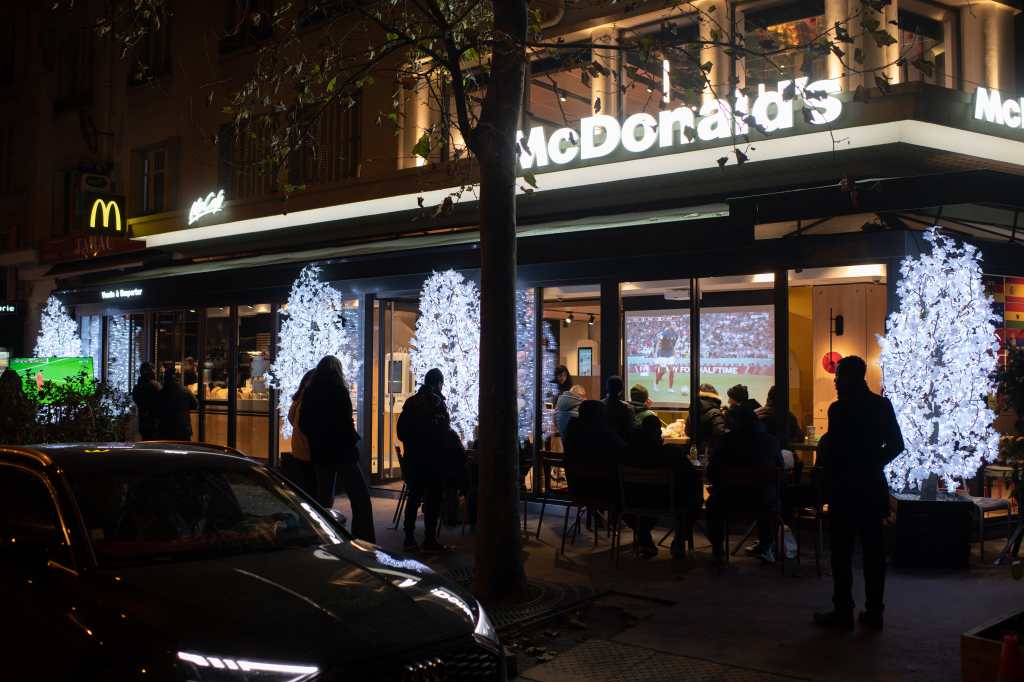
And McDonald’s said he was observing increasingly negative attitudes towards American brands abroad, especially in northern Europe and Canada.
International consumers “are going to reduce their purchases from American brands, and we have observed a rebound in the fee uniestadounidense,” said the executive director of the Hamburguerías chain, Chris Kempczinski, in a call with analysts last week.
The McDonald’s brand does not seem to have yet suffered: sales in the same establishments in Canada and Europe fell only 1 percent in the first quarter compared to the previous year. But there is an “increase of between 8 and 10 points in the anti -state feeling,” he said.