

Astrophysics pioneer in Guatemala, Rodrigo Sacahui has been awarded for his studies on high energy phenomena, which position the country as a regional reference in the science of the universe.
The first award -winning astrophysicist in the country has been called Guatemala to the international sphere with its research on active galaxies, gamma rays and high -energy emissions.
It is the first Guatemalan resident in the member country of the International Astronomical Union and the only one recognized with The 2025 Research Heroes Awardgranted by the scientific publisher Wiley.
His work, done from Guatemala, seeks to decipher the most extreme phenomena of the universe, based on Einstein’s relativistic physics.
How was you interested in astrophysics?
My interest was born at the diversified level, during the Fundamental Physics courses. They suffered, but they were also enjoyed. At that time, with limited Internet access, I found a magazine of the International Astronomical Union.
I was excited to know that there was a global astronomer community. Today I have the honor of being the only Guatemalan member of that organization.
I studied physics applied at the USAC and later I studied a master’s degree and a doctorate in astrophysics at UNAM, where I specialized in high energy astrophysics. Then I did a postdoctoral stay at the National Institute of Espaciais in Brazil.
Since 2016, I am a teacher at the School of Physical and Mathematical Sciences of the USAC. Making science in Guatemala is difficult: here you have to chop stone. But that is also an impulse to continue discovering.
What is your scientific work?
I specialize in modeling star explosions, that is, studying how stars die and what physical data – masa, density, energy – can be deduced from those events. I also invest active galaxies, which emit energy for thousands of years and still represent great challenges for science.
One of my achievements was a 2023 publication that was recently recognized as One of the most read in Astronomische Nachrichten magazine. I also made the first scientific publication of the School of Physical and Mathematical Sciences of the USAC, where I maintain a constant academic production.
Recognition of Astronomische Nachrichten to be one of the most read scientific articles of its season .. (Photo: Free Press /Rodrigo Sacahui)
In 2025 he was awarded the International Award Heroes of the 2025 Research of the American Scientific Editorial Wiley, in recognition of his work in that field, in recognition of his contributions, studies on the correlation between X -rays and Gamma Tev rays in Los Blazares del Hbl rays stand out.
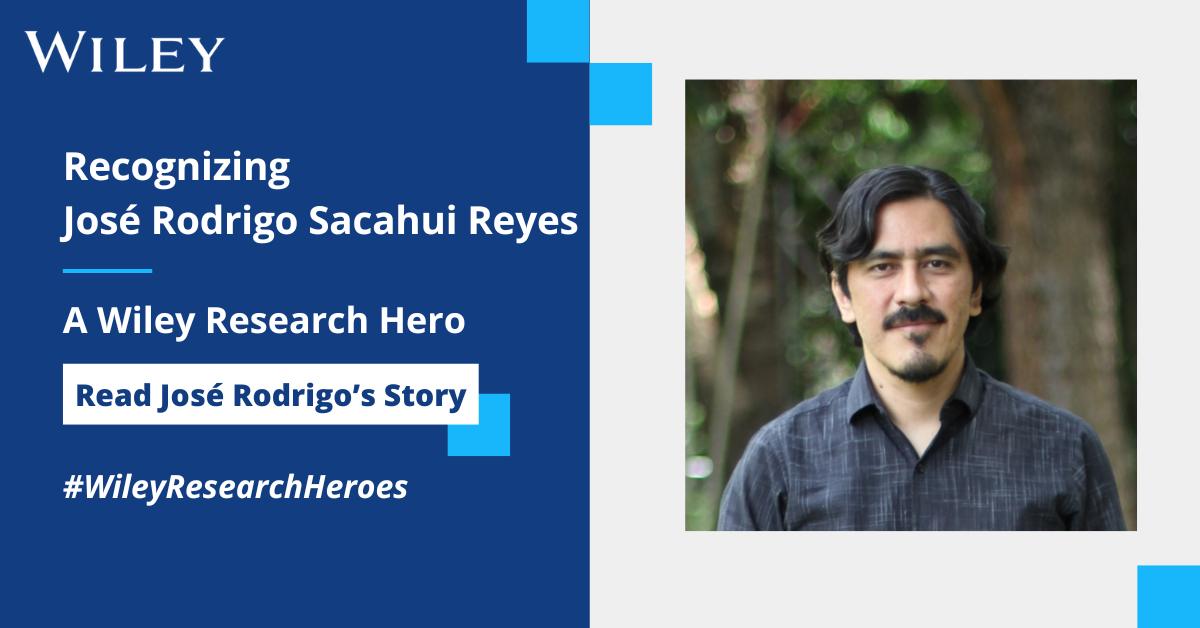
Hero Recognition of Wiley 2025 research for its contributions to astrophysics worldwide. (Photo: Free Press /Rodrigo Sacahui)
Sacahui has contributions in research articles such as “Mirax sensitivity for gamma rays.” With these works, he has marked a precedent in international astrophysics and has seated basis in this discipline nationwide.
Study on active galaxies
Sacahui’s work is based on the analysis of active galaxies, a special type whose nucleus houses supermasive black holes in the process of accretion; that is, absorbing matter.
This phenomenon generates intense energy emissions that can be observed from millions of light years away. Through physical models, Sacahui studies how these emissions occur, the amount of matter that is devoured and, in some cases, the possible existence of more than one black hole in the galactic center.
How has physics evolved in Guatemala?
When I entered the race, we were two students. Today the groups exceed 30, and all graduates have employment. In addition, physics already has a presence in institutions such as Insivumeh.
Guatemala is now part of a regional research consortium funded by the European Union. That participation opens new doors for the country’s scientific development. We have evolved, and we have done it for good.
Why did you decide to return to the country when you could stay abroad?
My return was due to two fundamental reasons: the commitment to the transformation of the academic environment in Guatemala and my family. My parents were university teachers and, while living outside, I lost my mother tragically. That reinforced my desire to be close to mine.
Social responsibility also weighed. I remember that my doctoral advisor told me: “If you don’t, the Guatemalans, who will do it?” That phrase marked me.
Since then, together with colleagues, we work to strengthen scientific training in the country. At first it was like chopping stone with plastic knife, but, thanks to collective work and international collaboration, little by little the panorama has been changing.
What have been the biggest challenges to do science from Guatemala?
The main challenge is academic isolation. In Guatemala there is no consolidated scientific ecosystem; We do not have who to consult a question as it can be done in large research centers.
Nor do we have the infrastructure or the sustained support that is needed to develop science at the highest level.
However, the country has human talent. Formation in physics is solid and those who go abroad usually highlight. The great challenge is now to create conditions so that they can return and contribute from here.
What is the impact that Guatemala has an internationally recognized scientist?
I think it generates visibility. It shows that from Guatemala you can do quality science. It also arouses interest in the country and attracts researchers who want to collaborate.
But the impact is not just out; It is also internal. It motivates students who perhaps did not know that astrophysics can be studied from here. In that sense, the impact is double: opens doors to the world and sows aspirations at the local level.
What is currently inspiring?
“Now I am motivated to train students,” he says. He is glad to see them graduate, study abroad and then return as colleagues. “One will not be always; you have to leave them the best possible means,” he says.
And concludes with a reflection that defines it as a scientist, teacher and Guatemalan committed: “Science is a common good. If one had the privilege of studying it, he has to share it.”
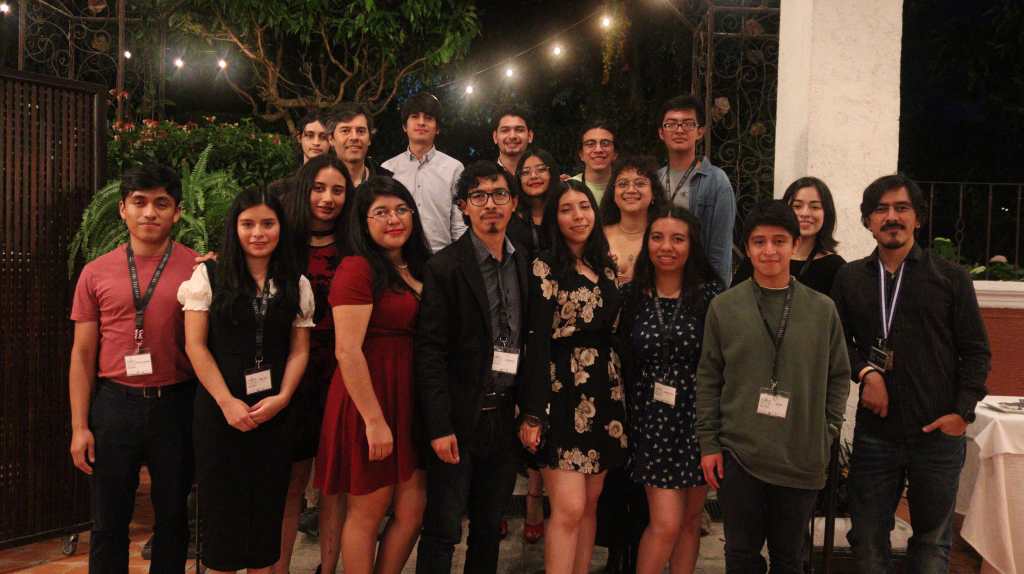
New generation of physicists and mathematicians from the University of San Carlos de Guatemala. (Photo: Free Press /Rodrigo Sacahui)
What project currently does Rodrigo Sacahui work?
I currently work at the Lago Project (Latin American Giant Observatory), along with my colleagues Héctor Pérez, Jorge Balsells and Maynor Ballina. This is a Latin American collaboration that installs astroparticle detectors in different countries of the continent. In Guatemala, we are developing our own node.
Detectors use a technique called Cherenkov radiation in water. Basically, these are tanks with demineralized water and a photomultiplier tube that allows detecting particles from space, generated by extreme events such as stars explosions or activity in distant galaxies.
Initially it was thought to place the detector at the top of the water volcano, 3,600 meters above sea level, but, for logistics reasons, we decided to install it on the Central Campus of the USAC, at 1,500 meters above sea level. This location facilitates maintenance without compromising scientific quality.
We generate around a data gigabyte per day, which we store locally in 10 terabytes servers. Then we process them with our own tools, such as the Ana software, and we share them with the International Lago Network.
In the near future we plan to install a second detector, which will validate the data and ensure that there is always one in operation. This will strengthen our observation capacity from Guatemala.