

In recent days, the Guatemalans They have experienced an increase in temperature as a consequence of the heat wave that affects the entire national territory. This phenomenon will continue as long as the rainy season in the country is not accentuated, according to the projections of the National Institute of Seismology, Volcanology, Meteorology and Hydrology (Insivumeh).
Practically, as long as the rain is not generalized in the last week of May, high temperatures will be presented in Guatemala, between 38 and 42 degrees, in the department of Petén, the Northern and Eastern Transversal Stripwhich are the areas where temperatures have been very high in recent days, says César George, an insivumeh meteorologist. In addition, it indicates that these temperatures are higher than those registered in recent years.
What are the causes of the temperature increase?
According to Paris Rivera, expert from the Meteorology Unit of the Mariano Gálvez University, the increase in heat in the country is an obviously meteorological effect, indirectly influenced by climate change. He also comments that there is currently a phenomenon that could be described as a heat dome at the average and high levels of the atmosphere, which prevents fresh air flow and retains heat, thus causing high temperatures.
Rivera also ensures that high temperatures will continue next week and rain conditions are expected to be more active from May 28 and early June, which could modify current temperature levels.
In the last five years, temperatures in Guatemala have increased approximately 0.1 and 0.2 degrees, causing the population to perceive the effects of heat more intense, according to Insivumeh forecasts. These patterns are also affected by phenomena such as the child, which causes increased rain at some points and, at the same time, droughts and high temperatures in other regions.
The year 2023 was confirmed as the warmest in recent historyaccording to estimates of the European Copernicus Climate Observatory, when an increase of 1.48 ° C was recorded at the average global temperature. However, these parameters have varied, with an increase between 0.1 and 0.2 degrees in temperature, according to experts.
Related readings
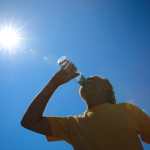

What are the recommendations for the population?
Given the risks of the increase in temperature, Paris Rivera, of the Meteorology Unit of the Mariano Gálvez University, recommends that the population remain duly hydrated, avoid prolonged exposure to the sun and remain informed by means of official and academic research centers, as well as the Conred.
For its part, César George, of the Insivumeh, also advises to avoid prolonged exposure to the sun, stay hydrated, wear light clothes such as shirts and shirts, and apply sunscreen to prevent skin complications caused by solar radiation.
The National Coordinator for Disaster Reduction (CONRED) also recommends to citizens the use of sunscreen, staying properly hydrated, consuming fresh foods such as fruits and vegetables, avoiding prolonged exposure to the sun and going to medical services if they are presented heat -related symptoms or any discomfort caused by high temperatures.
Related readings
