

The sunset of the colonial city marked the beginning of a different experience for the attendees.
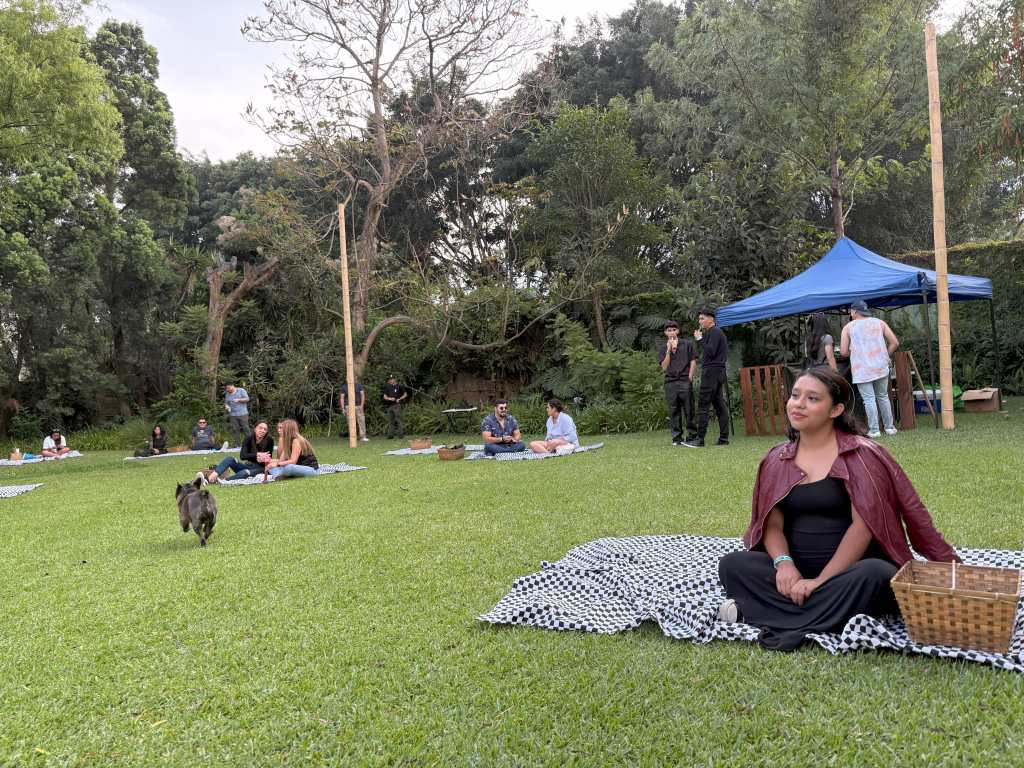
As the clock progressed, Curious and enthusiastic young people attracted to curiosity reached an open garden in Antigua Guatemala To experience something they had seen on Tiktok, but now they could live in their own territory.
“We fell into marketing,” “I came, more than anything, for leaving the routine,” “it caught my attention, it is something different and begins early,” were some of the comments of the attendees.
There are no bottles of beer or liquor as protagonists, nor the loaded and noisy atmosphere of traditional discos. Instead, The newly prepared coffee aroma is mixed with electronic music beats, while blankets extend over grass to create intimate living spaces.
These are the parties called Coffee Partyevents that have been viralized on social networks and that They are redefining what it means to socialize for young Guatemalans.
At noon or in the afternoon, these events mainly meet young people between 20 and 30 years, around a simple but revolutionary premise: celebrate, dance and connect without alcohol being the protagonist of the experience.
Generational paradigm shift
Luis Alberto Guigui Clinical and Teacher Psychologist of the Department of Psychology of the Faculty of Humanities of the Rafael Landívar University says that “There is a transformation at the sociological level in the way in which young people are being related to each other.”
This transformation has deep roots in recent social changes. “The opening at the cultural level, the anthropological transformation that is being given, all postpandiamal situations – which in a way we grab the children and enclose them to communicate through a screen and that we take them out then and it is like, ‘well, now socialize’.
The sociologist Katherine Orozco complements this perspective to indicate that “this new generation, generation Z, He is breaking with different already traditional paradigms that have already been structurally compounds. Both in family, religious and others, are breaking certain paradigms that were already established and that at the time were very radical. ”
Authenticity about appearance
What distinguishes these new forms of coexistence is their approach to authenticity. Guigui observes that The previous generations “were generations that depended a lot on their appearance, on the recognition of their achievements” and that, therefore, their social meetings tended to be a bit more presumptuous.
In contrast, “the new generation is not so,” he says. According to him, this new generation thinks: “Well, if they love me and accept me, chill – with those textual words – if not, Next. Outside there are more people that will value me.” This attitude reflects a more genuine search for relationships: “They relate from a different tonic, not from appearance, but from the search for authenticity.”
Coffee as a symbol of consciousness
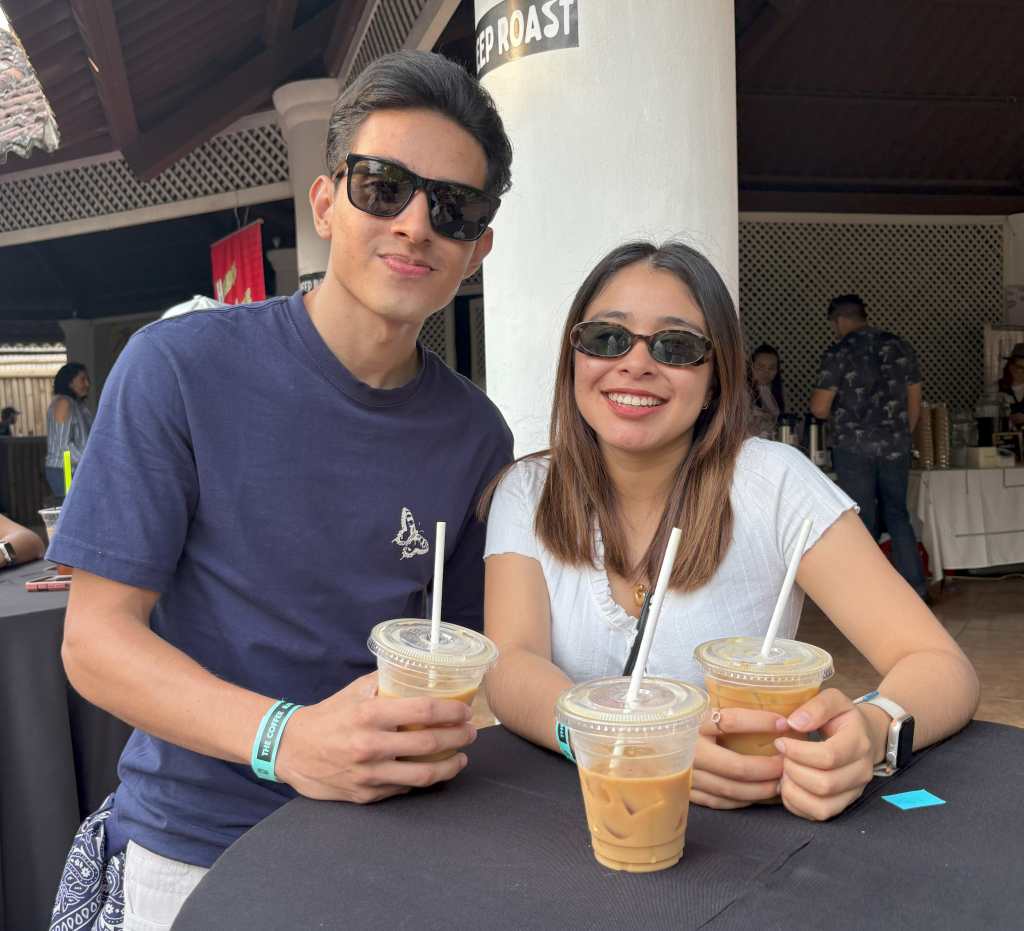
In the Coffee Party garden, coffee stalls offer a variety that goes from traditional preparations to innovations such as elaborate drinks based on coffee peel with citrus. This diversity is no accident; It represents a conscious choice about the type of experience you want to live.
According to Guigui, What young people are looking for are more authentic relationships, and these cannot be given if the nervous system is altered with substances such as alcohol. “While it is true that coffee is a stimulant, it does not alter reality,” explains the psychologist.
The organizers of Deep Roast GuatemalaAndrea del Pilar Ardón and Juliana Vega, emerged from this specific need. “The idea arises because, for example, I am a person who does not consume alcohol, but I like to have fun,” says Ardón.
These parties, “are parties aimed at people who want to go dance, to have a good time, to talk with their friends, but do not want substances to do that they cannot live the experience consciously,” Vega continues.

Identity construction spaces
Orozco identifies in these events something deeper than a simple fashion: “More than a party as very traditional, it also speaks of a space for relevance and identity construction.” Young attendees seek “spaces that align their interests, where they can feel part of and that are part of their identity,” says the expert.
This identity construction is manifested in various ways. “Within diversity, within the idea of being diverse, aesthetics plays a very important role. And plays such an important role that it is marked by the fact of ‘I want to be different, I need to demonstrate that I am different and that being different I am accepted'”looks Guigui.
According to the psychologist, the current world values and understands how important diversity and diversity is in all its areas. Therefore, the openness to know and experience in diverse spaces, quieter and more intimate, attracts the attention of the new generation.
The safety of environments
“One of the reasons why I decided to attend this party, is because I am afraid to go to a disco, but I like the holidays. So, this space I think unites those two points,” says Ximena, one of the attendees.
The search for safe spaces emerges as a central element. “We increasingly need more safe environments, we need security without having to depend on stimulants,” says Guigui. “That same desire will generate A safe environment where body expression, artistic expression, the way in which young people relate from what they care, from what I like, will have much more meaning, will have much more meaning”
But this security also includes mental health care. “We are increasingly willing to talk about our mental health and what its care implies, from the cognitive field to the expression of thoughts and emotions,” he says.
The psychologist also emphasizes that The new generations award greater importance to the spaces they frequent to interact without “feeling courts”and attend these types of coexistence in which they are not afraid to express their emotions and there is a greater availability of openness with others.
Orozco reaffirms this idea: “We are recognizing that another of the social codes is that now more emphasis is given to mental health and, with this, we are looking for more safe spaces. We also talk about a culture of self -care.”
The role of social networks
The phenomenon does not arise in a vacuum. Organizers recognize the influence of international trends: “The first time I saw this type of parties was in Tiktok, in regions such as Europe and North America, and from there arises the idea of bringing it to Guatemala,” says Vega.
Orozco analyzes the influence of social networks: “The Z generation has currently grown and born with digital media. In Latin America, specifically in Guatemala, this – the parties – is becoming more relevant. However, in other countries, these were previously already routine activities.”
Trends monitoring is combined with authentic needs. “Many of the young people want to say: ‘Well, I want to be fashionable.’ So, I am to be part of these trends,” says Guigui.
In addition, social networks are the first and almost unique dissemination space of this type of event. The calls are launched through Tiktok or Instagram and those interested share it among their friends to attend, it is in the networks where the target audience is located. But this does not limit other people to attend, according to Ardón, his target “It’s people who want to live a different experience, regardless of the age you are.”
And it is that Coffee Party have demonstrated their ability to convene beyond a specific segment. “We have had people who attend their children,” Ardón explains.
The new social codes
For Orozco, these events represent something more permanent than a passenger fashion: “Discovering new spaces allows us to know that we are building a new social fabric. That social fabric will allow us to stay, know that not everything traditional will stay, but that a new era is showing us.”
The sociologist emphasizes: “There are diversity of thoughts, we are looking for this diversity of thoughts and experiences that we have, our interests we have, and this allows us to some extent to build a new social fabric, which leads us to be a community.”
And this change also corresponds to that of the communication codes, since according to Guigui, “because of the way in which young people are going to relate they will vary from a group group.”
An evolution in process
Guigui emphasizes that This phenomenon represents something deeper: “genuinely I think it is something rather symbolic, there will be a social and sociological evolution every time where the ways in which we connect will be different.”
The psychologist observes that “in intimacy and depth, more significant coexistence, deeper encounters, a more authentic relationship between the parties without having social bias are sought.”
So, This phenomenon of Coffee Parties It has been venturing and representing a new form of entertainment; They are the reflection of a generation that seeks to redefine social coexistence codes.
In a garden where the blankets extend on grass and coffee replaces alcohol as the protagonist, Guatemalan young people are writing a new chapter in the ways of relating.
As the psychologist reflects: “The message can be the same, the way it is transmitted can be different, and I think that this type of activities makes us very clear that communication can be different.”
Well, while night fell, electronic music sounded and attendees gradually removed the penalty to dance and enjoy, it became clear that these transformations are not superficial. They are, rather, the result of a generation that has learned, after the pandemic and in an increasingly more connected world, that “the way we interact from the risk – in pandemic – makes many times we want to change the way of living together to something more secure, and becomes more and more symbolic,” concludes Guigui.
In this new “ritual” of coexistence, coffee is not just a drink; It is the symbol of a conscious search for authenticity, community and well -being that is redefining what it means to socialize for the new Guatemalan generations.