

Scenery
Among the reasons of embroidery of the huipil of the Mayan clothing suit of Quetzaltenango, Quetzaltenango, which is part of the series “Mayan textile tradition”, the bird stands out on a vase, which appears throughout the center of the piece.
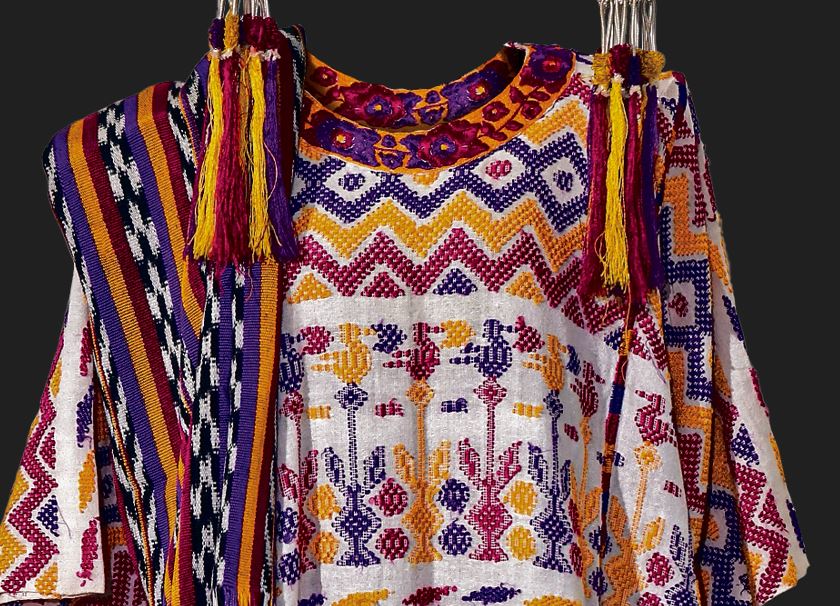
Among the reasons of embroidery of the huipil of the Mayan clothing suit of Quetzaltenango, Quetzaltenango, the bird stands on a vase, which appears throughout the center of the piece. (Free Press Photo: Juan Diego González)
The Huipil of this outfit It is made in three canvases woven in loom standing with white background, that bind by hand embroidered by hand, known locally as randas.
Despite being covered in phytomorphic and zoomorphic brocades, the canvases are very light and, therefore, a semitransparency can be seen. The neck carries a cloth application with embroidery that was handmade to the Huipil.
The pleated cut is woven in loom standing with dark blue cotton threads and strips of jaspeaded threads. SOn approximately eight rods of fabric that folds and ties to the waist with a cord and ensures with a small girdle. This type of cut is known locally as “varied.”
The dog is also woven in looming, with strips of colored colors with jaspe.
The xaq’ap (touched) was woven in tape loom, with acrylic and rayon threads. It is a strip that measures approximately 25 meters. The ends are topped with tassels, chains and fringes.
Related readings


Related readings

Designs
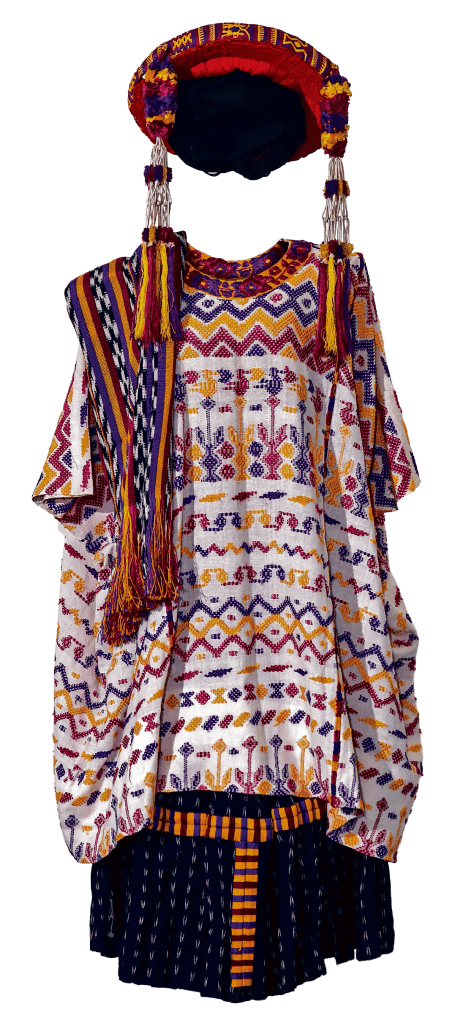
- Linguistic community: K’iche ‘
- Ceremonial use
The Huipil stands out for its combination of brocades, motifs and embroidery in which the traditional colors of the town predominate such as yellow, purple and corinth.
Among the figures that are reflected both in the neck and the brocades They are animals, plants and geometric.
One of the reasons that most attracts attention It is the bird on a vase, which appears throughout the center of the piece.
The cut is embroidered in the joints, the randa, which is made by hand by embroidery and expert embroiders on the subject.
Subscriber content
It should be noted that this clothing, with some variations, It is used exclusively by the captains of the Virgen del Rosario, that they are widowed women who have dedicated their lives to the service of the patron saint of Quetzaltenango, as well as by the companion of the major brother of the brother of the child of the Blessed Sacrament and by the Umial Indigenous representative Tinimit re xelajuj no’j (daughter of the people of Quetzaltenango).