

Four Judges of Alta Verapaz face a disciplinary process for an apparent improper use of facilities, In addition, one of them for the apparent finding of a minor in the office.
The judges who face the disciplinary process are William Arturo Chen, José Alfredo Quiñónez, Luis Alejandro Paniagua and Walter Fabricio Rosales Hernández; All indicated for consumption of alcoholic beverages, starring scandals In Judicatures.
Rosales Hernández, is also pointed out to keep a child under 16, who, according to lawyer Sindie García, of the General Inspection of Courts, has no employment, family or other relationship with the judge, which could become trafficking in persons and abuse of minors.
During a hearing on May 27, lawyer Garcia presented the facts indicated and with which she asked the Disciplinary Board of the Judicial Agency that the judges are dismissed from your positions.
The inspection indicates that the judges could be linked to trafficking in minors, consumption of alcoholic beverages during working hours, as well as inciting the workers of their respective judicies to carry out these actions. In addition, attend meetings in alcoholic beverage vending businesses.
It was pointed out that these activities would have been made daily by the four Judges of Alta Verapaz, indicated to commit faults to ethics and perform actions not consistent with their functions.
Due to this conduct, the dismissal of the four judges indicated was requested, ensuring that they do not meet the conditions of suitability required to perform their functions in the First Court and Second Court of Judgment, both in Alta Verapaz.
Related readings


The facts
The facts for which the judges are dated October 2023, said Garcia, who commented that information was received from the organized civil society of Alta Verapaz, in which this situation was made known.
The lawyer Garcia described as “unfortunate” this behavior, indicating that there are judges and magistrates in that department linked to establishments dedicated to human trafficking and liquor consumption. He also pointed out that they live with minors and even maintain sentimental relations with judicial auxiliary personnel who work in the judiciary.
According to the investigation against Judge Walter Fabricio Rosales Hernández, president of the First Criminal Court, there are testimonial statements indicating that he took a minor in his vehicle, taking advantage of the fact that he was not registered when he entered the judicial headquarters.
It is also mentioned that the child was repeatedly seen within the judge’s office. One of the witnesses said that the young woman several times for “Fabricio”, referring to Judge Rosales Hernández. Several witnesses also indicated to have seen the young woman, on multiple occasions, within the office of the judge, during working hours.
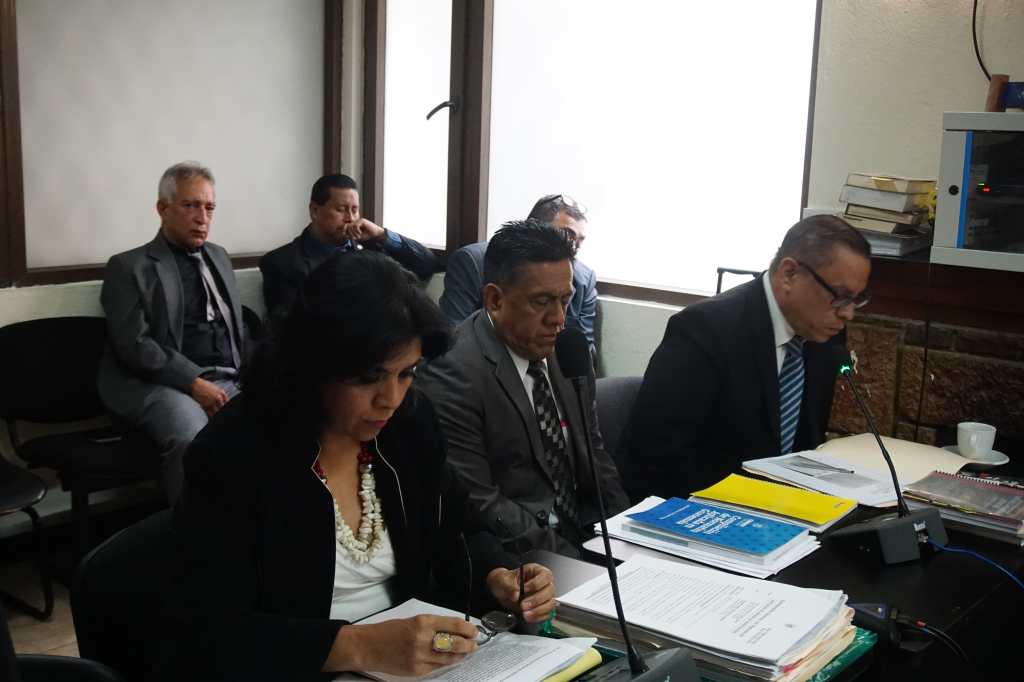
Lawyer Sindie García indicated that the staff of the General Court inspection approached the young woman, in the parking lot of the building where the First Judgment Court works, and she assured them that she was 16 years old.
The child also expressed that she is not a student from any University of Alta Verapaz, nor does she perform internships in court, but that she was a friend of “Fabricio”, as she called Judge Rosales.
It was of that account that no reason was found for the child to be in the courts of the court. It was also confirmed that the same minor was seen in a business in which alcoholic beverages are sold and that it is frequented by Judge Walter Fabricio Rosales Hernández, the investigation points out.
As for Judges José Alfredo Quiñónez Lemus, Luis Alejandro Paniagua Herrera and William Arturo Chen, they are pointed out to present themselves in apparent state of drunkenness to their work, in addition to ingesting alcoholic beverages in court and inciting the personnel to perform these actions. They are also accused of threatening staff to prevent statements against them.
Given these actions, the general supervision of Courts requested the dismissal of the position of first instance judges of Walter Fabricio Rosales Hernández, José Alfredo Quiñónez Lemus, Luis Alejandro Paniagua Herrera and William Arturo Chen.
The audience against those indicated will continue on June 17.
Related readings

Related readings

Complaints against judges no They advance
According to data from the Disciplinary Board of the Judicial Agency, until May there have been a total of 736 complaints against judges and magistrates throughout the country. The most common offenses are breach of duties, malicious delay in processes or arrears in the process of judicial files.
Of the total complaints filed, 16 have resulted in sanctions, while another 300 were not admitted for processing. The rest continues in process or in evaluation.
Failures and sanctions
The Civil Service Law of the Judicial Agency establishes that judges and judicial workers can be sanctioned by disciplinary offenses as slight, serious or very serious.
Mild faults:
- The non -observance of the work schedule without just cause.
- The lack of respect due to judicial officials, general public, colleagues and subordinates in the performance of the position, representatives of auxiliary bodies of the administration of justice, members of the Public Ministry, of the Institute of Public Public Defense and Lawyers.
- The lack of compliance with the internal administrative provisions of the judicial body.
- The negligence in the fulfillment of the duties of his position, established in this law.
Serious offenses:
- To abandon totally or partially the tasks of the performance of the position.
- Incur unjustified delays and carelessness in process processing.
- Do not save due discretion in the issues you know by reason of your position.
- The manifestly discriminatory behavior and treatment in the exercise of the position.
- The lack of compliance with the provisions contained in the regulations, agreements and resolutions issued by the presidency of the judicial body.
- Hide the parties or information of a public nature.
- Unjustified absence to your work for one day.
- Attend your work in drunkenness or under the effect of narcotics or in any other analogous abnormal condition.
- The third mild fault that is committed within a period of one year, when the first two have been sanctioned.
Very serious offenses:
- Request or accept favors, loans, royalties or gifts to the parties, their lawyers or their attorneys.
- Simultaneously perform paid jobs or positions, exercise any other employment incompatible with their work schedule and exercise or perform management positions in political entities.
- Interfere in the exercise of the functions of the other State agencies, their agents or representatives or allow the interference of any body, institution or person in the judicial body.
- Hide information that involves prohibition for the performance of the position
- Refrain from informing a survival cause.
- Unjustifiably missing the work without permission from the corresponding authority or without just cause, for two complete and consecutive working days or for six media for the same calendar month.
- Carry weapons during the workday and in the exercise of their functions except for the authorized special cases, by the administrative authority of the judicial body.
- Abandon work at work hours without just cause or without a license of the corresponding authority.
- Commit any act of coercion, especially those of a sexual or labor nature.
- The third serious fault that is committed within the period of one year, when the first two have been sanctioned.
SANCTIONS:
Faults committed by employees and judicial officials will be sanctioned as follows:
- Mild fouls: verbal or written warning.
- Severe fouls: suspension for up to 20 days, without salary enjoyment.
- Very serious offenses: suspension for up to 45 days, without salary enjoyment or
- dismissal.
Related readings
