

The modernization of the critical infrastructure of the port system and the reactivation of the rail system will position Guatemala as an important actor in the logistics of the Central American region.
Support in feasibility studies for the expansion of the Quetzal Port Company (EPQ) in Escuintla; the analysis for the reactivation of the railway circuits for cargo and passengers, as well as the Riel Metro, by the Corps of Engineers of the United States Army (Usace); And the beginning of the work for the expansion of the El Rancho-Maber highway, to connect with the Atlantic, are infrastructure works that are committed to improving competitiveness in the medium term.
Subscriber content
With the creation of these “logistics corridors”, Guatemala strengthens the multimodal system. One of the expected results for the national productive system is the reduction of logistics flows, with benefits for consumers and an improvement in connectivity efficiency, considered key.
Álvaro Sarmiento Matute, World Bank group consultant in the area of trade and logistics facilitation, analyzes for Free press These megaprojects that could transform and position Guatemala as a logistics axis in the region.
From the logistics vision, how do we understand the expansion of the EPQ docks and the reactivation of the rail system?
The road infrastructure crisis and, in general, of transport – maritime, terrestrial, rail and aerial – is an obvious and not very novel reality.
Their costs will affect and exponentially affect the entire population, not only the business sector, so it represents a challenge for all. The investment announced in EPQ, the possibility of reactivating the rail system and the expansion of corridors such as CA-9, in the stretch of four lane ranch, are efforts in the right direction to improve the competitiveness of the country.
The general population, users and economic agents, how should these megaproject recognize?
At the end of the day, all Guatemalans or residents in the territory are users of critical infrastructure. For sample, an example: the vast majority of fuels that mobilize all machinery, small or large, import and use port infrastructure. The same goes for fertilizers or medical and pharmaceutical supplies; We all pay the price of poor infrastructure.
What is the potential logistics corridor that is being planned?
In general, we all agree with the “logistics corridors”; They have economic logic that, in theory, works. However, the vision of the corridor, or rather of the network of corridors, must always be supported by a strategic vision, not only national, but coordinated with the main regional commercial partners: El Salvador, Honduras and Mexico.
So, the question is: what is the short and long term objective of a certain corridor, to which areas benefits and what is the effect on agricultural production and mobility, for example, for regions that are very far from its main consumption centers? I quote sectors such as “La Trendona”, in San Salvador (wholesale center), or in San Pedro Sula, Honduras.
On the other hand, the corridor in many cases begins in the sea or land ports, not only on the road. Do we know how many days it takes for a container, already in the sea port, to be reviewed and, if it is the case, fumigated, to be released later?
Subscriber content
Therefore, expediting these processes is essential for corridors to have economic logic.
Are there conditions to establish a multimodal transport system?
It is essential that the “business rules” are clear for all participants and that their fulfillment is a reality. In maritime and aerial transport, international rules are clear and cannot be easily ignored. However, it is an irrefutable fact that disrespect for heavy transport traffic regulations by some actors generates high accidents throughout the road network, a fundamental part of multimodal transport.
Here it is fulfilled that the strength of a chain depends on the weakest link.
From your experience, how should a logistics program to the future be designed?
It is important not to wear out to reinvent the black thread. The Regional Master Plan for Mobility and Logistics 2025, prepared in 2023 with the technical support of the Japanese International Cooperation Agency (JICA) and the Secretariat of Central American Economic Integration (SIECA), comes to order, organize and establish a sustainable mechanism for decision making, since it also involves the Council of Finance Ministers (COSEFIN), an indispensable forum to ensure the financing of the proposals of logistics corridors.
The investment announced in EPQ, the possibility of reactivating the rail system and the expansion of corridors such as CA-9, in the section of the four-lane ranch, are efforts in the right direction to improve the competitiveness of the country “
Álvaro Sarmiento Matute, Mobility Consultant
Central America is a region of small countries that requires greater integration, at least strategic, to ensure financing that converts these aspirations into realities.
Another important matter to be resolved at the local level is the port regulations. A few days ago institutions and mandates were created for the formulation of policies of the sector, such as the Law of the designated authority of the National Port System. It is important to “get to fruition” with these initiatives and institutional work, especially in relation to the definition of strategic policies for the sector.
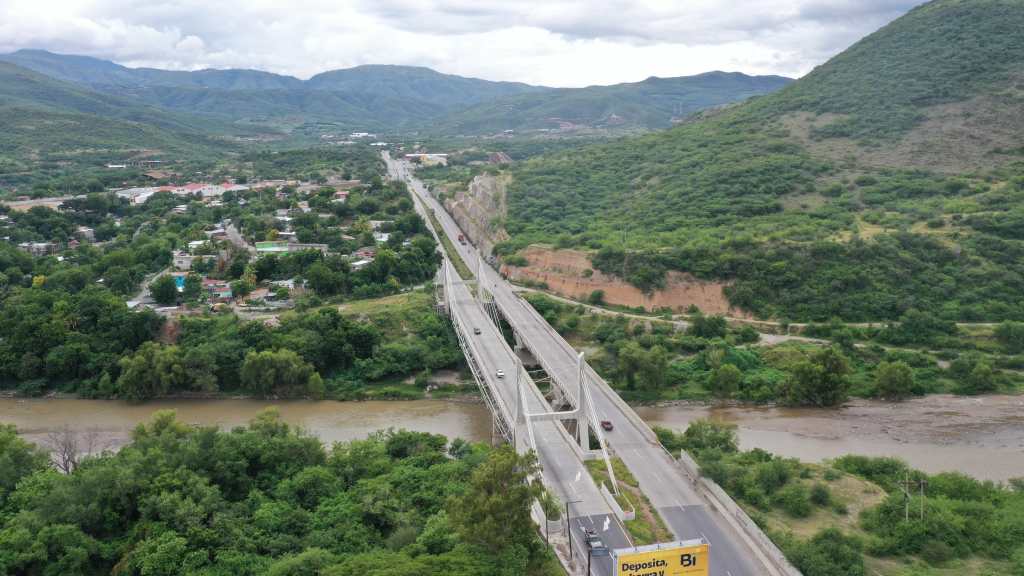
Logistic runners
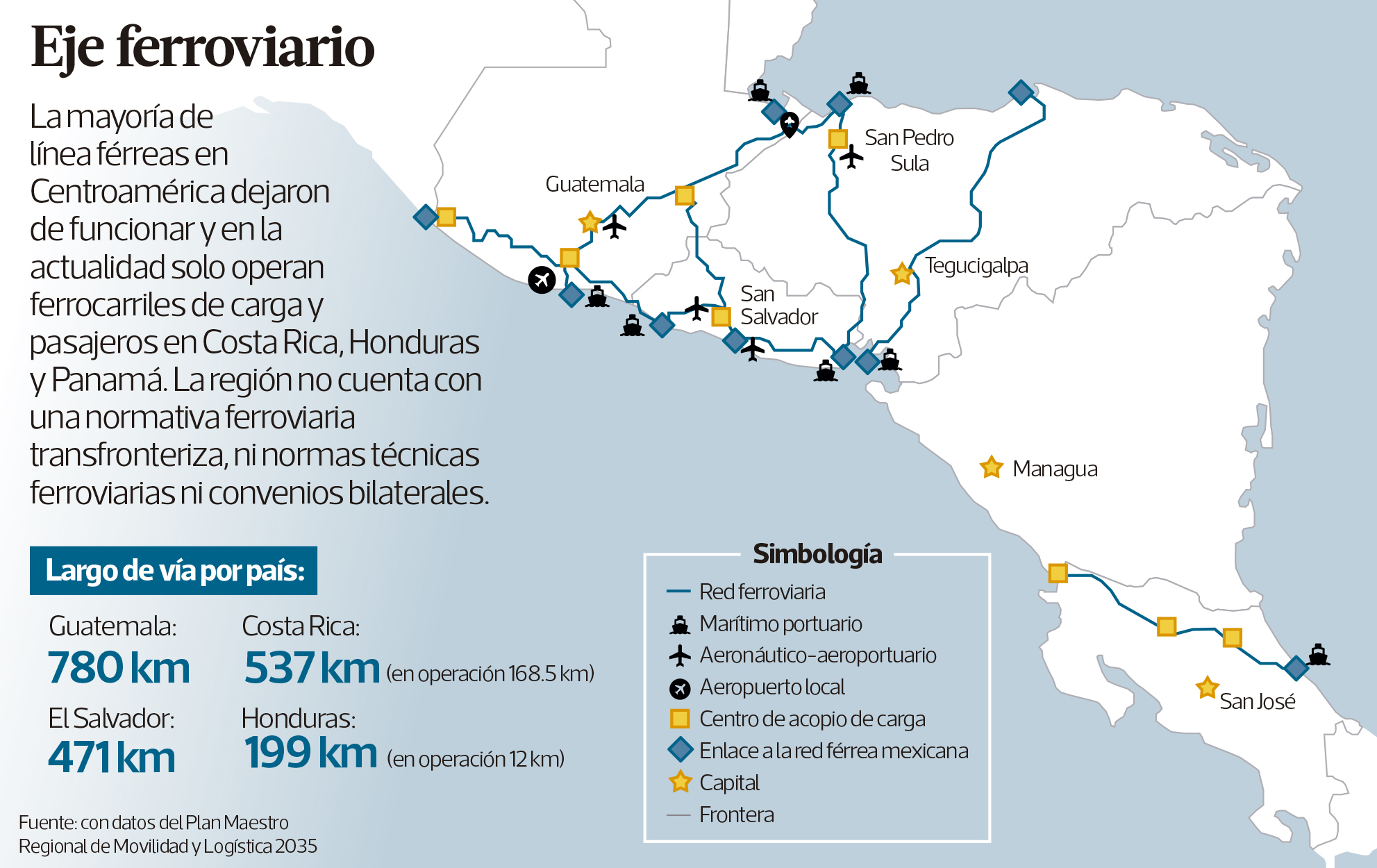
The Regional Mobility and Logistics Master Plan 2035, published in 2023, indicates that in the region there are more than 148 thousand km of roads, and about 6,525 km enter the category of Central American Highway (CA), according to the Sieca and Jica document.
The study identifies around 256.5 km of railway lines in operation, the existence of 19 facilities on the Central American Caribbean coast that extend over about 2 thousand 100 km, and 21 port facilities on the Pacific coast along about 2,900 km.
There is an interoceanic channel, 24 border posts, 21 international airports and two hubs aerial
The study indicates that Central America meets the conditions for the creation of “a world -class logistics platform in the transfer of people and goods, to boost an integrated and competitive region, capable of mobilizing the population and their supply chains effectively, increasing and diversifying trade”.
An efficient transport system is a key aspect in the economic growth and security of a country. Transportation and economic development are closely linked: development increases the demand for transport, while the availability of transport stimulates development through trade and economic specialization.