

The dollar value continues to descend.
In the midst of an increase in tensions by the commercial war initiated by Donald Trump since he returned in January to the White House, the US currency continues to weaken.
This week he deepened his fall after the US industrial activity was reduced in May for the third consecutive month, bringing the value of the green ticket to its lowest level since 2023.
Some investment banks such as Morgan Stanley, JPMorgan and Goldman Sachs, predicted greater dollar drops in the future due to an escalation of the commercial war and a potential weakening of the world’s largest economy.
“The dollar has fallen through Trump’s protectionist and erratic policy that is eroding the US reputation,” Gabriela Siller, director of Economic Analysis at the Base Financial Group, based in Mexico, tells BBC.
According to Siller, the president’s decisions affect the growth expectations of his country and sow doubts about the status of the dollar as a currency of refuge of investments and as the largest reserve currency in the world.
One of the direct consequences of the drop in the dollar is that US exports become more competitive in the international market, since they are cheaper for foreign buyers.
The opposite happens in the reverse sense. Imported products that enter the US rose price.
That is why the depreciation of the dollar could also make the Federal Reserve (equivalent to the Central Bank of other countries), do not want to lower interest rates due to the increase in the price of imported products and, consequently, of inflation.
From a broader perspective, many economists are concerned that the recent drop in the dollar reflects something much more disturbing: a loss of confidence in the United States.
“Global trust and dependency in the dollar were built for half a century or more,” economist Barry Eichern, from the University of California in Berkeley, said at the end of April. “But they can be lost in the blink of an eye.”
Why could Trump want a weak dollar
Historically, a strong dollar has been encouraged by the successive US governments for decades, since it helps keep low debt costs of the country and, from a more geopolitical perspective, allows the US to project an image of power abroad.
It also helps put pressure on other countries that are not allies, such as Iran, Russia or Venezuela, limiting access to their currency, which makes it difficult for them to access dollars to trade with other countries.
Even during the economic crises for which the US has gone through, in the past, the demand for dollars has remained strong.
However, there are analysts that point out that Trump’s government sees things differently.
According to these versions, the president considers that the strength of the green ticket is an obstacle to the American manufacturing revolution that he wants to boost.
A weak dollar would help him “restore the glory” of the manufacturing sector, returning to the “golden era” of the United States.
“Trump doesn’t want a strong dollar because imports increases,” says Siller.
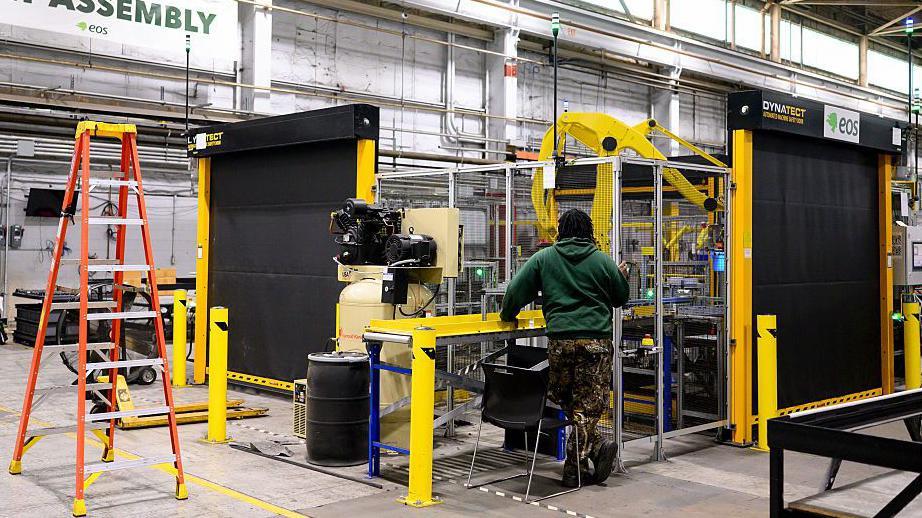
From Trump’s point of view, the country needs a weaker dollar to boost the manufacture of products within its borders, recover employment in the manufacturing sector, boost exports, and help reduce the country’s huge commercial deficit.
Unofficial versions indicate that there is a plan known as the “Mar-A-Lago Agreement”, proposed by Stephen Miran, president of the Trump Economic Advisors Council, to weaken the dollar.
The doubts
This plan would be based on the idea that the condition of the dollar as a world reserve currency is not a privilege, but an expensive load that has played an important role in the deindustrialization of the US economy.
The global demand for dollars, according to this argument, increases its value, making the products manufactured in the United States and this, in turn, generate persistent commercial deficits and encourage US manufacturers to transfer production abroad, destroying local jobs.
“Miran’s plan, however cunning it may seem, is based on an erroneous diagnosis,” wrote Kenneth Rogoff, professor of economy and public policies at Harvard University and chief chief of the International Monetary Fund (IMF).
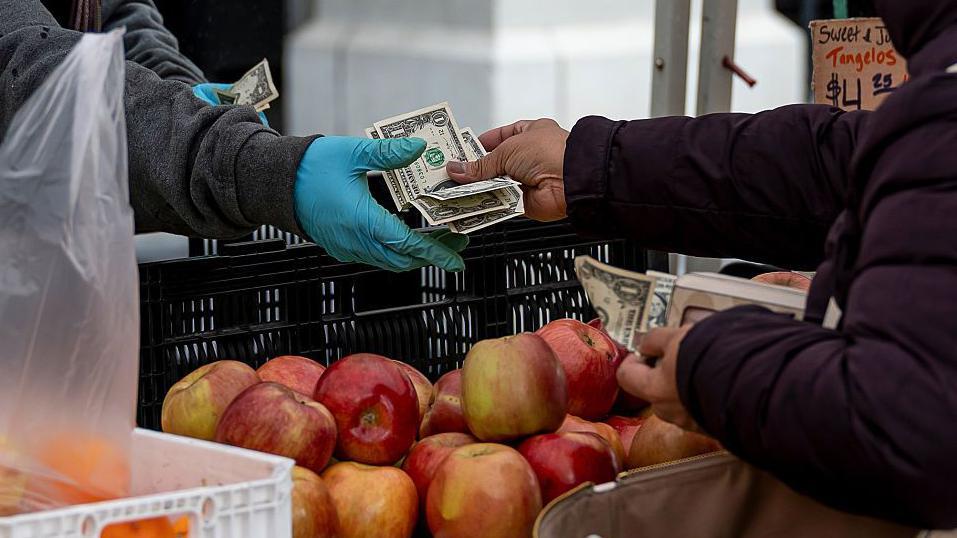
While the role of the dollar as the main world reserve currency influences, says the economist, “it is only one of the many factors that contribute to the persistent commercial deficits of the United States.”
And if the commercial deficit has multiple causes, “the idea that tariffs can be the panacea is, in the best case, doubtful,” he adds.
It is important to say that, in strict rigor, no president manages the value of the dollar in relation to other currencies because the exchange rate moves freely.
Washington cannot intervene directly so that the currency goes up or down, since its value is determined by a huge world currency market and it is the large investors who buy or sell dollars according to their expectations.
Anyway, the economic policy of the US government sends signals to the market and that influences how the value of the dollar evolves and other key factors such as interest rates.
A delicate gear
All this works as a delicate gear in which the movement of one piece affects the others.
This happened in April, when the comings and goings of Trump’s ads about tariffs ended up undermining investors’ confidence and damaging US bonds, an instrument that issues the State to be able to finance.
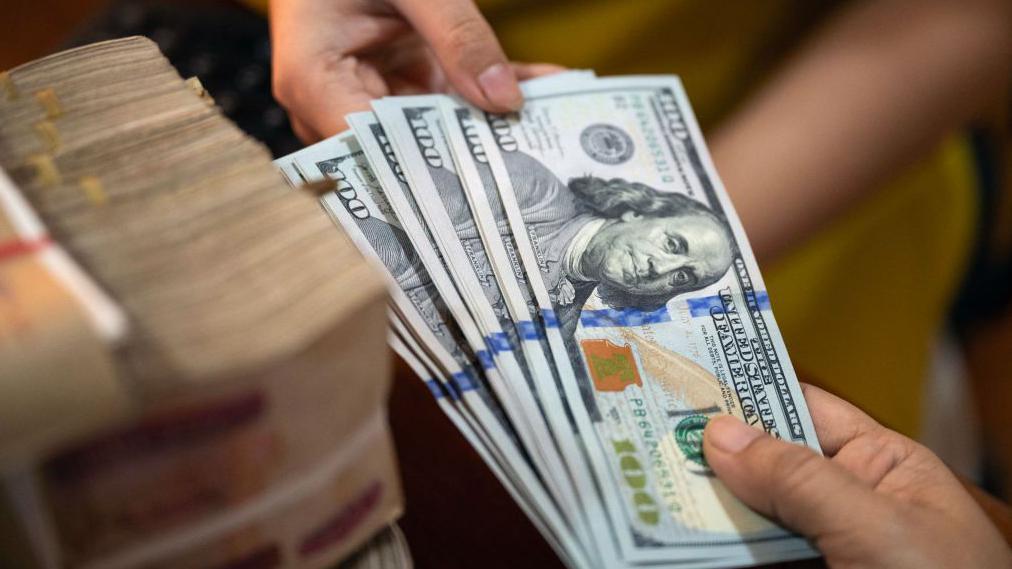
That lack of confidence has not been good for the dollar, although some analysts think that it is a more transient than structural phenomenon.
“No other currency or other asset, such as Yuan, Bitcoin or gold, is large enough to meet all the demand,” said Steve Ricchiuto, economist of the Mizuho Financial firm, in statements to the AP agency. “Right now there is no alternative.”
American consumers are attentive to a possible inflationary rise, to the extent that they will be paying higher prices for imported products, both for the imposition of tariffs and due to the fall of the dollar.
It remains to be seen what will happen in the coming months with Trump’s commercial war, its budget and tax cut project (which is currently discussed in the Capitol), inflation, interest rates and how all this will impact on the dollar’s trajectory.
There seems to be, for the moment, more questions than answers, although Wall Street projections suggest that the dollar is far from strengthening.

Click here To read more BBC News World Stories.
Subscribe here To our new newsletter to receive every Friday a selection of our best content of the week.
You can also follow us in YouTube, Instagram, Tiktok, X, Facebook And in our channel of WhatsApp.
And remember that you can receive notifications in our app. Download the latest version and act.