

International
The appointment of Silvia Delgado as a criminal judge in Chihuahua has generated concern, due to her past as the defending lawyer of Joaquín “El Chapo” Guzmán, founder of the Sinaloa Cartel.
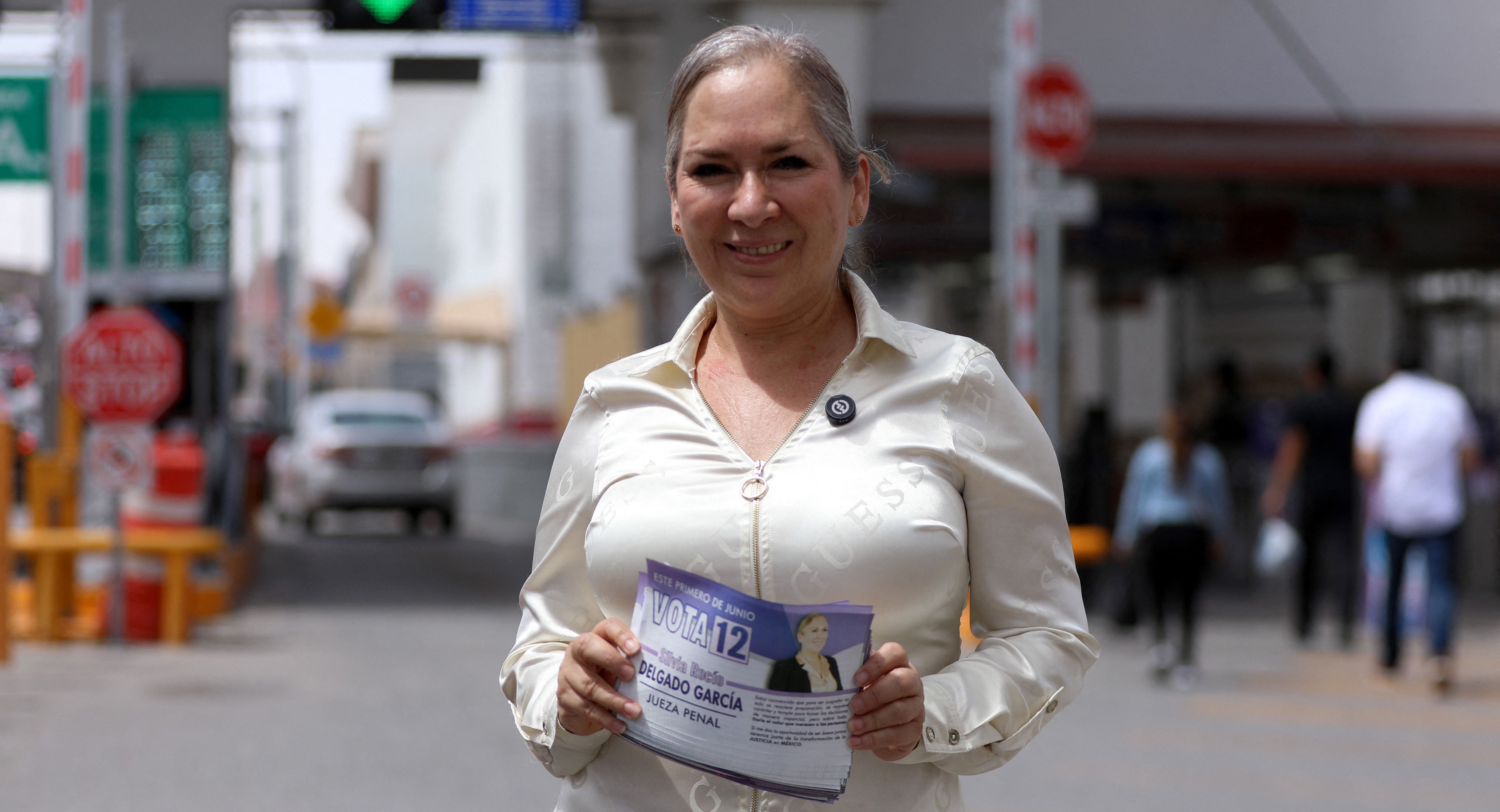
Silvia Rocío Delgado García, was elected criminal judge of the state of Chihuahua, Mexico. Delgado García was part of the defense of Joaquín “El Chapo” Guzmán Loera, leader of the Sinaloa Cartel, while being held at the Federal Center for Social Readaptation (Cefereso) number 9 in Ciudad Juárez. (Free Press Photo: AFP)
A former member of Mexican drug trafficker Joaquín “Chapo” Guzmán obtained sufficient votes to head a criminal court in a Mexican border city with the United States, according to the results of an unprecedented judicial election published on Tuesday.
With a very low participation, the Mexicans chose on June 1 to all their judges in unique elections in the world, which have generated doubts about the independence of justice in the face of political parties and organized crime.
Silvia Delgado, who defended the founder of the violent Cartel of Sinaloa before his extradition to the United States, in 2017, where he serves life imprisonment, appeared as a candidate for a court of the state of Chihuahua, in the north of the country.
On Tuesday afternoon, the Local Electoral Institute concluded the vote counting, in which this lawyer was second among women’s candidates. If your choice will be validated, it will be one of the five members who will head one of the Criminal Courts of Chihuahua.
Delgado was running to be a judge of first instance in criminal matters in Ciudad Juárez, neighbor of the American El Paso, Texas.
His candidacy was one of the most questioned. He said that his only relationship with Guzmán was professional, but was identified by the Oenegé Defensorxs between about twenty “risky” candidates.
The Sinaloa Cartel is one of the six Mexican mafias designated in February as “foreign terrorist organization” by the United States government, considering it responsible for a significant part of the illicit fentanyl and other drugs that enter that country.
In total, Mexican voters were summoned to choose 881 judges at the federal level – including the nine members of the Supreme Court – and around 1,800 in 19 of the 32 states. Complementary elections are expected in 2027.