

Decree 17-85, fuel alcohol law, allowed the use of mixtures with 5% ethanol since the 80s, but was not implemented. As of 2005, the Executive reactivated efforts with the National Biofuel Commission and pilot projects. Finally, in 2022, the Constitutional Court (CC) resolved legal obstacles and the Agreement 159-2023 was published.
That is the path that the country has led to diversify its energy matrix and fulfill environmental commitments.
For example, this measure is part of the fulfillment of international commitments, such as the Paris Agreement and the nationally determined contribution (NDC) in the transport sector. In addition, Guatemala has ratified the framework convention on climate change, the Kyoto protocol and national laws on this matter.
The country promised to reduce its greenhouse gas emissions by 11% by 2030 with its own resources, a goal that is expected to achieve with the implementation of the E10.
Postures stand out
Enrique Meléndez, Executive Director of the Guatemalan Association of Gasoline Expendors (AGEG), explained that, in order to “be able to store and sell gasoline with ethanol mixture, a technical analysis of the infrastructure – tanques, pipes and equipment – of the stations – of the stations, to determine if they comply with international regulations and if they can operate with an E10 mixture” will be necessary.
The required investment calculations will depend on the specific needs of each station; Therefore, an amount cannot be generalized. He insisted on the need for analysis through technical tables.
Until now, the Ministry of Energy and Mines (MEM) has not provided major responses. It has only followed with the discussion about the regulation and its implementation, without deepening the technical aspects requested, not only for this sector, but also by other market actors.
According to Aída Lorenzo, manager of the Association of Renewable Fuels of Guatemala (ACR), the common good should prevail and that a public policy can benefit the entire population, regardless of whether alcohol is national or imported.
He quotes article 15 of the regulation, which indicates that the market is free and does not force to buy alcohol in Guatemala.
Lorenzo said that in no country has been optional. For example, in Brazil it began with a mandatory 12%; It rose to 27% and, as of August 1, it will rise to 30% by law, with optional mixtures only in larger percentages, which do require modifying the vehicle.
He reiterates that the mixture of 10% ethanol with gasoline is viable, without the need to modify engines.
He affirms that it is completely viable and that only political will to implement Law 1785, which for 40 years establishes that gasoline should have at least 5% alcohol.
In that sense, Ivanova Ancheta, Executive Director of the Guatemalan Alcohol Producers Association, said her sector agrees that the mixture with 10% ethanol is mandatory. It is an internationally recommended percentage for not affecting cars or motorcycles. In addition, in the rest of the world, this has been a public policy.
Renewable Fuel Association
According to Aída Lorenzo, manager of the ACR, Guatemala and Central America, they are being laughed in the use of ethanol, since more than 60 countries have implemented it with successful cases and with emission reduction.
Lorenzo said that our country needs some energy independence, improving air quality, fulfilling international environmental agreements and diversifying the transport matrix, which today requires exclusively fossil fuels.
Faced with doubts that ethanol can damage cars and motorcycles, he said that the experience of 60 nations demonstrates otherwise. He cited Brazil, which began in 1976 with a mixture of 12% in a vehicular fleet older than that of Guatemala.
Import
Lorenzo indicated that the country imports 100% of fuels, which costs around US $ 6 billion annually, an amount that goes abroad.
According to data from the Superintendence of Tax Administration (SAT), vehicles that use gasoline have, on average, 18 years old.
Gasoline Expendors Association

The gas stations are not opposed to the use of ethanol, since the current standard allows its mixture for up to 10% for some years; However, he disagrees that his use is forced, according to Enrique Meléndez, executive director of the Guatemalan Association of Gasoline Expendors (AGEG).
Being optional, each user decides which fuel wishes to use for their vehicle, but the problem is that it is being forced by different routes: to consumers, to use this mixture, and the service stations, to market it, Meléndez said.
He also considered that freedom of choice should be left to consumers, so that they acquire the product that best suits their needs, costs and other aspects that they can evaluate.
There is no discussion
Meléndez explained that, for several years, they have requested that technical tables be constituted to evaluate the infrastructure of the service stations, but – until this moment – the authorities of several governments have not wanted to open the discussion on that matter.
Alcohol Producers Association

In the country ethanol is generated from sugarcane, and the producer sector is prepared in order to supply the national market for gasoline mixing, Ivanova Ancheta, executive director of the Guatemala alcohol producers association.
Faced with doubts about whether national production will be prioritized or if there will be difficulties in importing, the Executive clarified that the import is allowed, according to the law and the regulations. He added that they have knowledge of great interest on the part of American producers to provide the Guatemalan market, and said they will compete on equal terms. The sector must also decide how to meet external demand.
validity
According to the regulation, the mixture must begin to be implemented on January 1, 2026, but it has been heard that this could be postponed to August or September of the same year.
For this reason, as long as there is no certainty on the date and the entire supply chain is prepared, producers may officially declare how much
Availability will have for the local market.
Association of New Vehicle Importers

The new vehicle import sector indicates that it has no problems, because the units that bring to the country are conditioned in such a way that they tolerate a mixture up to 10% of ethanol, said Jean Pierre Devaux, director of the Association of Importers and Distributors of Automotive Vehicles (AIDVA).
He explained that, with respect to new imports – in a variable average according to brands and origin -, models of 15 to 20 years already come conditioned to operate with a mixture of 10% ethanol, therefore, models since 2006 should not have problems.
User Manual
On whether the units require any certificate, the Executive explained that it is not necessary, but that the user’s manuals must indicate it.
Regarding the obligation, he said that this affects free trade or the free choice of the consumer. However, he explained that if the government determines that this is the option that favors all Guatemalans, they will accept it if there are specific analysis, consensus and evidence that demonstrates it.
Federation of used vehicle importers

When it comes to used or shot cars, we will have to wait how they react to the fuel mixture with 10% ethanol, said Nelson Escalante, president of the federation of importers, vendors and managers of new and used vehicles of Guatemala.
He added that there are certain types of vehicles that are not compatible with ethanol, and it is mentioned that this could cause damage to gasoline pumps, in filters and probably in injectors if combustion is not very fine. The manager added that it will also depend on quality, because, like gasoline, there are different types, even some mixed or adulterated.
Compatibility, in doubt
He also said that his sector is concerned, mainly with cars assembled in Mexico, since perhaps they would not be compatible with ethanol.
He commented that this will be checked when the mixture is put into practice. He added that maintenance should also be taken into account, because sometimes gasoline pumps are changed.
Consumer Attention Directorate

The Consumer Attention and Assistance Directorate (Diaco) will receive complaints from users in relation to the mixture of 10% ethanol in gasoline, said Herbert Ordóñez, head of the Department of Verification and Surveillance of said institution.
However, he clarified that it does not refer to the issue of the obligation of the use of said mixture, because it is a law.
Complaints could come from consumers whose vehicles have used fuel with that composition and have damage derived from their use.
The official explained that, when gasoline is used with 10% ethanol and a problem in the vehicle originates, the Diaco has the obligation to receive a normal complaint.
Complex process
Ordonez warned that it may be difficult to determine whether the fuel has been the cause of the damage when you do not have the automotive maintenance history.
An option would be to request that history, but pointed out that few people take control of periodic reviews with a certificate.
Hydrocarbons import companies
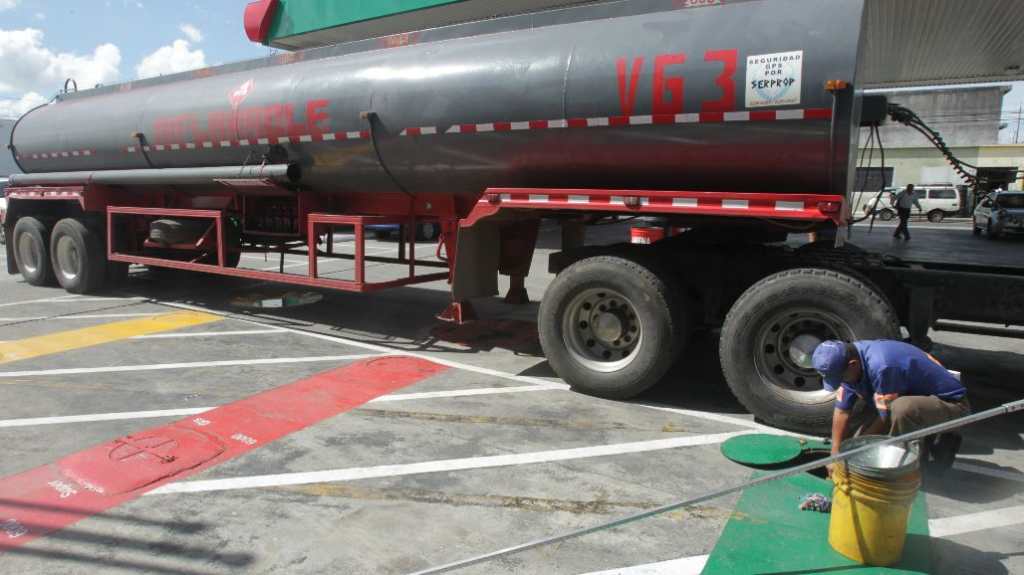
The gasoline importer and distributor sector, about the mandatory implementation of the mixture with 10% ethanol and the prohibition of importing that already mixed fuel, has not yet defined its position, since it is in the evaluation phase of its implications.
José Briones, Executive Director of the Guild of Hydrocarbons import companies (GEIH), explained that they continue to evaluate the final position of the sector and are in conversations on that matter, because there are still aspects without clarity.
They will not favor
The executive said that there is still a lot to do. Part of this depends on conversations with the authorities and how the pending aspects are defined. Briones clarified that the process takes time and requires important investments.
“At this time, we are not ready,” he added. He indicated that they are evaluating whether they can be on January 1, 2026, but considered that it is very unlikely, due to the multiple aspects that must be defined.
Congress

Sonia Gutiérrez Raguay, deputy for Winaq, said that her bench has begun to listen to some disagreements of the population, because the economy would be affected. In Congress there has not yet any repeal or legislative action; However, if a level of disagreement by the population was intensified – which could be seen soon – that situation can be considered.
Román Castellanos, legislator for seed, recalled that in Congress a part of the budget was awarded to comply with the norm, which in the original proposal was not included and that the discussion took place in the Finance Commission.
OPPORTUNITY WASTE
Julio Héctor Estrada, deputy of Cabal, considered that, due to having ideological or polarized discussions, the important, such as energy security.
The fact that the country produces and can use part of its oil consumption, in case of a crisis – as a war in Iran or a blockade in the Ormuz Strait – would help mitigate the problem.