
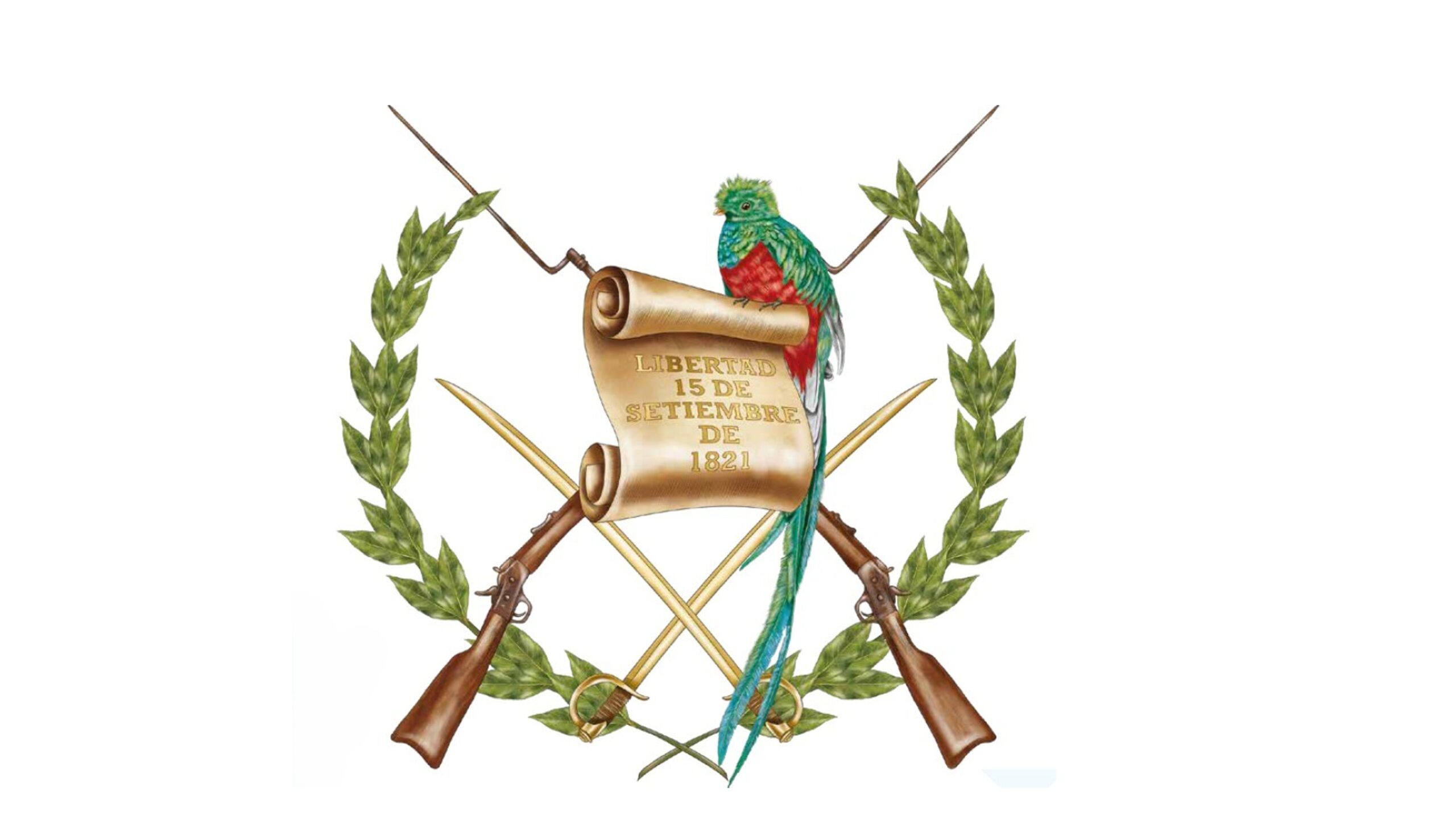
Weapons shields have been the most characteristic sign of the nobility since very ancient times.
In addition, they were widely used by knights who had to cover their bodies with iron suits, as it was necessary to mark them with symbols and other badges that allowed them to make them known.
History of the National Shield of Guatemala
Know the shields that Guatemala has had during his independent life.
August 21, 1823
It was the first coat of arms of the United Provinces of Central America, after having emancipated from Spain, it was decreed by the National Constituent Assembly. He consisted of an equilateral triangle and at the base was a mountain range with five volcanoes in a land bathed by two oceans. In the upper part I had a rainbow and, under this, a hat of freedom spreading light. A circular figure bordered the triangle with the gold letters: United Provinces in Central America.
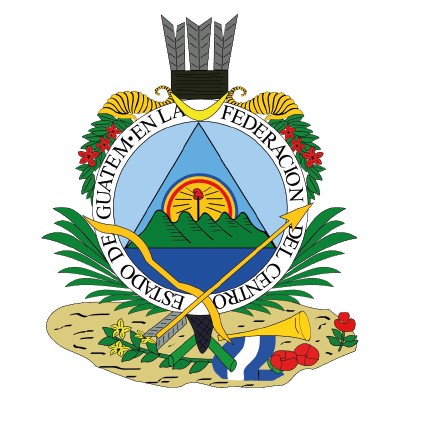
January 20, 1825
It was the state shield of Guatemala during the time when the Central American States belonged to the Federation, since each one had their own shield. He was on a large aljaba whose upper limb stood out on the circle and crowned it with the blue and white arrows. Of it, there were also two horns of abundance and, at the bottom, there was a portion of earth with some trophies and the colors of the flag. From there they climbed two palms that closed the circle. A gold and arc arrow crossed the base of the triangle. In the circle you could read in gold letters: Guatemala state in the Federation of the Center.
Modification of 1843
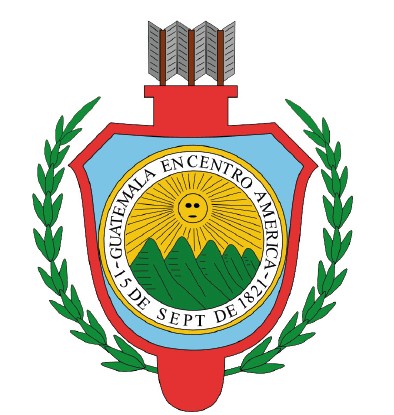
In a decree issued that year, another modification was made to the shield in which a sun and volcanoes were included in the center with the legend: Guatemala in Central America, September 15, 1821, also contained an olive crown.
March 14, 1851
The House of Representatives issued a new decree considering that as Guatemala had declared an independent and sovereign republic, it had to adopt a new pavilion to distinguish it from the other powers.
May 31, 1858
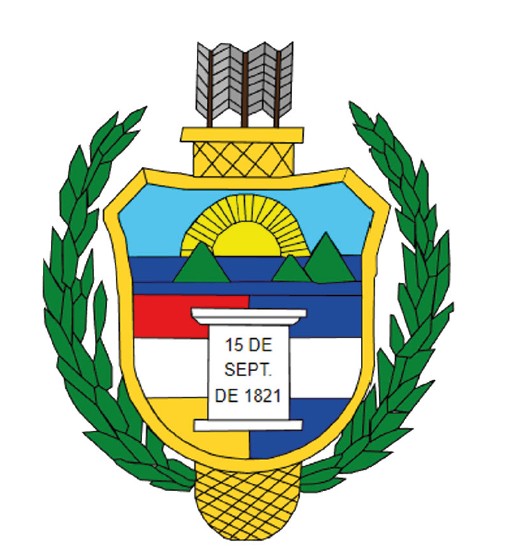
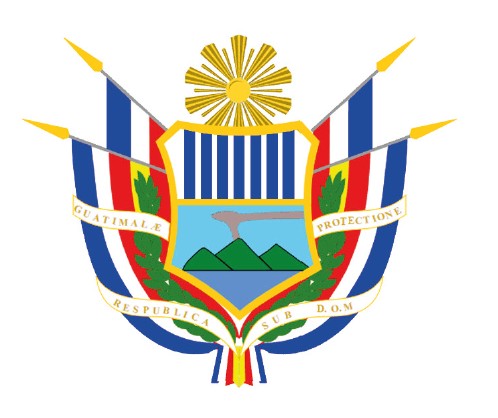
Another decree modified the symbols, the shield was divided into two barracks, the superior was blue with vertical silver bars and the lower one had three volcanoes on a light light blue field. In the upper part there was a sun and, on the sides, two pavilions with the national colors knotted in the antlers. He had a bouquet to the right and one of laurel on the left, in addition, a white ribbon with the legend in gold letters: Guatimalae Respublica Sub Dom Protectione.
November 18, 1871
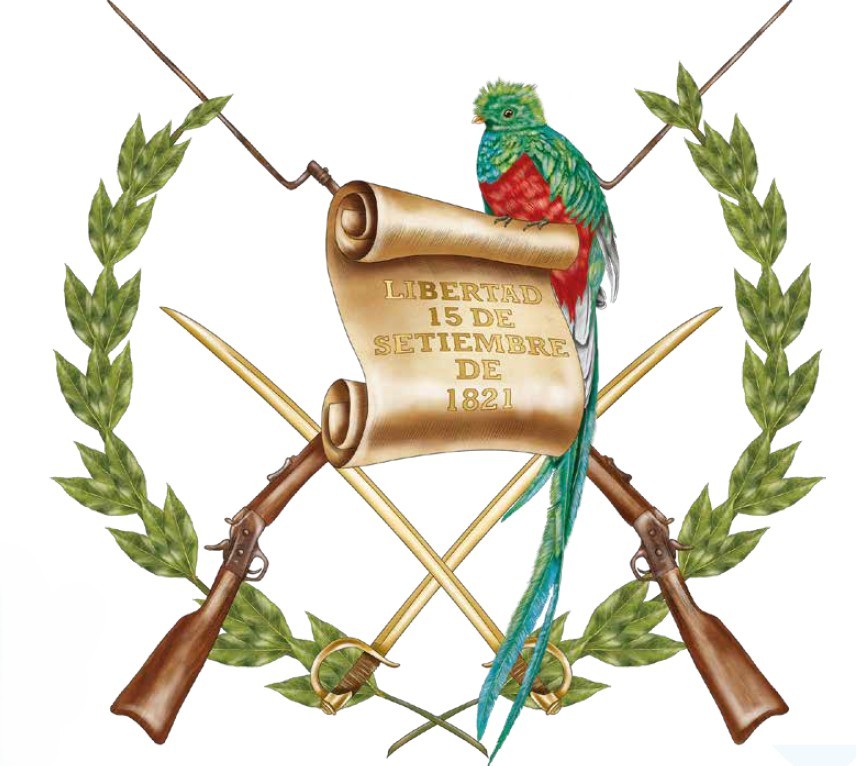
The president of that time, Miguel García Granados, issued the decree that gave life to the shield that is currently used and that is formed by the following elements with their respective meanings:
- Laurel branches: symbolizes triumph and victory. In ancient Greece the victors were crowned with that symbol.
- The scroll: represents the independence act and has registered the date on which it was written. Symbolizes and immortalizes the date of the birth of the homeland.
- Encino’s bouquet: it refers to the lasting of the civic virtues and the institutions of the country because the oak never withers.
- Weapons: express the force that attends homeland institutions.
- The swords: honor, justice and sovereignty. They are drawn and in gold, they intersect symmetrically to the rifles.
- The rifles: they symbolize sovereignty, security and defense. They are Remington rifles that were used at the time of the 1871 revolution.
- The quetzal: symbolizes freedom, autonomy and independence, because this beautiful bird cannot live in captivity. On the shield rest on the parchment and is shown in profile, with its longer flow feathers extending over weapons and some bay leaves. In this decree, Quetzal is declared as a national symbol of Guatemala.
Who was Juan Bautista Frener?
Of Swiss origin, he arrived in Guatemala in 1853 to work as a recorder at the Casa de la Moneda for his extensive experience.
At an organized party for the bosses of the triumphant army of the revolution, in September 1871, Frener decorated the hall where the tribute was offered.
General Barrios liked the composition so much, that he made him know President García Granados. Later, this allegory became the current coat of arms. That is why Juan Bautista Frener is considered his creator.
With information from Violet Velásquez