
Thousands of hectares of forest destroyed at a dizzying pace. Stolen water and depleted aquifers. Kidnappings and murders. All of this driven by the multi-million dollar demand for Mexican avocados in the United States. The trade is so lucrative that for years it has fueled a craze for illegally clearing forests and attracted cartels, which extort farmers by threatening them with violence. Traditional efforts to stop deforestation and criminal activity have largely failed, so now one group hopes to use the market itself to change the industry’s destructive dynamics.
The initiative, a certification program for orchards and businesses, aims to halt decades of forest loss by showing where avocados come from. By providing near real-time deforestation alerts, it also gives authorities data so they can act. “We have never reached what we are reaching now of being able to put a stop to the deforestation process,” said Guillermo Naranjo, federal environmental inspector in the state of Michoacán, the world’s main supplier of avocados.
How is US demand for avocados destroying Mexico’s forests?
After the U.S. ban on Mexican avocados was lifted in 1997, the avocado industry became hugely profitable, reducing poverty but devastating the environment, according to experts and officials. “Forests are beginning to be cut down excessively, without absolute control,” said Naranjo. “And no one stops land use changes, which are all illegal.” Mexican law requires a federal permit to convert forests into orchards, but according to authorities, no such document has been issued in Michoacán since the late 1980s.
There are many parties involved in clearing forests to plant avocados, including criminal gangs, landowners, corrupt local officials and community leaders. A 2023 report from Climate Rights International revealed that avocado expansion over the previous decade led to the clearing of more than 28,300 hectares of forest in Michoacán and Jalisco, the only states authorized to export avocados to the United States. Avocado orchards also consume much more water than native forests, depleting streams and aquifers at the expense of local communities.
The situation led to pressure on the four main US importers of avocados from a group of US senators and a consumer association, who sued the companies.
What does the new plan consist of?
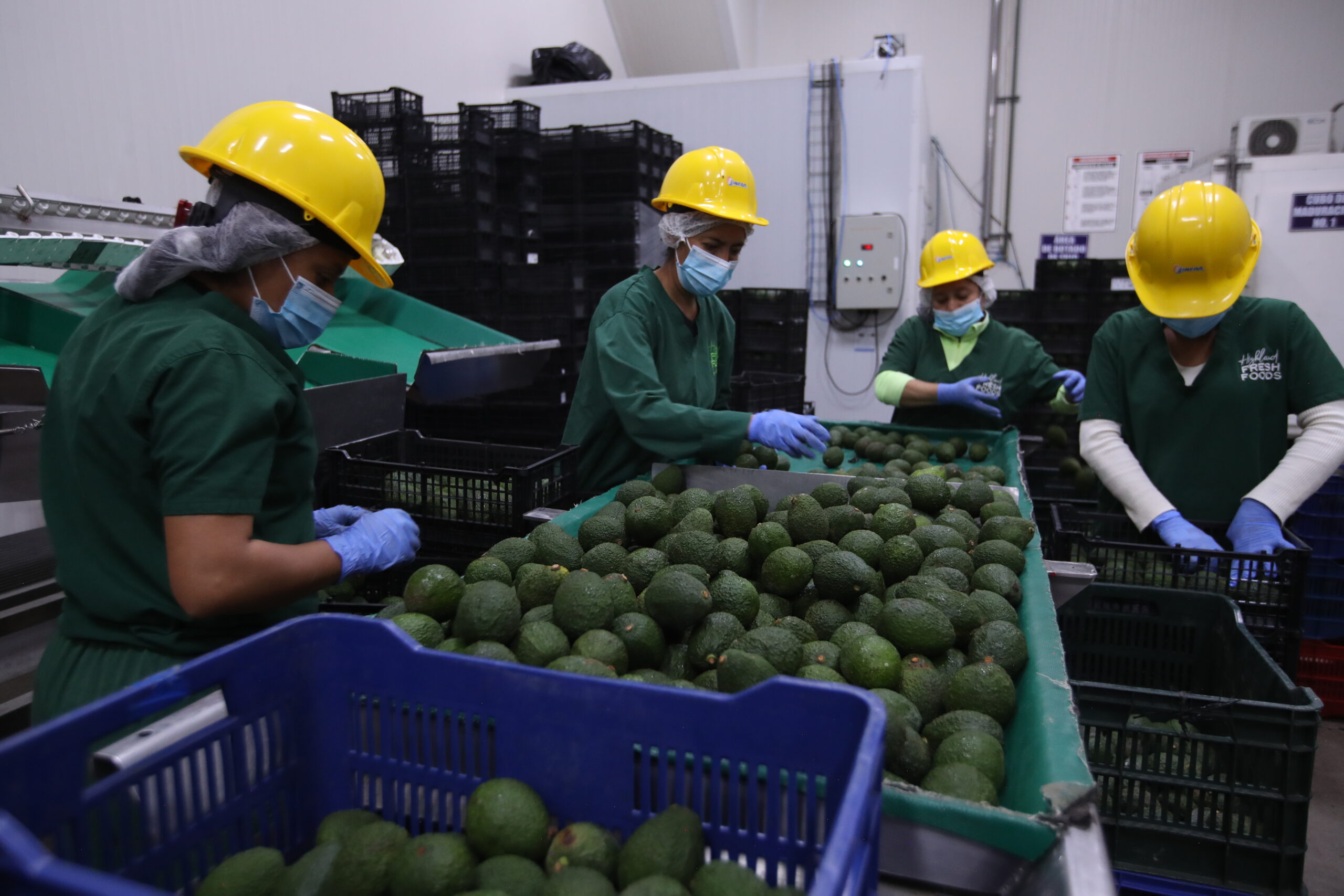
Last year, the state of Michoacán, in collaboration with the nonprofit Guardian Forestal, contacted those American importers and presented them with a list of suppliers who harvested in recently deforested orchards. They invited companies to join a voluntary certification program, a system based on satellite images, which was made public, to ensure compliance. To obtain certification, a packer must only purchase avocados from orchards free of deforestation since 2018 and free of forest fires since 2012.
“It is a system that allows you to carry out transparent procedures. You do not trust who certifies, but you can jump directly to the data,” said Heriberto Padilla, director of the non-profit organization. “That’s why everyone is trying so hard, because the packaging companies are afraid that the retailers “Orchards can also be certified for a fee, with some of that money returned to local communities to fund their own conservation efforts.
How have people reacted?
The program is already having some effects: avocados destined for the US market have recently been seen unharvested from non-compliant orchards. “It was very blunt, from one day to the next. And yes, the producers are upset,” said Luis Miguel Gaitán, manager of a Mexican packing house, Tanim Avocados, who has seen how some of his own partners have been excluded. However, he considers that it is a fair price to pay: “Business is one thing, but taking action and seeing what we are going to leave to our children is another thing.” Some environmental activists consider the 2018 benchmark too recent and question whether the program will be able to reverse decades of damage.
But they also say it may be the first effort to achieve change. “Before this, there was nothing,” said Nuria Yamada, a 33-year-old activist. “The program is working like a little light, when for years there were no glimmers anywhere.” The program has been criticized by others for being too cumbersome and dismissive of industry interests. The federal government and an association of avocado exporters are working on their own mandatory plan, which they hope to enact next year. Additionally, several producers have refused to join the program, citing concerns about how the money they would pay in fees would be used.
How effective has it been?
several municipalities, suggesting that producers have fewer incentives to cut down trees. “It is no longer financially profitable to do deforestation,” said Alberto Gómez-Tagle, a researcher who has studied the consequences of the avocado industry. But it’s too early to know if the program is solely responsible. Furthermore, the initiative may do little to reduce the criminal footprint of cartels, which have infiltrated the industry to diversify their income and take a cut of the profits. In August, the US Treasury sanctioned members of two criminal organizations for illegal logging and extortion of farmers.
Some growers could also try to game the system, experts say, by expanding their orchards into states that aren’t policed and then bringing uncertified avocados to Michoacán for export.