
The war in Middle East skyrocketed the cost of oilso energy economics helps explain why energy prices gasoline react unequally, to the point that a war thousands of kilometers away can be reflected in what consumers on the continent American must pay when loading fuel.
This war between the United States and Iran has profoundly altered the functioning of the oil market worldafter the interruption of maritime traffic in the Strait of Hormuzone of the main energy arteries of the planet, because it provides the only maritime passage from the Persian Gulf to the open ocean.
In accordance with what is stated by the International Energy Agency (IEA), more than 20 million barrels daily shipments of crude oil and petroleum products that normally circulated through the strait have been affected by the crisisso that it is a disturbance of exceptional magnitude in the energy market world.
Given the circumstances, the markets they reacted quickly to this situation international stressso, according to the British newspaper The Independentthe price of oil Brentan international reference for light and sweet crude oil, went from US$71 (Q542) prior to the start of hostilities to be located in US$99 (Q757).
rocket and feather effect
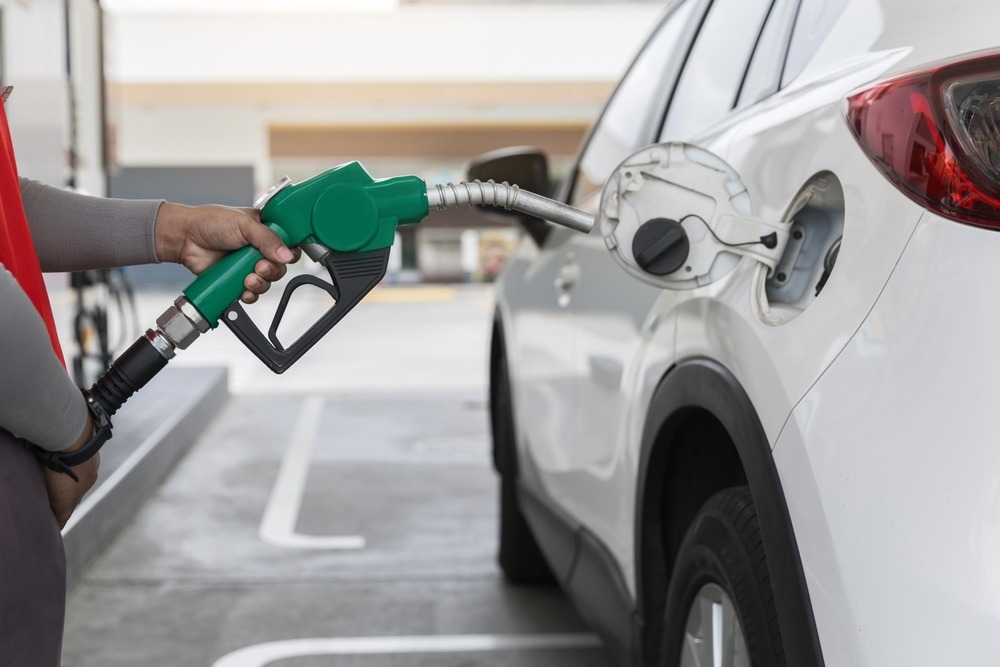
For many international consumers, the most visible effect occurs after stabilizes the price of crude oil, since, when oil rises, gasoline prices seem to increase almost by immediate at service stations around the world. However, when oil goes down, the decline is usually much more slow.
American economists call this phenomenon “rocket and feather effect”as gasoline prices rise like rockets and fall like feathers. However, the term was coined by Severin Borenstein and Richard Gilbert In his article published in April 1997which became popular in North America.
Therefore, since the international price of oil responds to factors geopoliticalfinancial expectations and production decisions of large exporting countries, distributors and service stations must add more taxes to the final price of fuel, with the aim of maintaining its margin of revenue.
In this situation, when the price of oil rises, the costs wholesalers increase rapidly and service stations usually pass on that increase with speed. However, when the price of oil falls, the adjustment usually occurs more quickly. delayin such a way that the current crisis illustrates this energy impact well.
Energy crisis of 2026
The International Energy Agency (IEA) estimates that global oil supply could be reduced by about 8 million barrels per day in May, due to the stoppage of exports and to the closure of energy infrastructure in several Gulf countries, where production was reduced due to lack of storage capacity.
This is because, to try to cushion the impact on the market, the IEA member countries agreed to release almost 400 million barrels of strategic reserves, with the aim of stabilizing global supply, although these interventions can only soften temporarily all tensions at the international level.