
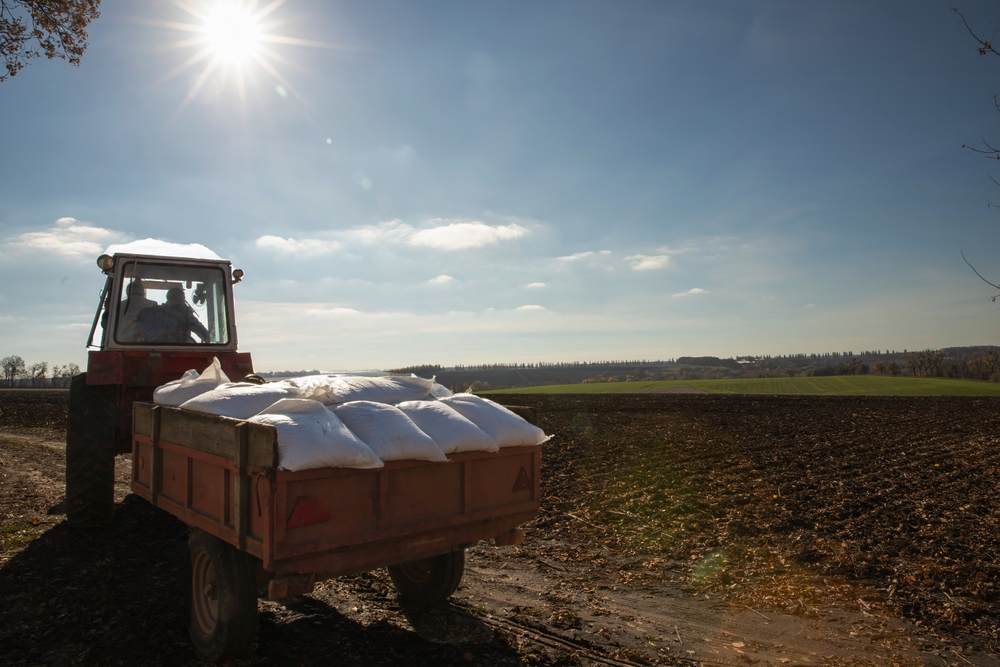
The continuation of the war in Iran increases the risks to global food security, especially in low-income countries dependent on imports, the Food and Agriculture Organization of the United Nations (FAO) warned this Thursday.
The organization’s chief economist, Máximo Torero, presented in Brunei a recent report on the impact of the conflict in the Middle East, which began with attacks by the United States and Israel on Iran on February 28, on supply chains, mainly due to the blockades in the Strait of Hormuz, through which a good part of global trade passes.
“The conflict poses additional risks to global economic and food security. Disruptions to oil, gas and fertilizer exports have already caused sharp price increases,” said the letter, which was published during an FAO ministerial summit for the Asia-Pacific region.
Torero stressed that the prolongation of the conflict would aggravate the consequences on the world population, since in the coming months the production and distribution of food would be reduced, which would lead to an increase in prices that would punish low-income countries more strongly.
“We do not want to be alarmist, but rather realistic, and that means understanding that we are facing enormous challenges,” he said.
He recalled that the Persian Gulf is one of the largest fertilizer production centers and that close to 30% of the world’s trade in these products transits through the Strait of Hormuz, so interruptions in this artery threaten the agricultural sector, especially in Asia, Africa and the Middle East.
“Lower agricultural production could trigger knock-on effects on basic food products, where grain shortages further drive food price inflation and worsen hunger in import-dependent low-income countries,” the report said.
Consequences in Latin America
The FAO warned that farmers in Latin America, “already facing difficult market conditions with low commodity prices, may not be able to afford a further increase in input costs and will have to reduce fertilizer use.”
The document highlights the case of Brazil, as it is a global agricultural power that obtains a fifth of its fertilizers from the Persian Gulf, which leaves it in a position “directly vulnerable to the logistical bottlenecks” generated by the conflict in the Middle East.
“If Brazilian farmers reduce fertilizer use due to rising costs or limited availability, crop yields will decline and this would transmit the crisis directly to global food markets, raising food and commodity prices around the world,” the brief continues.
The UN recalls that the South American giant, where 213 million people live, is a global leader in the export of vital commodities such as soybeans, corn and sugar, so any impact on its agricultural production would have consequences on the international market.