
Democrats have always been optimistic regarding recovering the House of Representativesbut a changing political landscape has also made his once-unlikely hopes of gaining control of the U.S. Senate more feasible. High gas prices and growing voter distrust in President Donald Trump’s economic management have raised concerns among Republicans that Democrats could overcome their 53-47 seat lead.
The Republican Party remains the favorite to maintain control, as Democrats would need to win in states that tend to vote Republican. However, those odds have been shifting in Democrats’ favor as Trump’s popularity declines in the polls. “During his first term, the economy was his strong point,” said Lindsey Owens, executive director of Groundwork Collaborative, a progressive think tank specializing in economic issues.
“That phenomenon was crucial for his re-election. People remembered him as a firm defender of the economy.” But those popularity ratings are plummeting. A survey of Associated Press-NORC released last week showed that 70% of respondents in April disapproved of Trump’s economic management, up from 61% in March.
A survey of Fox News published last week paints an even bleaker picture for Republicans: for the first time since May 2010, voters trusted Democrats more than Republicans in economic matters, and this continues to be one of its main concerns. To gain control of the Senate, Democrats must defend all of their current seats at the polls and win at least four traditionally Republican states, all of which Trump has won three times.
“That’s where the majority will ultimately be won or lost,” said Kyle Kondik, an analyst for Sabato’s Crystal Ball, a nonpartisan election website and newsletter. Republicans plan to fight hard for their incumbents and also try to take seats from Democrats, even as the latter post impressive fundraising numbers. These are the 11 states that, according to Cook Political Report, will determine control of the Senate.
Best chances for Democrats to win seats: North Carolina, Maine, Ohio.
North Carolina, Maine, Ohio. Each of these states has an electorate that Democratic strategists say is very likely to vote for them in 2026. In Maine, five-term Sen. Susan Collins holds the distinction of being the only Republican senator representing to a state that voted for Kamala Harris in 2024. Strategists from both parties consider Maine a swing state.
In June, Maine Democrats will face an ideological and generational dilemma between Governor Janet Mills, 78, the state’s first female governor, and her more anti-establishment rival, Graham Platner, a 41-year-old oyster farmer and military veteran. Platner has come under fire for old online posts and a chest tattoo, which he modified after public controversy over whether he was anti-Semitic.
Democrats have recruited well-known former Ohio and North Carolina politicians who have repeatedly won state elections. Former Senator Sherrod Brown (Democrat) is running in Ohio to unseat Senator Jon Husted (Republican) who was appointed when JD Vance became vice president. In North Carolina, former Gov. Roy Cooper, a Democrat, will face Trump-backed former Republican National Committee Chairman Michael Whatley in what is expected to be one of the most expensive Senate races in the country.
There are no sitting senators in this election, as Thom Tillis, a Republican, is retiring.
Republicans’ best chance of victory: Michigan
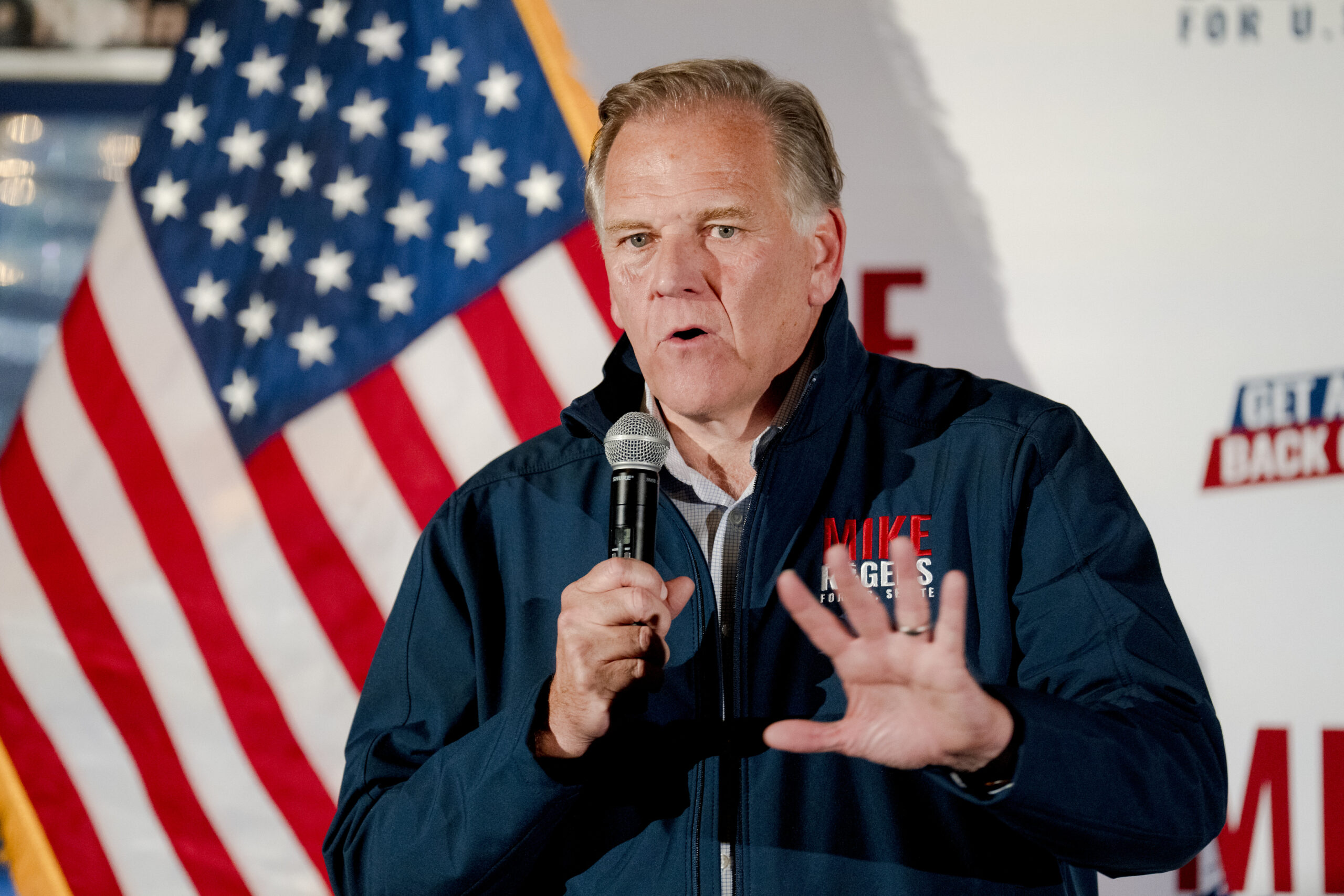
Michigan has its second open race for a Senate seat in two years, and Republicans see their narrow loss in the 2024 Senate election as a roadmap to victory in this key state. Senator Gary Peters (Democrat) is retiring. It is one of two Democratic-held Senate seats up for vote this fall in states Trump won in 2024 — the other being Georgia.
Republican Mike D. Rogers, a former congressman who lost to Democratic Senator Elissa Slotkin by 19,000 votes two years ago, is running again and has the support of Trump, facing the Republican primaries of August. Democrats are in a tight three-way race with candidates spanning the party’s entire ideological spectrum.
Democrats have a harder time winning seats in Alaska, Iowa, Texas and Nebraska.
Trump won these four states by double-digit margins, making them much more difficult targets for Democrats. But both parties consider them battlegrounds this year. In Alaska, former Congresswoman Mary Peltola (Democrat) is challenging Senator Dan Sullivan (Republican) who is seeking his second term. No Democrat has won a seat in the Senate for Alaska in almost two decadesbut Peltola won Alaska’s only seat in the House of Representatives in 2022, in a special election.
She narrowly lost re-election in 2024. Democrats consider her a strong candidate in a year when Republicans are often unfavorable to incumbents, but they are confident they can keep the seat. In Iowa, Sen. Joni Ernst, a Republican, is retiring, leaving a seat vacant in the once swing state that Republicans have dominated for years.
However, polls suggest a change in the political landscape, and its comparatively cheaper media market makes it an attractive place for national parties to invest large sums in advertising. Two Democrats in the state legislature, Rep. Josh Turek and Sen. Zach Wahls, are the front-runners in the June primary, while U.S. Rep. Ashley Hinson, a Republican, has taken the lead against her primary competitors.
In Texas, Democratic candidate James Talarico, a state representative and seminarian, has been actively fundraising since winning the primary, while Republicans prepare for a May runoff in which Trump has stayed away. Sen. John Cornyn, a four-term incumbent and key GOP figure, faces the state’s combative Attorney General Ken Paxton, whom state Republicans impeached but failed to remove.
In Nebraska, Democrats hope that a Republican loss to an independent will help reduce the GOP’s power in the Senate. Senator Pete Ricketts (R), former governor, faces independent Dan Osborn, his most well-resourced opponent in the race.
Republicans are less likely to win in Georgia, New Hampshire and Minnesota.
Republicans are seeking to gain seats in Georgia, a state that Trump won in 2024, and in New Hampshire, where Harris won by less than three points. Minnesota is a much smaller possibility. In New Hampshire, voters have sent Democrats to Washington in recent years but have elected Republicans to run the state government. The retirement of Senator Jeanne Shaheen (D) left one seat vacant.
Two Republicans, both former senators, are seeking their party’s nomination: John Sununu, who lost to Shaheen in 2008, and Scott Brown, who lost his Senate reelection bid in Massachusetts and also lost to Shaheen in 2014. Rep. Chris Pappas (D) is his party’s favorite.
In Georgia, Senator Jon Ossoff is the only Democrat in the country seeking reelection in a state that elected Trump in 2024. Republicans have a crowded three-way race without a clear favorite in the May primary, which could lead to a runoff in June. Trump has not commented on these primaries.
In Minnesota, Senator Tina Smith (D) is not running for re-election. While Trump lost the state by 4.2 percentage points in 2024, Republicans see a slim chance of a victory depending on who emerges as the winner in August’s Democratic primary.