

Guatemala will have moderate performance in the growth of family remittanceslike other Latin American countries, according to the report “Continuity and change in remittance transfers, 2026”, which estimates a rate of 2.7% and an income of about US$25,732 million.
The analysis by the Inter-American Dialogue entity, based in Washington DC, presented in March, identifies seven factors that will influence a moderate pace of remittances and calculates that The region will receive about US$168,775 million in 2026, which will mean a growth of 2%.
The report argues that business, politics and economics are defined by trends that influence change and continuity of decisions or actions. “The money transfer industry is not immune to these trends. Although the fundamentals of growth are practically the same – changes in the needs or behavior of senders and recipients, competition between financial intermediaries, policies and regulations, and use of innovation and technology – there are several processes that will determine the performance of remittances this year and that show a modest growth of 2%,” the document highlights.
The report warns that this growth will affect the consumption capacity of many countries highly dependent on remittanceslike Honduras, Nicaragua or Guatemala. In general, remittances represented 5% of the GDP of all of Latin America and the Caribbean, and their contraction will be reflected in the economic behavior of many countries.
Guatemala enters the top 5 countries with the most remittances
The report adds that, by 2026, Guatemala is among the first five countries that will receive the highest income from remittances.
- Mexico: US$61 thousand 336 million
- Guatemala: US$25,732 million
- Colombia: US$13 thousand 207 million
- Honduras: US$12,378 million
- Dominican Republic: US$12,253 million
Fewer remitters will set the pace of remittances in 2026
The Inter-American Dialogue analysis maintains that there are seven factors that will influence a moderate pace in transfers by 2026.
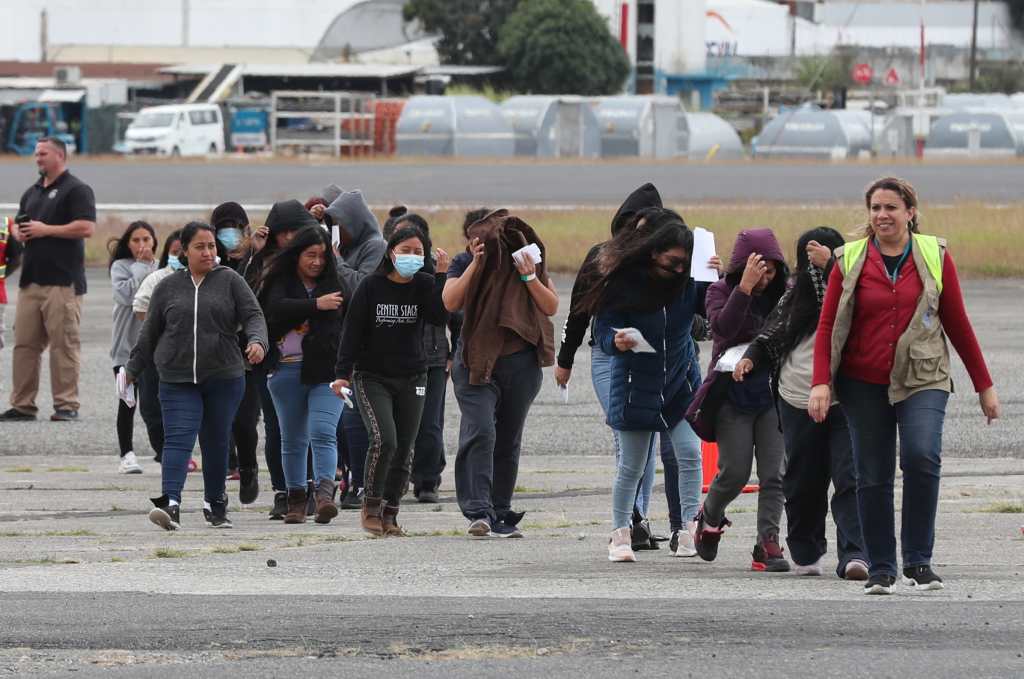
It stands out that, first of all, the decrease in the number of remitters will continue this year, although to a lesser extent. It will be driven mainly by the reduction in migration and increase in deportations.
Given current trends, irregular migration in 2026 can be estimated at 380 thousand people, which represents 15% of the average arrivals between 2020 and 2024.
This figure is similar to or slightly higher than the irregular arrivals in 2025, which was 360 thousand people. “This point is important because irregular migration represented 80% of Central American migration and part of South American migration, and 50% of Mexican migration,” they point out.
Furthermore, the majority of these migrants began sending money the same year they arrived, which contributed to the significant growth in transactions during that period. Following the decrease in arrivals, the increase in new remitters also decreased.
Likewise, it is likely that deportations in 2026 will remain at a similar number to that of 2025, in a conflictive political environment, but directed at certain nationalities with a higher risk of deportation, such as those who have expired humanitarian relief permits, expired work permits and do not have authorization to remain in the country, those who have a court date in immigration court and those who have deportation orders.
In this sense, the number of remitters could decrease between 3% and 5%, depending on the trends of each country.
Remittances face pressure from regulations and migration
Secondly, the principal amount of the remittance will not exceed 5% compared to 2025, due to income limitationsunless migrants choose to draw on their savings (half is intended for emergencies).
Third, migrants’ responses to the remittance tax reflect important trends.
This growth will affect the consumption capacity of many countries highly dependent on remittances, such as Honduras, Nicaragua or Guatemala. In general, remittances represented 5% of the GDP of all of Latin America
Fourth, a key consequence of the remittance tax is competition between companies to offer and market digital transactions.
Fifth, the restrictions imposed by various regulatory bodies add complexity and difficulties to the sector.
Sixth, competition occurs in different segments.
Seventh, the political crisis and the pending transition in Venezuela turned that country into a vital recipient of remittances, with more than 750 thousand transactions originating in the US and where more companies offer transfers.
Fewer remittances will hit households in 2026
In conclusion, the report indicates that this growth should be taken as a reference, while possible upward trends could be due to the resilience of migrants.
It is important to consider other factors, such as the slowdown in economic activity in some countries, accompanied by possible political turbulence in Nicaragua, Ecuador, Honduras or Guatemala, that could modify migratory intentions and increase pressure on irregular arrivals at the border between Mexico and the United States.
These changes affect economic growth in the region, since in several countries the volume grew significantly, and a decrease of 3% to 5% in Central America will imply a reduction of 1% in these countries.
It must be taken into account that it is not only about the volume slowdownbut from the fact that almost a million households will stop receiving remittances at the end of 2026.
This implies that economic pressure occurs both in those who do not emigrate – who support these households and may be at least 300 thousand Latin Americans – as well as in those who were deported (at least 350 thousand) and in those who stopped receiving remittances, which total more than 700 thousand in the last two years.