
He quetzala symbol of identity and economic stability in Guatemala, has played a key role in the country’s financial history. Besides, is considered one of the most stable currencies in Latin America.
This year, the Bank of Guatemala announced two news about six coins and a collectible bill to commemorate his legacy. However, to understand its value beyond the economic, it is essential to know the historical evolution that has marked its design and circulation.
From the Mayans to the birth of the quetzal
According to information on the website of the Numismatic Museum of Guatemalain Guatemalan territory, the mayan civilizations They used products like cocoa, jade, salt and feathers as means of exchange.
Later, with the Spanish colonization (1524-1821) a Reales monetary system, coins minted in other territories of the empire, as explained on the museum’s website.
During the Central American Federation (1823–1839) there was no consolidated currency of its own. Mainly Spanish colonial currencies, such as the real, continued to circulate. Attempts to create a federal system failed to stabilize a single currency.
RELATED READINGS

After the definitive separation of the federation and the founding of the Republic of Guatemala, in 1847, Banks and the issuance of banknotes began to emerge. Later, with the monetary reform of 1924, the quetzal was born as a monetary unit, replacing weight.
After the Revolution of 1944the country strengthened its financial system with the creation of the Bank of Guatemala.
At the end of 1968, the Monetary Board of Guatemala promoted a redesign which marked a key change: we went from allegories and symbols to historical figures and eventsbasis of the current design.
RELATED READINGS

From Q0.50 to Q200: the history and changes of banknotes in Guatemala
Modern banknote designs began to circulate in the early 1970s, printed by De La Rue.
These new banknotes incorporated elements of Mayan culture, the image of the quetzal in flight and new security measures such as microtexts, ultraviolet ink, iridescent effects and matching images.
To date, although they have had updates in color, size of the figures that compose it, materials and security systems, This model has been maintained for more than five decades, consolidating itself as the image of paper money in Guatemala.
Q0.50 (1972–1998): First bill withdrawn from circulation
The Q0.50 bill incorporated the image of Tecún Umán as a main historical figure. It was part of the first modern designs of the monetary system in force from 1972, until its retirement in 1998, when it was replaced by metallic currency.
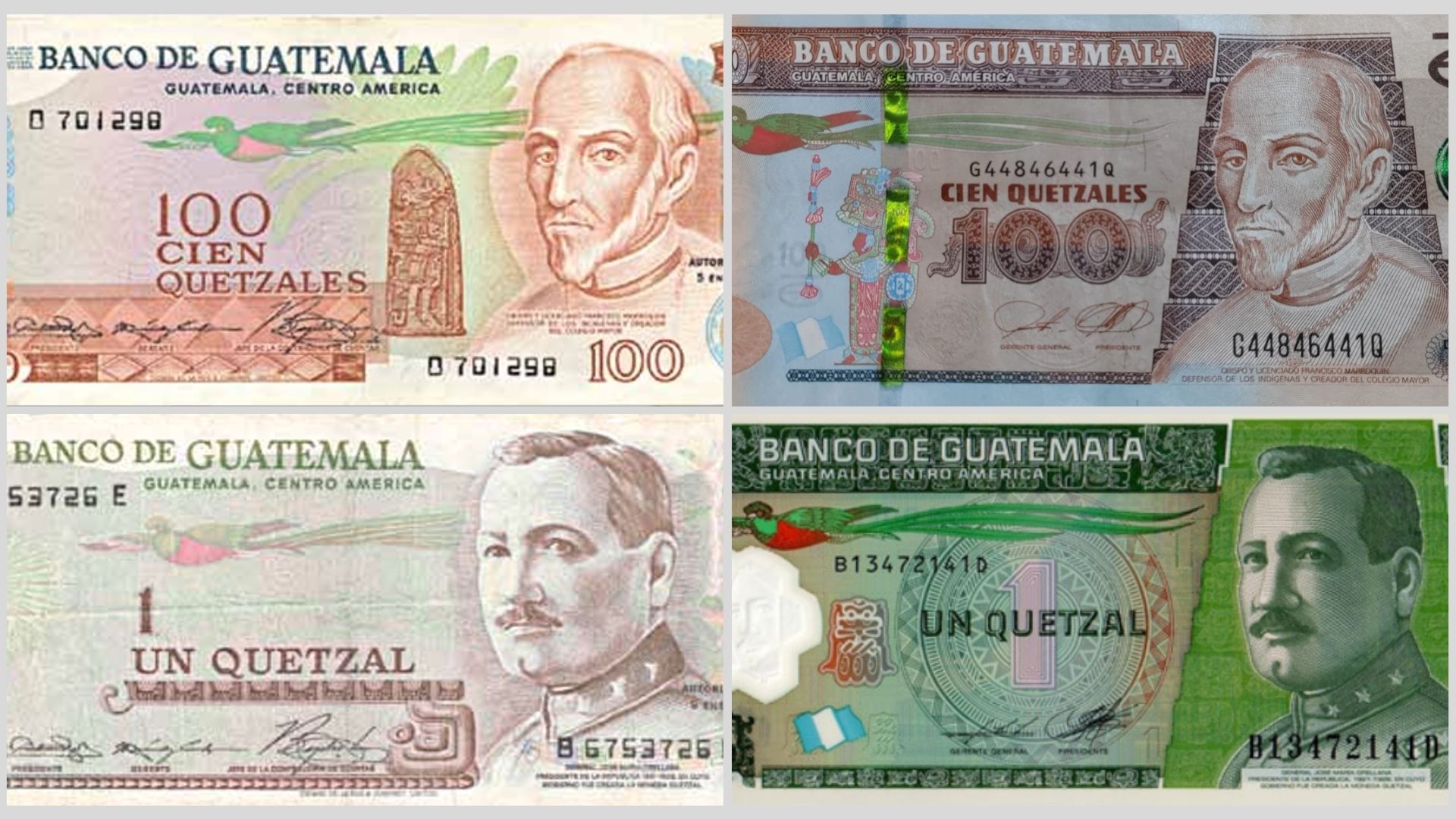
Q1 (1972–2023): Replaced by metallic currency
The Q1 ticket presented José María Orellana next to the Banco de Guatemala building. It remained in circulation for more than five decades before being replaced in 2023 by its modern metal version.
Q5 (1971–present)
The Q5 bill highlights General Justo Rufino Barrios as a central figure. Although it has received improvements in safety and color, it retains its original design as one of the longest in circulation.
Q10 (1971–present)
This bill features Miguel García Granados and maintains its historic design. Over time it has incorporated adjustments to security elements without altering its main structure.
Q20 (1972–present)
The Q20 ticket includes Mariano Gálvez and scenes linked to the history of the country. Its design has remained current with technical improvements in safety.
Q50 (since 1967): First name of the reform
ANDThe design of the Q50 bill includes Carlos O. Zachrisson. This denomination was created after the second monetary reform and put into circulation before the redesign promoted by the Monetary Board of Guatemala in 1968.
Q100 (1972–present): Reference with the greatest circulation
The Q100 bill represents Francisco Marroquín and has been one of the most important denominations of the Guatemalan monetary system. It remained the highest value for decades, until the introduction of the Q200 in 2010.
Q200 (last denomination): Higher value in circulation
The Q200 bill pays tribute to the Guatemalan marimbawith the figures of Sebastián Hurtado, Mariano Valverde and Germán Alcántara. It became the largest denomination in the Guatemalan monetary system. Its circulation began on August 23, 2010, according to data from the Bank of Guatemala.
In 2024, the central bank announced a new issuance of this denomination, with improvements in security and representation elements within the country’s financial system.
Six commemorative coins and a collection note this 2026
The 2026 commemorative coin collection of the Banco de Guatemala (Banguat) will be dedicated to historical milestones such as 100 years of central bankingthe 80 years of the Bank of Guatemala and the 70 years of the Civic Center.
These silver pieces will seek to highlight the cultural heritage of the country and will be focused mainly on collecting, it is expected that in the In the next few days Banguat will provide details about it.