
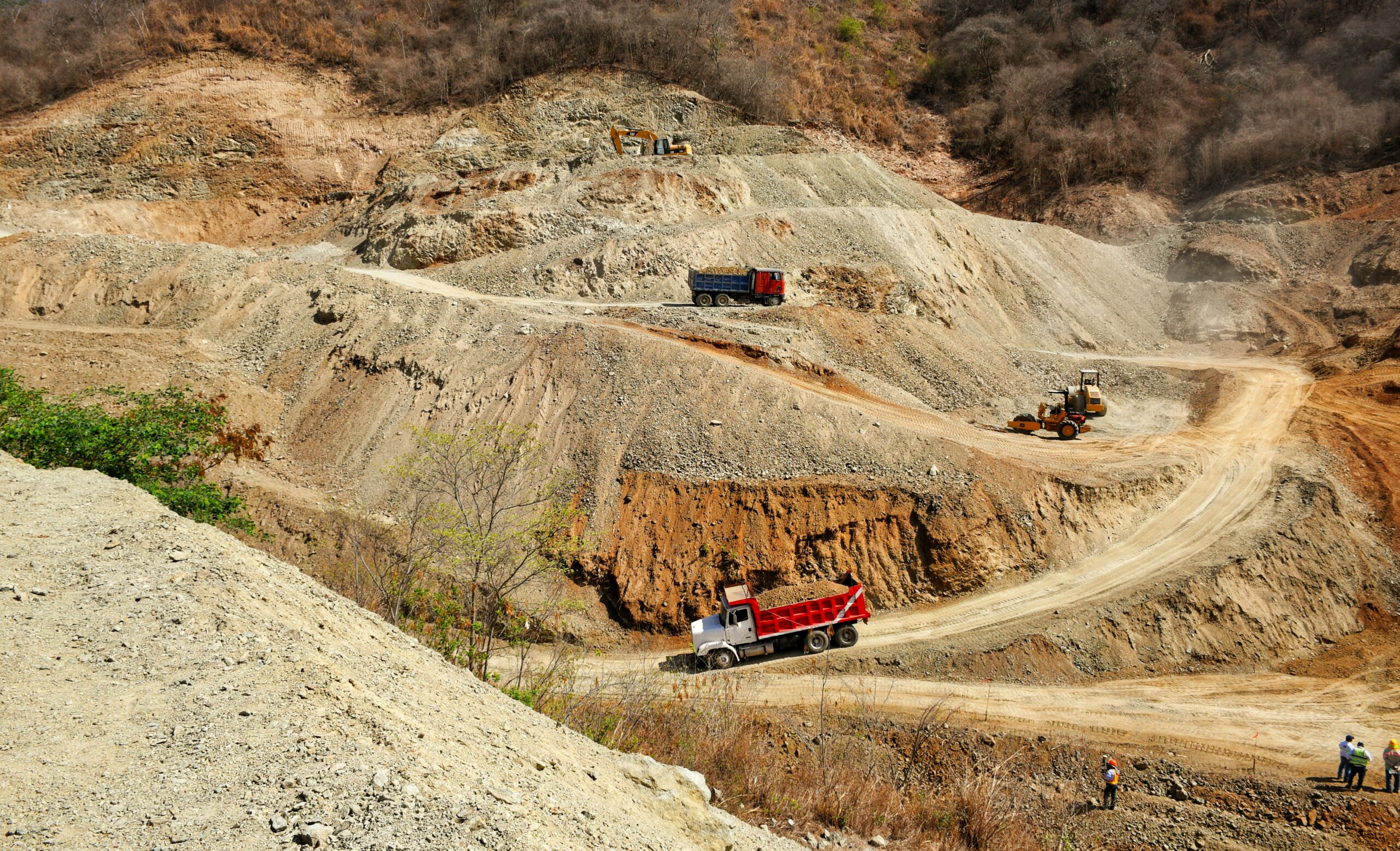
The Ministry of Communications, Infrastructure and Housing (CIV) reported through the Guatemalan News Agency on progress in four sections of the C-50 Regional Ring, a road project divided into eight segments that seeks to surround the capital and connect the departments of El Progreso, Escuintla, Guatemala, Jalapa, Jutiapa, Sacatepéquez and Santa Rosa. The objective of the work is to reduce vehicle load in the metropolitan area and reduce logistics costs by avoiding passage through the capital.
According to Delfino Mendoza, a member of the Guatemala No Se Detiene infrastructure board, in 2023 the previous administration left four of the eight sections contracted. However, only section 8, which connects Escuintla with Guanagazapa, was under construction, while the other three remained suspended.
Mendoza explained that these projects were reactivated. “They subdivided one and now they have reactivated four contracts,” he said. However, he indicated that there are still important pending issues: three of the remaining sections have not completed their engineering studies. “We must expedite the completion of the studies, put out to tender the projects and give continuity to those that are already contracted. Let’s hope that this progresses,” he added.
The C-50 Regional Ring was proposed since 2013 and contemplates connecting 58 municipalities in eight departments. In total, it will cover 182 kilometers and is part of a strategy to improve the country’s road connectivity and facilitate the transit of goods without entering the capital.
These are the sections that report progress.
Section 1
Section 1 includes the connection from the CA-9 North to Sansare, in El Progreso, passing through Sanarate, and includes the expansion of the road to four lanes. The project was awarded to the company Constructora y Transporte San Francisco for an amount of Q664.53 million. The work began recently, with an estimated physical progress of 0.22%.
According to the CIV, work is currently being carried out focused on preparing the land, which includes excavations, cuts, filling and stabilization of the surface for the future highway. These works also include the construction of structures such as slopes, berms and embankments, which will serve as a base for the new road platform.
“The work is concentrated at different points of the section, with interventions between stations 58+700 to 60+000 and 60+100 to 61+000, where progress is being made in the preparation of the land in accordance with the technical specifications of the project,” the portfolio detailed.
This segment will have an approximate length of 14 kilometers and, according to authorities, will contribute to linking eastern regions with the south of the country and will benefit more than 56 thousand inhabitants.
Section 6
In section 6, located between the CA-1 Oriente and the El Obrajuelo sector, in Villa Canales, work continues to expand the RD-GUA-09 highway to four lanes. The section was divided into two phases. Phase I is in charge of the company Representaciones CEM, for an amount of Q868.45 million. Phase II is in charge of the company TRACSER, for an amount of Q853.81 million. The work is in progress, with a recent start, and reports a physical progress of 10.75%.
The CIV reported that the work focuses on the formation of the road structure through earthworks on different fronts. Simultaneously, actions are being carried out to keep the existing route enabled, which includes interventions on the surface and the installation of 36-inch diameter transversal culverts.
The work is carried out in at least two points of the section, while maintenance tasks are carried out on the current road to allow vehicular circulation during the execution of the project.
According to the institution, these interventions seek to improve traffic conditions in an area with high traffic, both for light and heavy transportation.
Section 7
In section 7, interventions are currently being carried out aimed at leveling the land, reinforcing the base structure of the road and expanding lanes on the RD-ESC-09 and CA-2 Oriente routes. The project was awarded to the company Aspectro for an amount of Q990.17 million. The work began recently, so no physical progress is reported.
These works will enable a road with greater capacity, which will contribute to reducing travel times and improving conditions for transportation and commercial activity in nearby communities, benefiting more than 180 thousand people.
According to the CIV, in the medium and long term these interventions are part of a strategy to alleviate the vehicular load on the main routes of the metropolitan area and facilitate the mobility of people and goods on a national scale.
Section 8
Section 8, which connects Escuintla with Guanagazapa, is the one that has made the most progress. According to Mendoza, progress had been slow in previous stages due to payment issues, but is now showing improvements. The project was awarded to the company Ciansa for an original amount of Q590.27 million and is in execution, with a physical progress of 58.89%.
He pointed out that key works such as bridges and access to Guanagazapa have already been completed, which represented one of the main delays. “Now you can see that they are working,” he said.
He added that, if the current pace is maintained, this section could be completed in a period of between eight and ten months.
Impacts
Mendoza explained that one of the main benefits of the ring will be the connection between strategic corridors in the country. “It would have an impact on joining the CA-2 Oriente route, which goes from Escuintla to the Pedro de Alvarado border, in El Salvador, with the CA-1 Oriente, which is the one that goes from Guatemala to Jutiapa,” he said.
He indicated that this first phase would allow significant improvements in mobility, although connections to other routes would still be pending. He also warned that some sections present greater technical challenges.
“The CA-1 North is going to be a little more complicated because there is a part where it is 100% new construction. You have to acquire the right of way and that has always been a problem; it delays the works,” he explained.
According to Mendoza, the development could be carried out in two stages: first, the connection between CA-2 Oriente and CA-1 Oriente, and subsequently, the integration towards CA-9 North.
Likewise, he highlighted that four sections are already being executed. “Those that are already working are number 8, which came from the previous administration, and those that have just been reactivated: number 7, 6 and 1,” he pointed out.
Pending sections
Regarding the pending segments, Mendoza indicated that three have yet to complete their engineering studies, while another must be tendered again.
“One already had studies because the previous administration put it out to tender, but for some reason it was not awarded. So, we have to repeat the tender,” he explained.
Section 2, which will connect Sansare, El Progreso, with Jalapa, will have an extension of 28 kilometers and is pending engineering studies. Section 3, 44 kilometers between Jalapa and Mataquescuintla, was tendered in 2023, but not awarded, so the process must be restarted.
Section 4 will connect Mataquescuintla with El Salitre, Santa Rosa de Lima, in the department of Santa Rosa. It will have an extension of 40 kilometers and engineering studies still need to be completed before starting the tender.
Engineering studies are also pending for section 5, which continues section 4, from El Salitre and El Pino lagoon to the junction with the CA-1 Oriente.
Mendoza warned that execution times could extend beyond what was originally planned. “The contracts have a term of 24 months, but they are unlikely to be completed in that time, considering that a good part of the term has already passed,” he indicated.
He added that, although the suspensions stop the counting of contractual time, the accumulated delays could affect the completion of the works. “That may already begin to affect them so that they do not leave within the 24 months that the original contract said,” he commented.