
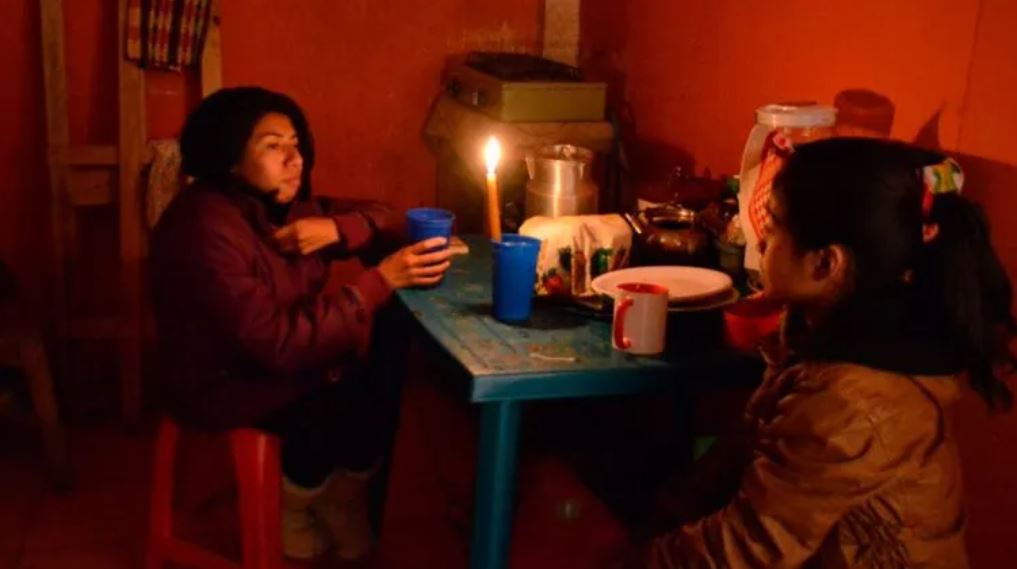
After the first INDE tender for rural electrification works financed with an IDB loan was unsuccessful, the Institute relaunched the process this year with a new event, making modifications to attract more bidders and seeking to make it happen.
For the Infrastructure Program for Rural Electrification (Pier), a loan of US$120 million has been approved with the Inter-American Development Bank (IDB), for which several phases of events were established.
However, the first, launched as a tender in August 2025, only received a proposal from one bidder in October and was declared not awarded on March 13, 2026, according to the Guatecompras system.
With the first event, it was planned to serve more than 6,500 homes in 72 communities in Alta Verapaz, Baja Verapaz, Huehuetenango and Quiché, according to authorities reported last year.
The new event was launched on March 24 as a Request for Offers (SdO) for the Construction of Distribution Networks and Electric Lines in Medium and Low Voltage Guatemala (Block 1); However, in the process documents it is identified as a call for bids. The date for receiving offers is May 19, according to Guatecompras.
It is planned to cover 133 communities in Alta Verapaz, Baja Verapaz, Huehuetenango and Quiché, for around 10,000 or 12,000 homes, divided into three work lots.
For the first tender, an investment of Q60 million was estimated, but for the second event it has been estimated at Q110 million.
Armando Martínez Aguilar, manager of the National Electrification Institute (INDE), who before assuming that position in January 2026 served as manager of Rural Electrification of said entity, explained that the first process was completed in January of this year without awarding it because the technical offer did not meet the requirements. For the new event, changes were made to the bases, among these three elements that they consider important, he added.
CONTENT FOR SUBSCRIBERS
Although in the first contest there were around 10 potential bidders, in the end only one participated, so they hope that in this new event they can bid more, he indicated. Now, in the first information meeting with bidders, held in April of this year, about 12 companies participated, the official said.
Unlike the first event, in which companies could bid only for the entire lot, now they will be able to do so for any of the three lots or for the entire lot, he added.
The official explained that in the first event it had been proposed that the 72 works were from a single lot, that is, they would be assigned to a single company, with a period of six months to complete them.
Now 133 works are planned, divided into three lots: the first lot covers 46 communities; the second, 37; and the third 40. And with terms of 10 months.
In addition, he said that when reviewing the bases of the previous contest they observed that they could relax the requirements requested for the guarantee, since they were considered very high.
The feedback received by interested parties allowed them to understand how potential bidders perceived the tender and what aspects could be improved.
What does it consist of?
The works for electrification with this project consist of the expansion of the energy distribution network.
The manager explained that, according to the General Electricity Law, as INDE they promote the expansion of the network from the point of view of labor and materials; However, when the network is built, it is operated and maintained by the distributor that has the concession in the area.
Funding for the project will come from a US$120 million loan from the Inter-American Development Bank (IDB).
CONTENT FOR SUBSCRIBERS
The first US$60 million will be from the Ordinary Capital of the IDB, and the other US$60 million, from the Korea Facility for the Co-financing of the Infrastructure Development of Latin America and the Caribbean, administered by the IDB, according to the approved decree.
The Pier Support Project is designed to cover 40 thousand homes, with more than 221 thousand people benefiting.
Other tenders are planned in June, September and January 2027 to complete 100% of the process.
The intention is to cover between 125 and 130 communities in each event, and it has been estimated that in each one there will be about 500 kilometers of medium voltage. For example, each community carries an average of between three and five kilometers of medium voltage network.
The manager said that in the case of the IDB, he participates from the conception of the loan contract, which defines a series of clauses that must be complied with by the State of Guatemala, which designated the INDE as executor. A specific executing unit and program regulations are established that define how the operation is carried out between the institution and the bank.
Martínez added that the rules for bidding and the process are coupled to those of the bank, and that Guatecompras is used as a transparency mechanism.