
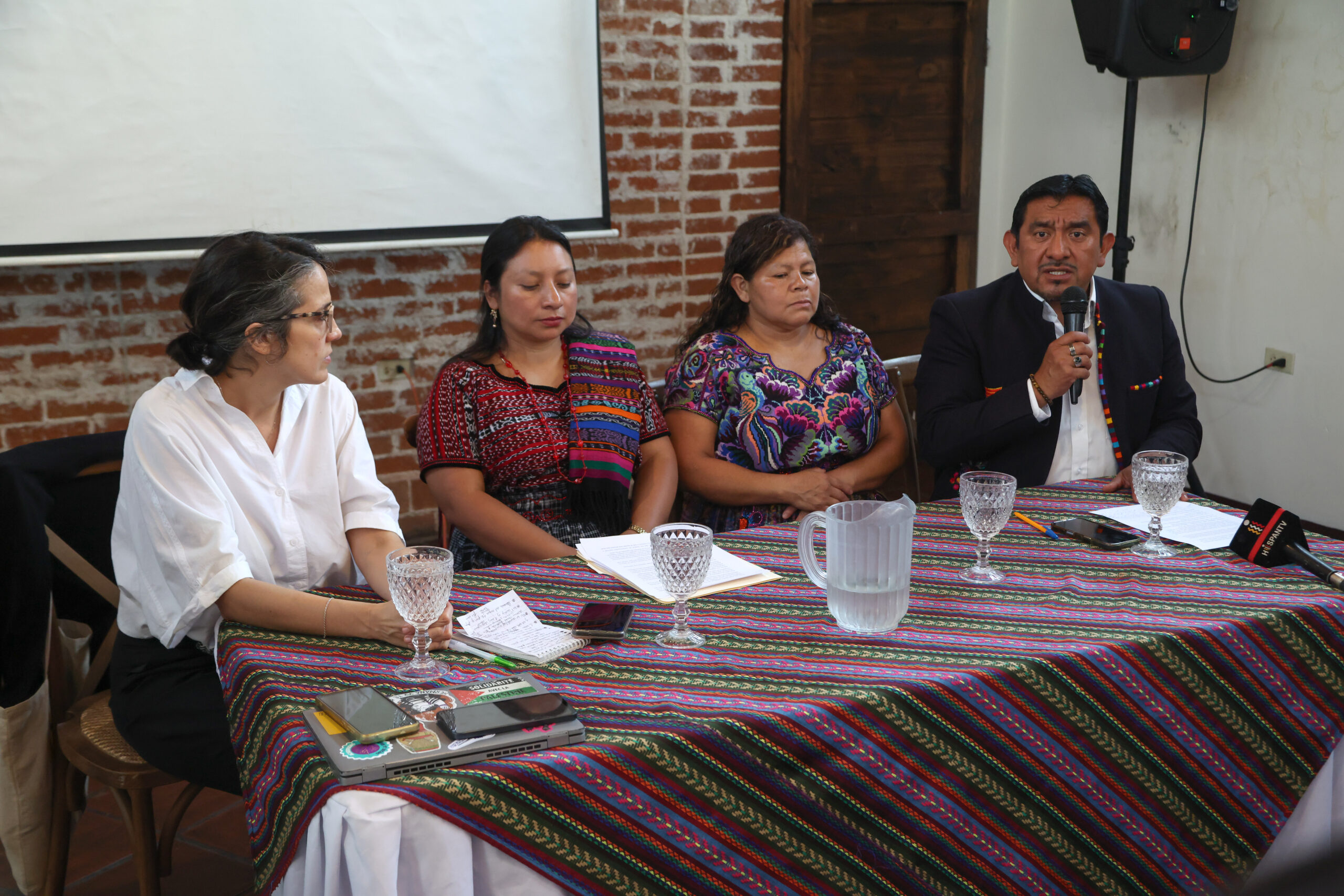
The organization Amnesty International (AI) declared this Wednesday, May 6, indigenous leaders Luis Pacheco and Héctor Chaclán, detained for a year after leading protests in defense of the results of the 2023 presidential elections, as “prisoners of conscience,” and demanded their “immediate and unconditional release.”
Both leaders of the indigenous organization 48 Cantones of Totonicapán face charges of terrorism and illicit association in a process that AI describes as “arbitrary punishment” and an example of “structural racial discrimination.”
Pacheco and Chaclán were arrested in April 2025 in a case that, according to their lawyer, Juan Castro, has now lasted 10 months without a “natural judge”, due to the constant challenges that have prevented the intermediate stage hearing from being held.
Amnesty International researcher Adeline Neau denounced at a press conference that the trial against Pacheco – who is vice minister of Energy and Mines, a position he maintains despite the arrest – and his colleague Chaclán represents a “serious setback” in human rights.
Neau recalled that other indigenous authorities are also accused of the same terrorism charges, such as Basilio Puac, member of the board of directors of the 48 Cantons, and Esteban Toc, former vice mayor of the Indigenous Mayor’s Office of Sololá.
The Prosecutor’s Office accuses the indigenous leaders of illicit association, terrorism and obstruction of justice for leading the mobilizations in 2023 that demanded the resignation of the attorney general, Consuelo Porras Argueta, sanctioned by the United States and the European Union under accusations of corruption and attempts to undermine democracy.
The protests arose due to actions by the Public Ministry that were accused of trying to prevent the inauguration of President Bernardo Arévalo.
“It is no coincidence that crimes such as terrorism are used against ancestral authorities; it is an extension of racial discrimination that seeks to send a dissuasive message against social mobilization,” said Neau, who stressed that the justice system is being used to punish forms of indigenous organization.
Lidia Tzunún, Pacheco’s wife, described the situation as a “social death” and psychological death for K’iche’ Mayan families.
“Luis and Héctor acted by mandate of their assemblies and not by their own decision; they defended the will of five million Guatemalans at the polls,” he stressed.
Amnesty International urged the new attorney general, Gabriel Estuardo García Luna, recently appointed, to review the objectivity of these persecutions which, according to the organization, are part of a pattern of criminalization that also affects journalists and justice operators in Guatemala.
*Stay up to date with the Now newsletter. Key information at the moment it happens. Subscribe here.