
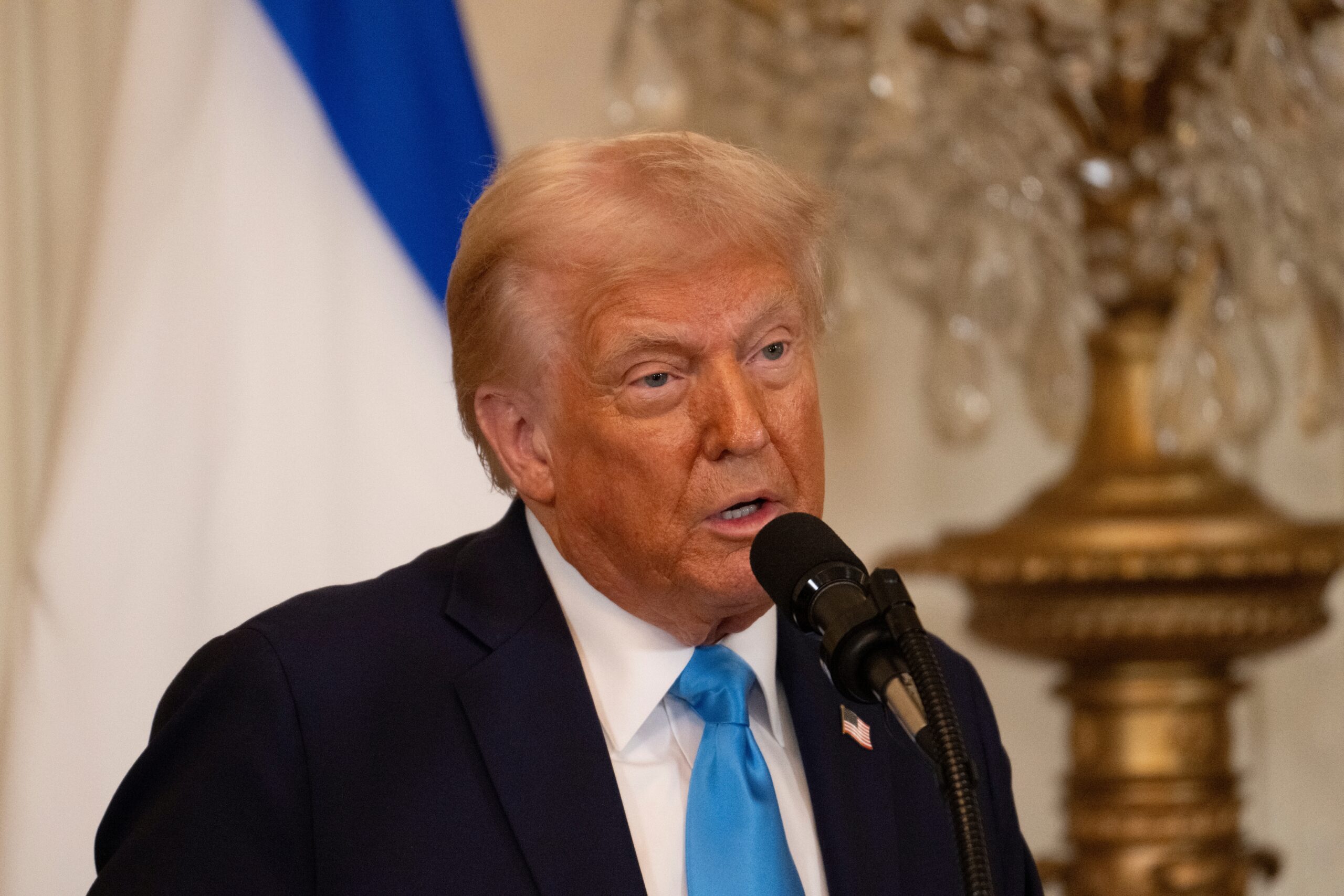
President Donald Trump has always characterized himself for his public use of swear words. However, according to an analysis of Washington Post over his speeches and social media posts, his use of vulgar language, personal insults, and self-centered rhetoric has increased markedly during his second term. Trump’s use of profanities and vulgar or derogatory language — including insults like “low IQ,” which he often hurls at his political opponents — has increased over time. In the first year and a half of his first presidency, about 40% of his speeches contained at least one vulgar term, compared to 93% in his second term.
Besides, The number of vulgar or insulting posts on social media has approximately tripled during his second termcompared to a similar period of his first term. The increasingly crass rhetoric reflects what historians and presidential experts describe as a more overtly combative second term, defined by blistering executive actions, public threats against perceived enemies and a style of governance rooted in dominance and confrontation. Trump has openly disparaged his political opponents, threatened retaliation against his critics and deployed federal agents in Democratic-run cities, sometimes with fatal consequences.
Throughout this entire process, he has used vulgar language to justify his actions. “Tuesday will be Power Plant Day and Bridge Day all in one. Open the damn Strait, you damn fools, or you’ll live in hell! You’ll see!” Trump posted on Truth Social on April 5, Easter Sunday, as the war in Iran and the resulting closure of the Strait of Hormuz sent gas prices skyrocketing and his approval ratings falling. A month later, speaking to supporters in Florida, Trump directed his ire at whoever was manning his microphone. “Turn up the microphone!” he shouted. “I don’t believe in paying people who do their jobs poorly. … I’m screaming like crazy!”
Trump has made his directness, even his crude language, part of his public image, presenting his sincerity as a sign of authenticity that, according to him, more scripted politicians lack. He has repeatedly claimed to express what others are afraid to say out loud. Trump’s language “fits perfectly with a very aggressive presidency,” said Julian Zelizer, a Princeton historian who specializes in presidential rhetoric. According to him, Trump is, without a doubt, the most publicly rude president in American history. “President Trump uses that language to intimidate, threaten and attack his opponents,” Zelizer said.
“So a curse is more than just a curse. In some ways, it can be a way of sending a very intimidating signal to someone who doesn’t support you or who threatens you out of anger… because you now have a track record that shows you’re willing to go to great lengths to stop that person.” In a statement, the spokesperson from the White House, Olivia Wales described the president’s speech as proof of its authenticity. “President Trump doesn’t care about being politically correct, he cares about making America great again,” Wales said. “The American people admire the president’s authenticity, transparency and effectiveness, which is why he won a landslide victory on November 5, 2024.”
Analysis paints portrait of president whose rhetoric has become increasingly crude and rambling, peppered with angry late-night posts and public statements that often veer into long ramblings and off-the-cuff detours. Among the findings are that this year, about a third of Trump’s original posts on Truth Social were posted between 8 p.m. and 6 a.m. ET, up from a quarter last year. This represents a huge jump from a similar period during his first term, when roughly one in six of his original Twitter posts were made late at night or early in the morning.
In 2026, nearly half of Trump’s original posts on Truth Social contained first-person pronouns like “I” or “myself.” He usually mentions himself several times in such posts, sometimes more than a dozen times. This represents a marked increase from a similar period in 2018, when around 30% of his posts contained first-person pronouns. When analyzing Trump’s speeches during his second term, it is observed that he deviated from the topic 37 times or more in half of them. This represents a considerable increase over a similar period in his first term, when his speeches featured an average of 10 or more digressions.
These digressions began to increase towards the end of his first term and continued during the 2023 and 2024 electoral campaigns. Historically, presidents and presidential candidates have aspired to grandiloquent rhetoric and have avoided the public use of obscenities or vulgar language. Modern presidents employ teams of speechwriters to imbue their words with discipline, precision, and solemnity. Past presidents generally viewed swearing as something to be hidden from public view, not something they used as part of their political image.
Richard M. Nixon was so embarrassed Because of the profanity captured on his Oval Office recordings during the Watergate scandal, the transcripts replaced many of his swear words with the now-famous phrase “expletive deleted.” In his 1990 memoir, Nixon acknowledged the public shock the recordings caused. “Most people swear sometimes,” he wrote, “but because neither I nor most other presidents had ever used foul language in public, millions of people were scandalized.” As vice president, Joe Biden once told President Barack Obama that passage of the Affordable Care Act was “a big deal.”
A few years later, as president, Biden was recorded without permission telling a reporter that he was a “stupid son of a bitch.” Trump’s use of foul language can help solidify support among his base, but it can also be a drawback, Zelizer said. Following Trump’s expletive-filled message to Iran, Democrats began arguing that the vice president and Cabinet should use the 25th Amendment to remove him. “Sometimes when you talk in such a degrading way, you lose the respect that people have for you,” Zelizer said.
“It may lead voters, allies and opponents, both here and abroad, to think: This person is not a great leader. This person is almost desperatebecause that’s how he talks, and he’s not much better than the rest of us.”
Methodology
The Washington Post analyzed Trump’s social media posts and speeches during the first year and a half of his two presidencies. This analysis includes publications through May 17 and speeches through May 11. Speech transcripts come from Factbase and include official statements, excluding brief appearances and press conferences. The posts were obtained from Trump’s Twitter archive and Truth Social. He post searched for more than two dozen profane and other insulting or vulgar terms, such as “low IQ,” “deranged” and “loser,” in his posts and speeches. He post looked for this type of language in all of Trump’s original posts on Truth Social and Twitter/X that contained text and used the same data set to track the use of first-person pronouns. All timing data for posts reflects US Eastern Time. To measure deviations in speeches, the Post programmatically rated how closely consecutive sections of each speech were related in meaning. When two sections were sufficiently different, and Trump did not return to the original topic within five minutes, it was counted as a deviation.