
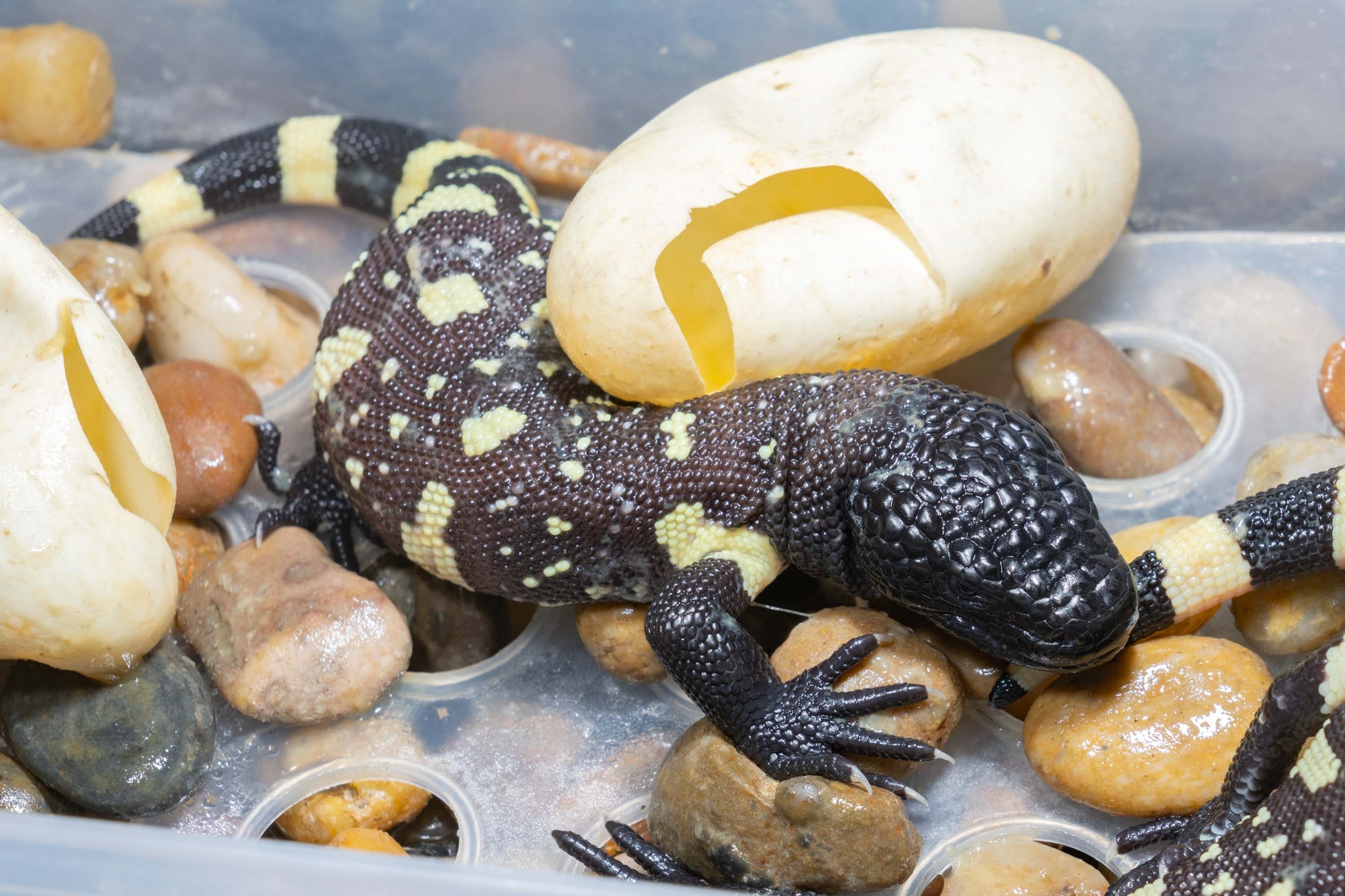
During the night of last Wednesday, May 20, the Foundation for the Endangered Species from Guatemala (Fundesgua) announced the successful reproduction of the Heloderma charlesbogertialso known as scorpion lizarda species poisonous endemic to the dry forests of the Motagua Valley, in eastern Guatemala.
“We wanted to share this news because we believe that it is an event that deserves to be celebrated. The birth of these babies represents a very important achievement. important for Guatemala and for the conservation of one of its most important species threatened and unique“added Fundesgua on his social networks, and thanked the coverage of Free press.
“This is a moment special and in the coming months we will also be sharing the progress of these babies as part of their process of returning to the family. nature“added the foundation in its publication, in which it also thanked the support of the National Council of Protected Areas (Conap) during the development of reproduction.
Given the circumstances, social networks increased the interest for him birth of the five babies of the scorpion lizard that, after a difficult processopen a hope to save the species in Guatemala, because the Heloderma charlesbogerti survives in the country between genetic threats and a unusual reproductive cycle.
What is the scorpion lizard like?
According to the Mexican naturalist Rene Villanuevathe scorpion lizard, also known as the sleeping child, is part of the family Helodermatidae and it is the unique species allopatricin reference to the evolutionary process by which the original population is divided into groups isolated geographically by a physical barrier that prevents gene flow.
This is because the Heloderma charlesbogerti It is separated from the closest species of chaquirated lizards from the Motagua Valley by about 250 kilometers of unsuitable habitat, so the “scorpion” is a species very rare and in critical danger of extinction, since it is believed that fewer than 500 of these animals in nature.
Faced with this scenario, according to the American herpetologist Jonathan Atwood Campbellprofessor of Biology and director of the Department of Biology at the University of Texas in ArlingtonUnited States, this situation has made the Heloderma charlesbogerti in one of the most lizards threatened from all over the world.
Therefore, due to its critical conservation statushe Heloderma charlesbogerti went to a status of maximum protection in the Convention on International Trade in Endangered Species of Wild Fauna and Flora (Quotes), a treaty whose purpose is to ensure that the trade in animals does not threaten their survival.
Scorpion Lizard Classification
On the other hand, according to the professor of Biology from Central University in Washington D.C. Daniel D. Beckthe scorpion lizard species was discovered in December 1984 by a farm worker in the Motagua Valleyan important geographical feature of Guatemala formed by the longest river of the nation.
Additionally, in his study on the biology of Gila monsters and beaded lizards, Beck explains that the genus name Heloderma means “studded skin” and comes from the Greek words “helos” (nail head) and “derma” (skin), while the species name is after the herpetologist Charles Mitchill Bogert.