
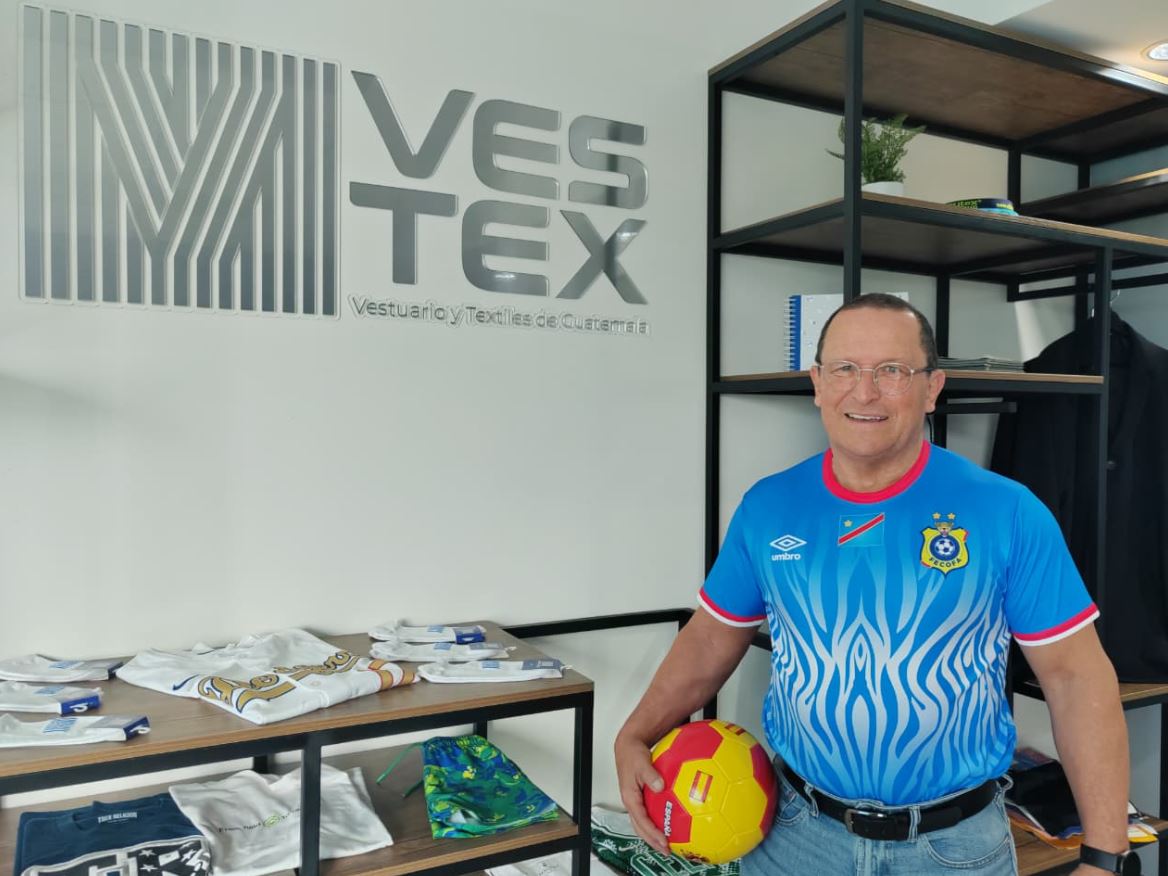
Guatemala’s clothing and textile industry has ridden the soccer World Cup wave and is one of the suppliers of brand stores in the United States, with shirts for fans of different teams, as well as souvenirs such as polo shirts or other clothing alluding to the players or teams.
During the 2026 World Cup season, This sector will send around 1.6 million garments to the United States, which will represent about US$7 million in exports, indicated Alejandro Ceballos, vice president of the Guatemalan Clothing and Textile Industry Association (Vestex).
This work is carried out with between 1,500 and 2,000 direct and indirect jobs.
The executive said that the sale of shirts has already begun, because it is the time when followers begin to request personalized ones; In addition, they already know where the teams will play and are preparing to attend the different activities.
When the tournament is in progress, and if a country surprises by advancing, people start buying clothing from that team. Purchases are also recorded because the designs are attractive, since many teams present new shirts for the World Cup, he added.
The producers that are dedicated to this type of garments, that work with sublimation and microfiber, already manufacture and have made shipments, but they continue manufacturing during the development of the event, he added. Even many of the factories that make children’s clothing are receiving orders for camisoles or souvenirs.
These are not only shirts for fans, but also polo shirts, vests, jackets, shorts and other clothing.
“It is already effervescent, all the designs are ready just to be made” and continue meeting the demand, added Ceballos.
At this moment, clothing has already begun to be sent and the stores are stocked and ready, “because it is already a World Cup fever,” he said.
CONTENT FOR SUBSCRIBERS
The garments are made under a license that is paid to the brands and the federation, according to the manager.
The sector prepares depending on the movement that may be generated. For example, the best-selling shirts are those of Lionel Messi and Cristiano Ronaldo, among other players, and if their teams reach the championship final, demand increases.
It also depends on the progress of the teams, because if they have shirts from one that is left out of the tournament, these are no longer sold and there is inventory left, Therefore, work must be done in an organized manner and according to orders.
Immediate orders are placed in Guatemala due to the speed of manufacturing derived from the specialization that the country has achieved, and the arrival of the product to its destination in a short time, due to the proximity to the United States, the executive explained.
The manufacturing factories have production lines ready to receive orders that may be 10,000 shirts from a particular player or team, as indicated.
Also read: How much money will the 2026 World Cup champion earn?
The average time to have the camisoles ready is about 10 days; However, in tournaments like these there are garments that can be made in one day and be in the US the next day or two, Ceballos said.
“At all stages of the chain there are inventories ready to go out and meet orders,” said the vice president of Vestex.
To do this, the factories prepare the shirts ready, since they all have different cuts. In these cases, for example, Argentina’s, Messi’s or Ronaldo’s shirts are ready; They already have the fabric ready to sublimate and send it. Others are already sublimated.
Read also: How the arrival of LeBron James to the Lakers impacted the industry in Guatemala
There are also ready-made garments in the sublimation, tailoring and sales lines; “That is, throughout the chain,” commented the executive. While stores have inventory available to the public, factories have finished garments to prepare and ship, which can arrive the next day. There are printed camisoles without names, waiting for the order, and white fabric ready to be cut and made, Ceballos indicated when explaining details of the process.
Now, with the difficulties in the Strait of Hormuz, in the Middle East, and the problems transiting through Panama, which have put a strain on transfers, the factories in Guatemala “were well prepared with inventories, because the opportunity is unique and when the tournament ends, the opportunity ends.” Then lawsuits continue, but only from some teams or players, mainly the champion.
When there are items advanced and the team is eliminated, they are sold later; That is the risk in these types of events. However, manufacturers have no problem, because if they are produced it is because there is already an order, but it is shipped until the customer authorizes it, since storing inventory in the US is more expensive than doing so in Guatemala.
CONTENT FOR SUBSCRIBERS
Transportation is efficient and fast, because in championships like these shipments are made by air, he added.
The executive indicated that the first shipments have already been made by sea and that they are ready for the rest of the orders, which, depending on the urgency, will be sent by air.
The Guatemalan sector also manufactures camisoles for fans of American football teams, and especially for the Super Bowl, in addition to basketball teams.
For example, in 2018, the transfer of LeBron James, the NBA superstar, to the Los Angeles Lakers, this week generated contracts for Guatemalan factories for 60,000 shirts from the famous team and with the name of that player, which will be exported to the United States.
Uniforms have also been made for the players, many of them sports stars.
You may be interested in: Guatemalan industry dresses sports stars