
In it The first quarter already registers exports of US$460.5 million, 4.1% more than in the same period of 2025. and hopes to improve the pace in the rest of the year.
Bet on growth amid global uncertainty derived from the recomposition of global trade after the covid-19 pandemic, driven by the nearshoring and, more recently, by tariff policies implemented by the US government.
According to Alejandro Ceballos, vice president of the Guatemalan Clothing and Textile Industry Association (Vestex), this commitment is based on the country being able to take advantage of its advantages and has prepared itself to address global trends, showing the ability to adapt.
The executive said that the global clothing and textile industry “is going through a profound transformation.”
This situation has meant years of overinventories, adjustments in purchase orders, changes in consumer habits and growing commercial uncertainty, he commented. Based on these factors, international brands are rethinking the way they manage their supply chains, which have had to evolve.
Among these changes, he cited that Brands have gone from prioritizing mass production, large inventories and long-term orders towards models focused on speed of response, flexibility, tight inventories and resilience.
The changes also include supplier diversification, which has become a key strategy, in addition to nearshoring and the capacity to adapt, which have been gaining relevance in supply decisions, said Ceballos.
Given this context, Guatemala has adapted, driven by the strength of its highly integrated cluster, specialization in value-added products and the ability to quickly serve the US market, derived from its geographical proximity.
CONTENT FOR SUBSCRIBERS
However, the Vestex manager also pointed out challenges, both internal and external, that have affected the sector’s export dynamics.
Among the most recent are the tariffs imposed by the United States since April on global products, including 10% for this sector in Guatemala, when the country already enjoyed a 0% tariff for the Free Trade Agreement between Central America, the Dominican Republic and the United States (CAFTA-DR).
Changes in consumer trends in the US also impacted, as clothing represented only 2.08% of total spending in 2025, and that country reduced its clothing imports by 3.6%.
Other challenges are national in nature, such as road and port infrastructure, paperwork and costs, which reduce competitiveness compared to other countries.
Read also: Logistics costs in Guatemala reach 29% and reduce the competitiveness of exports
“Issues such as infrastructure, efficiency in ports and the cost of electrical energy have also hit the sector hard.”
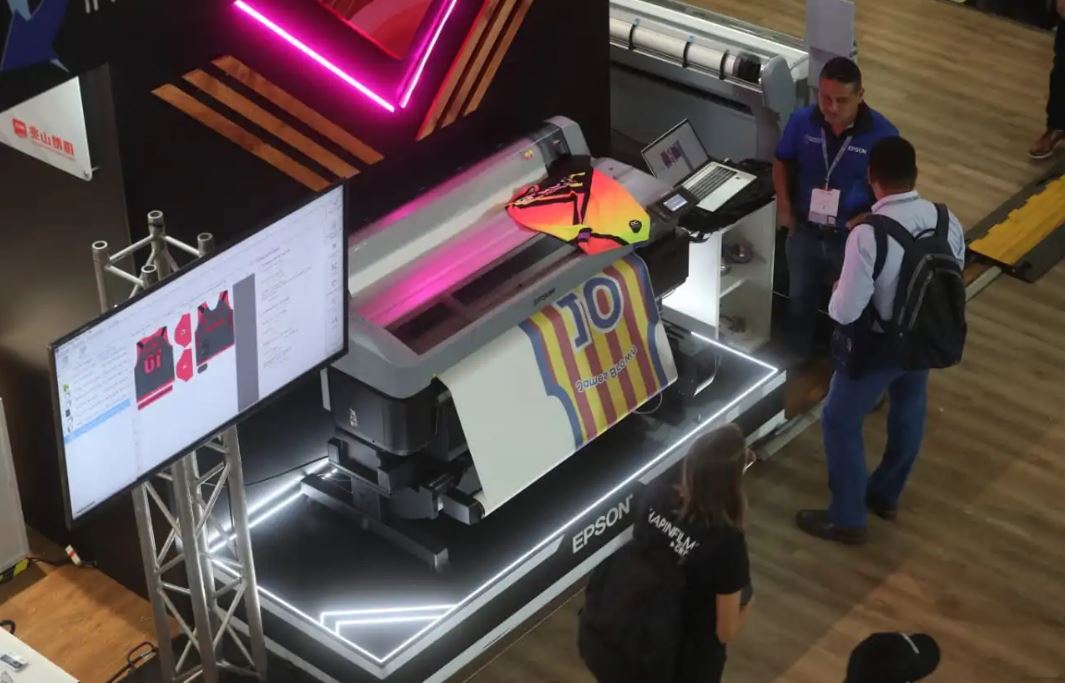
In this context, the sector has advanced in the automation of processes through modern technology, which factories can implement gradually. He mentioned as an example a clothing machine that allows an operator to double his production and that does not require specialization as a seamstress or clothing maker.
When asked if this automation could reduce jobs, he indicated that they do not see it that way, but rather that greater productivity allows for increased production at a lower cost per garment, which will make it easier to compete with countries that currently operate with lower costs, such as Nicaragua.
Another benefit is that, by recognizing the CAFTA origin of garments made in Guatemala and the rest of Central America, the US. left the sector exempt from the 10% tariff, by meeting those conditions.
He added that they have already reviewed the exemptions that the new USTR tariff proposal would bring, based on section 301 of the Trade Act, which refers to actions to prohibit imports from third countries produced with forced labor. In this case, Ceballos indicated that, if approved as is, they would continue to be exempt from tariffs.
CONTENT FOR SUBSCRIBERS
The difficulty, he explained, is that the independence of CAFTA has been weakened, because with the current decisions there is a risk that its tariff conditions will not be respected.
“Despite these challenges, Guatemala remains among the main supply bases used by American brands” and is located in the top 10, explained Ceballos.
They launch the Apparel Sourcing Show
The sector announced the 33rd edition of the Apparel Sourcing Show, considered the only fair in Central America that brings together the entire supply chain of the textile and clothing industry.
The event will take place from August 18 to 20 and will feature the participation of representatives from 27 countries, an exhibition floor of 192 stands and speakers who will analyze trends and other topics.
Sector data
- Generates more than 150 thousand direct and indirect jobs
- There are 275 exporting companies
- Its export offer is diversified: activewear (athletic clothing), sportswear (sportswear), outerwear (chumpas, sacks), casualwear (casual clothing).
- It also exports uniforms and work clothes, as well as children’s clothing, categories that have shown resilience in the US market.