
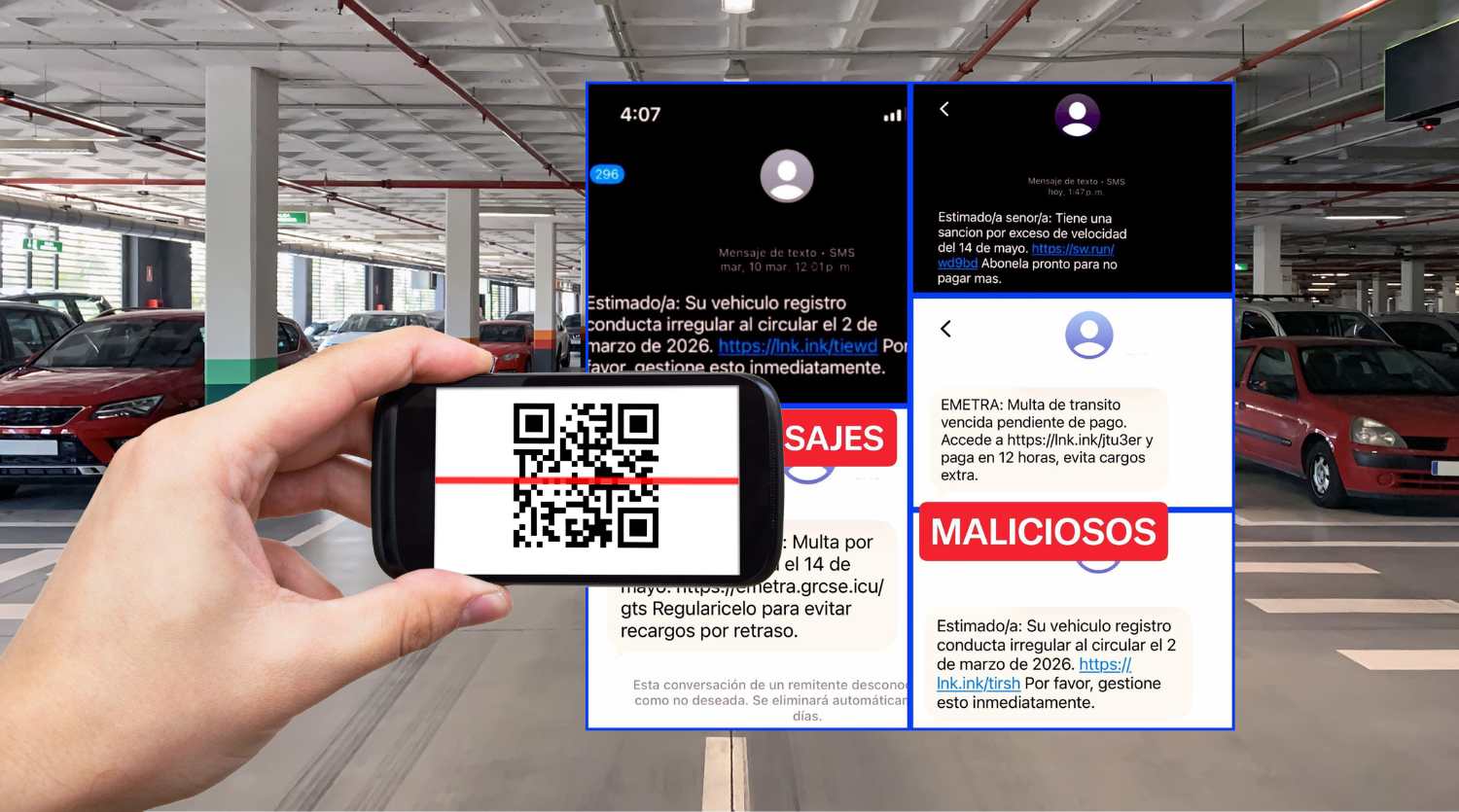
The Municipal Traffic Police (PMT) of Guatemala issued a alert to the increase in fraudulent text messages, emails and now even QR codes that seek to deceive drivers by posing as official notifications of traffic fines.
According to the institution, scammers use links and QR codes to direct victims to fake websites where they request personal and financial information, which carries a high risk of compromising bank accounts, mobile devices and even digital identities.
“The largest number of complaints we receive is for these five telephone numbers, which we have made public so that people can copy, identify and block them”explained Amílcar Montejo, spokesperson for the PMT of Guatemala.
According to Montejo, fraudulent messages usually warn about alleged traffic violations pending payment and include links that appear to be official. “It happens that they send you an electronic connection or a link, and in this way when they enter it begins to request sensitive data such as name, DPI and, in some cases, credit cards,” Indian.
How does this type of scam operate?
This type of digital fraud, known internationally as smishing when done through text messages, it consists of the Cybercriminals send communications that appear to come from legitimate institutions to generate urgency in victims.
In the case reported by the PMT, the messages refer to alleged fines for speeding, outstanding violations or late fees. By entering the link, victims may be directed to fake pages that imitate official portals and where confidential information is requested.
The data obtained can be used to access bank accounts, make unauthorized purchases or commit identity theft.
Montejo assured that the PMT does not make this type of notifications through links sent from unknown numbers.
“It is fraudulent, because we have not made any notification as an institution. We do not know who these numbers belong to,” he stated.
The spokesperson added that there is already at least one report of an affected person. “According to the report, a person was already deceived in the sense that when they entered their data, their bank account was apparently violated,” he said.
Additionally, some users have reported unusual behavior on their devices after accessing the links.
“Some people have said that when they enter the application the application gets stuck and they have resorted to having to go to a phone expert to unlock it; in other cases they say that the phone is reset,” he commented.
They also alert about QR codes and emails
The PMT indicated that criminals have diversified the methods used to try to deceive the population.
“The other way they are sending these malicious messages is by email,” Montejo explained.
Likewise, he pointed out that they recently began to receive reports related to QR codes placed on vehicles or disseminated through social networks, although so far no specific case has been documented in the city related to this modality.
“With the QR code we began to receive information. We do not have any specific case, other than what is appearing on social networks,” he explained.
This technique, known as quishing or QR code fraud, consists of placing codes that redirect to fraudulent pages designed to capture personal information or install malicious programs on victims’ devices.
PMT Recommendations
In this situation, the institution recommends:
- Do not open links sent by unknown senders.
- Do not scan QR codes placed in vehicles or public spaces without verifying their origin.
- Do not provide personal, banking information or card numbers.
- Verify any information only through official channels.
- Block and report numbers identified as part of these fraud attempts.
“Our basic recommendation is that they do not access those links, much less comply with the requirements of the data that are sensitive,” Montejo emphasized.
The spokesperson added that there are also reports of attempts to duplicate or hijack WhatsApp accounts associated with these fraudulent practices.
“They already told us that they are also duplicating the WhatsApp issue, that is why we are asking for great caution,” he said.
Finally, he confirmed that the institution has already forwarded complaints to the competent authorities so that they can continue with the investigations.
“The institution has already made some complaints to the Public Ministry; they will be the ones to follow up on this issue,” he concluded.