
International Soccer
While France, England, Argentina and other teams consolidate their presence among the elite of world football, historical powers such as Germany, Brazil and Italy are going through one of the periods of lesser prominence.

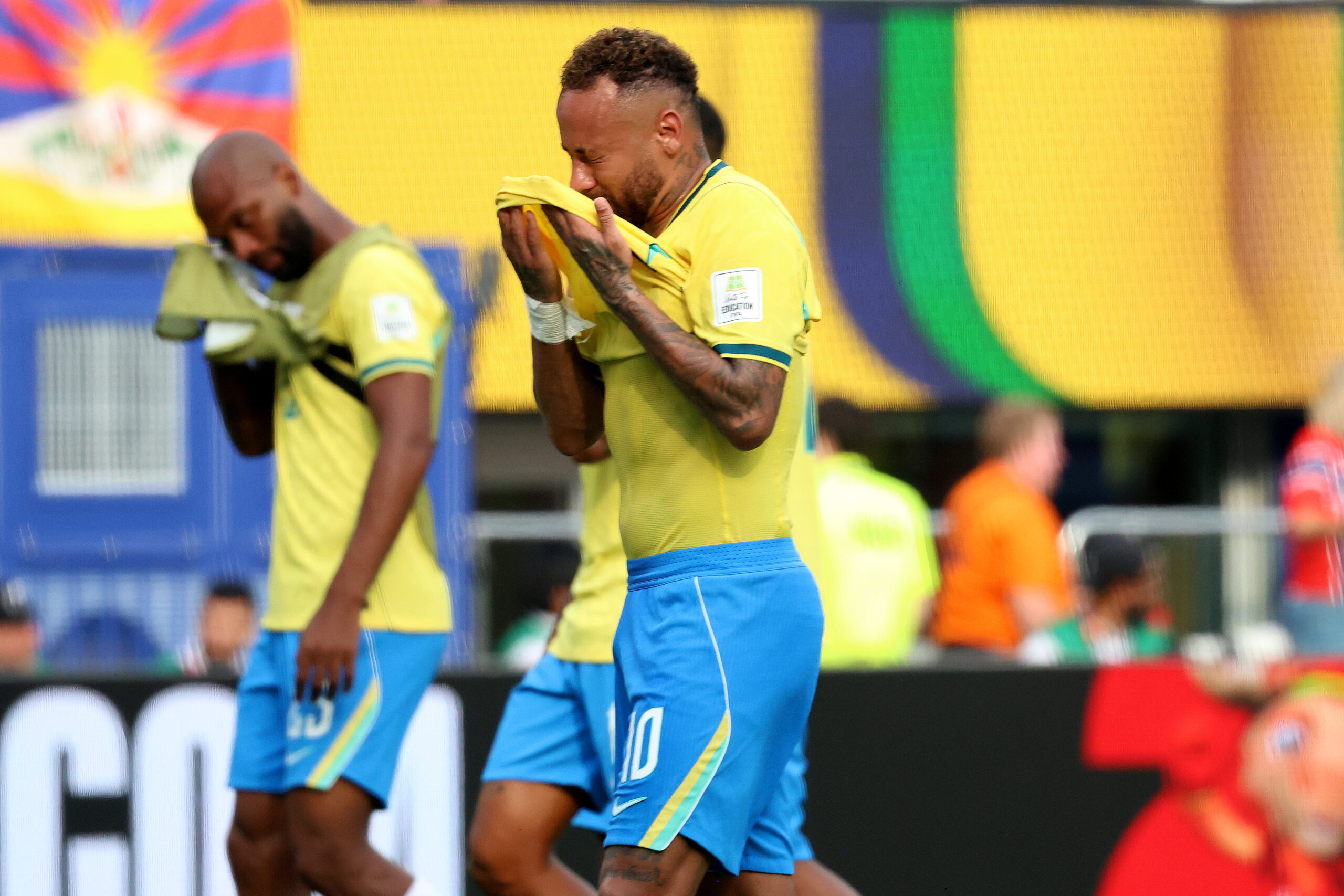
Neymar (c) of Brazil cried at the end of the 2026 FIFA World Cup round of 16 match against Norway at MetLife Stadium in New Jersey (United States), the result of which left them out of competition. Free Press Photo: EFE.
For much of the 20th century, the football map seemed immovable.
Brazil, Germany, Italy, Argentina, Uruguay and the Netherlands regularly starred in the decisive phases of the World Cup. Their titles, finals and historical generations marked different eras of the tournament.
However, the cycle that began in Russia 2018 has transformed that panorama and has revealed a change in the balance of international football.
RELATED READINGS


Germany, an unthinkable crisis
The 2014 Brazil world champion is going through the most complicated period in its recent history.
Since then it was eliminated in the group stage of Russia 2018 and Qatar 2022, while in North America 2026 it also failed to reach the quarterfinals.
For a team with four world titles and eight finals played, the contrast is historic.
Brazil is still looking for the sixth title
The elimination against Norway reopened the debate about the present of the Canarinha.
Since the historic 7-1 defeat against Germany in the semifinals of Brazil 2014, the most successful team in history has not managed to return to that stage.
Belgium in 2018, Croatia in 2022 and now Norway in 2026 consecutively stopped the aspirations of the five-time champion.
Italy remains absent
The Italian case is even more striking.
The four-time world champion was once again left out of the World Cup, prolonging an absence that began after Brazil 2014.
Never before had the Azzurra been away from football’s most important tournament for so long.
Netherlands lost continuity
The Oranje was a finalist in South Africa 2010 and a semi-finalist in Brazil 2014.
However, since then they have not managed to consolidate a constant presence among the best teams on the planet, alternating competitive performances with premature eliminations.
Uruguay closed a generation
La Celeste is also going through a transition process.
The generation led by Luis Suárez, Edinson Cavani, Diego Godín and Fernando Muslera took Uruguay to the semifinals of South Africa 2010 and kept the team among the protagonists for more than a decade.
In North America 2026, the elimination before the decisive rounds symbolized the definitive closure of that cycle.
The new order of world football
The 2026 World Cup confirms that historical prestige no longer guarantees prominence.
While several traditional powers seek to rebuild, other teams have managed to sustain sporting projects that allow them to compete constantly in the decisive phases.
France, England and Argentina have made the quarterfinals a regular presence; Morocco established itself as the great reference for African football and Spain returned to the elite with a new generation.
More than a change of names, the World Cup seems to confirm a change in cycle: the shirts with the most history continue to command respect, but the prominence is no longer inherited. In modern football, continuity depends less and less on the past and much more on the ability to renew projects, generations and game identities.