
The Ministry of Energy and Mines (MEM) established at 10% the volume of ethanol that each gallon of E10 gasoline must contain for the period from June 30 to December 31, 2026 and for all of 2027, for which it issued two ministerial agreements, as part of the process of implementing the ethanol mixture in premium and regular gasoline.
The percentage was already established in article 38 of the General Regulations of the Fuel Alcohol Law (government agreements 257-2025 and its reform 95-2026); However, it had to be published again as part of the Supply Security procedure, as well as the Methodology to Operate the Fuel Alcohol Supply Security Procedure, which was issued last week through ministerial agreement 295-2026/SG.
Based on the latter, the MEM had three calendar days starting on Friday, July 10, to publish said agreements with the percentage of mixing and the volume of advance contracting by the distributors (importers of hydrocarbons that must make the mixture for subsequent distribution).
With Ministerial Agreement 298-2026/SG, 10% of the percentage of fuel alcohol to be mixed to obtain gasoline was established for the period from June 30 to December 31, 2026 and it was established that distributors must contract 50% of the fuel alcohol in advance for each of the aforementioned periods.
By 2026, this is equivalent to 22 million 067 thousand gallons, which reflects that in that period it was estimated that the country will use around 44 million gallons of ethanol in the period from June 30 to August 21.
On this last date, the deadline to start the sale of E10 gasoline for the final consumer will come into effect.
With agreement 299-2026/SG, the same percentage is established for the full year 2027. In this case, 50% of the volume of ethanol that distributors must contract in advance is 47 million 349 thousand 001 gallons. This represents that for that year, 94 million 698 thousand 002 gallons were estimated.
Characteristics
Another aspect that is established is that the minimum percentage of advanced ethanol that the mixture must contain in the periods mentioned cannot be less than 60%; As a result, the percentage of conventional ethanol in the mixture should not be greater than 40%.
CONTENT FOR SUBSCRIBERS
Derived from these parameters and the types of ethanol used, the MEM established the volume composition (called volumetric composition, resulting from the application of mass balance) that must be achieved to achieve a greenhouse gas emission no greater than 44.1 grams of carbon dioxide equivalent per megajoule or megajoule (44.1 g CO₂eq/MJ) for advanced ethanol and no greater than 55.1 g CO₂eq/MJ for fuel alcohol, as well as its distribution by type of gasoline.
By 2026 it was established at:
- If it is advanced ethanol A, there must be 11.95 million gallons
- If it is advanced B ethanol, 14.53 million gallons will be required
- If it is conventional ethanol, there must be 17.65 million gallons
While by 2027 they will be at:
- Advanced Ethanol A, 25.60 million gallons;
- Advanced Ethanol B, 31.21 million gallons;
- Conventional ethanol, 37.87 million gallons.
The MEM stated in a statement that the objective of the methodology to operationalize the security of supply of fuel alcohol is to guarantee legal certainty and protect the rights of the Guatemalan population. As part of this methodology, this Monday, July 13, these agreements were published on the ministry’s electronic portal. This opens the space for producers to present their official ratifications.
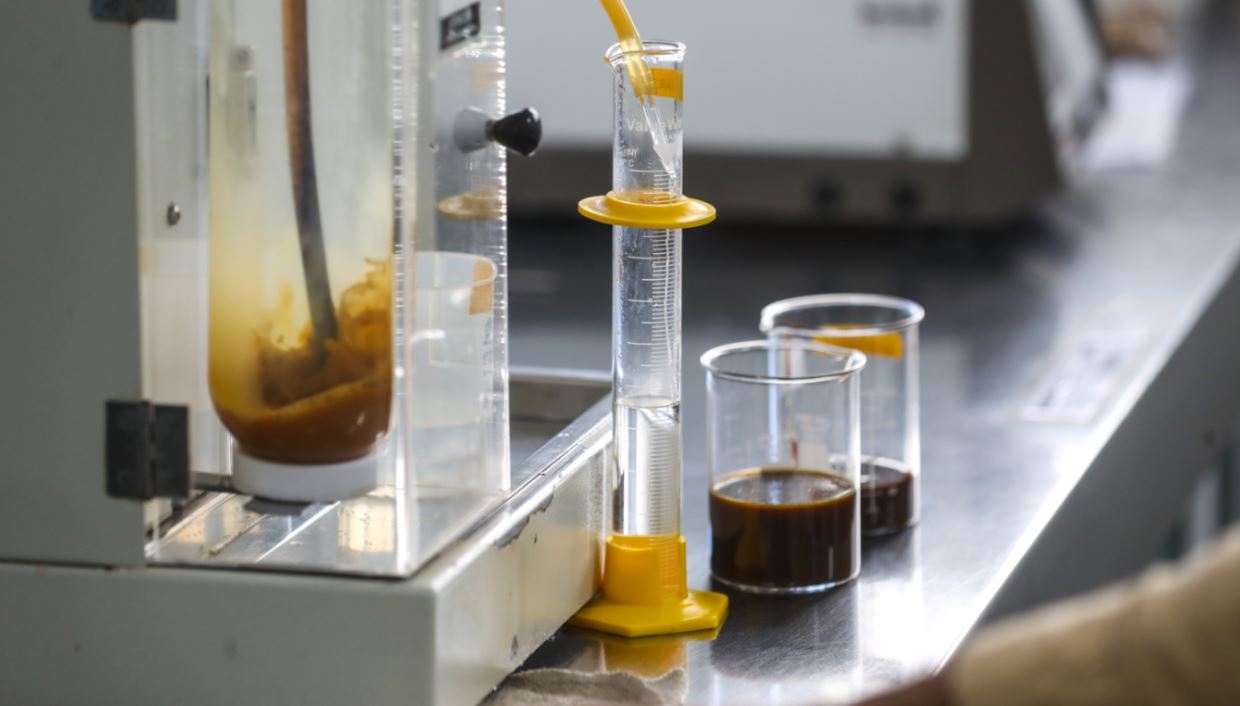
Furthermore, as part of quality control and inspection, the Department of Fuel Alcohol already carries out inspections and verifications of the ethanol that enters the country to certify that the required international quality standards are met.
These will serve to update the MEM databases as a precise tool to monitor and guarantee the quality of both premium and regular gasoline and ethanol that will be distributed throughout the country.