
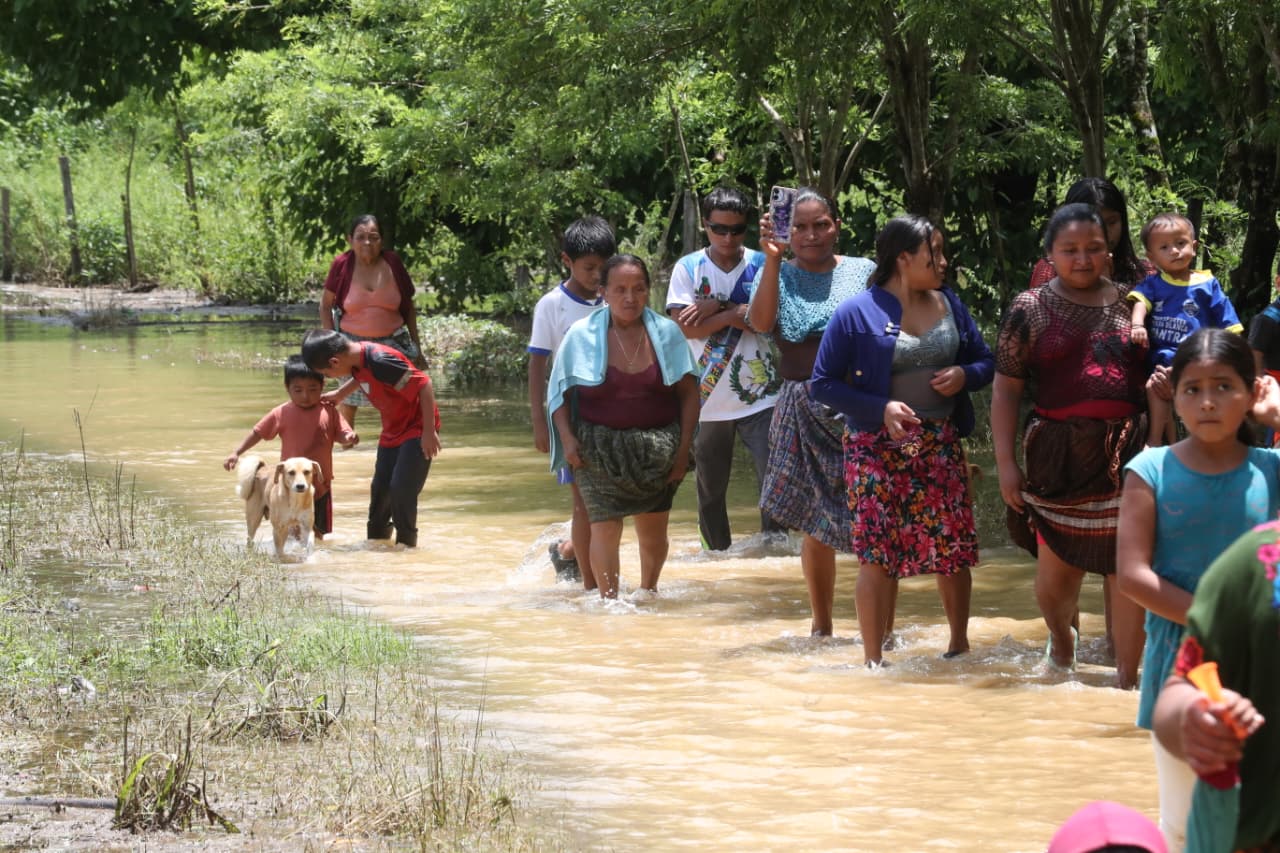
In eight days, the rains in Alta Verapaz provoked 113 floods that have affected 15 thousand 248 peopleof which 694 have had to look for shelter. The municipalities with the most damage are Fray Bartolome de las Casas, chahal, San Cristobal Verapaz and Santa María Cahabónaccording to the report of the National Coordinator for Disaster Reduction (Conred).
The situation directly affects the health of the population in Alta Verapaz, where the worst inequality figures in Guatemala coincide. The National Survey of Living Conditions (Encovi 2023) indicates that six out of ten people in the department They live in conditions of extreme poverty. Meanwhile, the National Health Development Survey (Endesa 2025) reveals that seven out of ten people are food insecure and that four out of ten children under five years of age have chronic malnutrition.
Mario Rivera, Community Resilience Manager at World Vision, pointed out that in Alta Verapaz the population is in great social vulnerability, but it is also one of the departments with the most emergencies due to floods, landslides and river flooding. In addition, rural areas are located in mountainous and difficult to access places.
Faced with this panorama, natural phenomena, such as the rains and overflowing rivers recorded in recent days, which flood communities, not only translate into material losses, but also have an impact on health that must be attended to.
Álvaro Valencia Pineda, rescue doctor and coordinator of the Prehospital Care and Patient Transfer Area of the Guatemalan Red Cross, indicated that the most vulnerable population is at the ends of life: children and older adults, as well as pregnant women and people with disabilities.
The main health problems presented by the population of flooded communities are related to acute respiratory processes. Sudden changes in temperature and humidity can cause bronchitis, allergic processes and inflammation of the airways. There is also the risk of proliferation of viruses such as respiratory syncytial and others that affect the respiratory tract and can be spread in closed spaces, as is the case in some shelters.
Another complication affects the skin. Humidity, standing water and mud can promote fungal development on the feet and dermal lesions in the community. Among the sheltered people, there may also appear pediculosis (lice infestation) and skin infectionslike the scabies (scabies), so these conditions should be controlled within those spaces, Valencia recommended.
Access to drinking water
According to Endesa 2025, in Alta Verapaz four out of ten people They do not have water to drink and seven out of ten have access to sources contaminated with E. colia bacteria indicator of fecal contamination. The situation can worsen in the context of flooding, as many homes lack drainage systems and use latrines that overflow when the water begins to rise. Added to this is that dead animals can contaminate sources for human consumption.
This unhealthy scenario can cause gastrointestinal problems. “Generally communities do not consume safe water; sometimes it is not even piped, which increases the risk of contamination by amoebas, Salmonella typhi and Shigella, bacteria that can cause very strong diarrheal processes,” said the Guatemalan Red Cross doctor.
The first reports from the institution on the care of the sheltered people show an increase in gastrointestinal diseases, diarrhea and mycoses – skin infections caused by fungi.
Pests appear
From experience, Valencia mentioned that two or three days after a flood can rodents appear that escape from flooded areas, which can cause health problems. Rat urine can transmit leptospirosis.
The snakes They can also represent a danger, since, in search of a safe place, they can appear where people are sheltered.
“We already saw it when there was the flood in Campur, where there was a severe migration of poisonous snakes and we had problems with snake accidents,” he added.
Stagnant water represents another danger by becoming mosquito breeding groundwhich can favor the appearance of arboviruses, such as dengue, chikungunya, zika and malaria. Of the latter, it is reported 73 suspected cases in Fray Bartolomé de las Casas.
Mental health
Floods, like any other natural disaster, impact the mental health of the people who They lose homes, belongings and cropsas happened with residents of Alta Verapaz communities. For this reason, Valencia pointed out that it is a problem that must be addressed with psychosocial support.
People may present with anxiety attacks, hysteria, anguish, grief, disorientation and uncertainty. Children are more likely to develop post-traumatic stress faced with the loss of their environment.
Rivera, from World Vision, warned that another issue that directly affects children: in the face of natural disasters, such as floods, schools often become hostelswhich interrupts the educational process indefinitely.
He also considered that there is a risk that minors remain in environments where they can get sick. Furthermore, given the loss of families’ livelihoods, the risk of food insecurity in households increases and the number of cases of childhood acute malnutrition.
“In May, families plant their food for the entire year, and the floods represent a loss for them. The impact on household food security will be reflected in five or six months,” Rivera said.
As of July 4, the Ministry of Health reported 1,059 cases of acute malnutrition in children under five years of age in Alta Verapaz and seven deaths from that cause.
World Vision and the Guatemalan Red Cross support government institutions in actions to serve the population affected by the floods and cover the different needs they present. Rivera indicated that, from experience, at this time families need food, bottled water and clothing.
Health cares for cases and maintains surveillance
Given the emergency of floods due to rain, the Ministry of Health indicated that it has attended to the affected population in Fray Bartolomé de las Casas, where it has provided 445 medical services, including medical consultations, care for pregnant women, monitoring of people with chronic diseases, epidemiological surveillance and the quality of water for human consumption. In addition to delivery of pharmacological treatment and education for disease prevention.
Among the main conditions treated are acute respiratory infections (72 cases), diarrhea and gastroenteritis (57), gastritis (51), intestinal parasitosis (39), urinary tract infections (22) and skin diseases.
The Ministry of Health reported that it maintains epidemiological surveillance and prevention measures to address any emergency among the population.