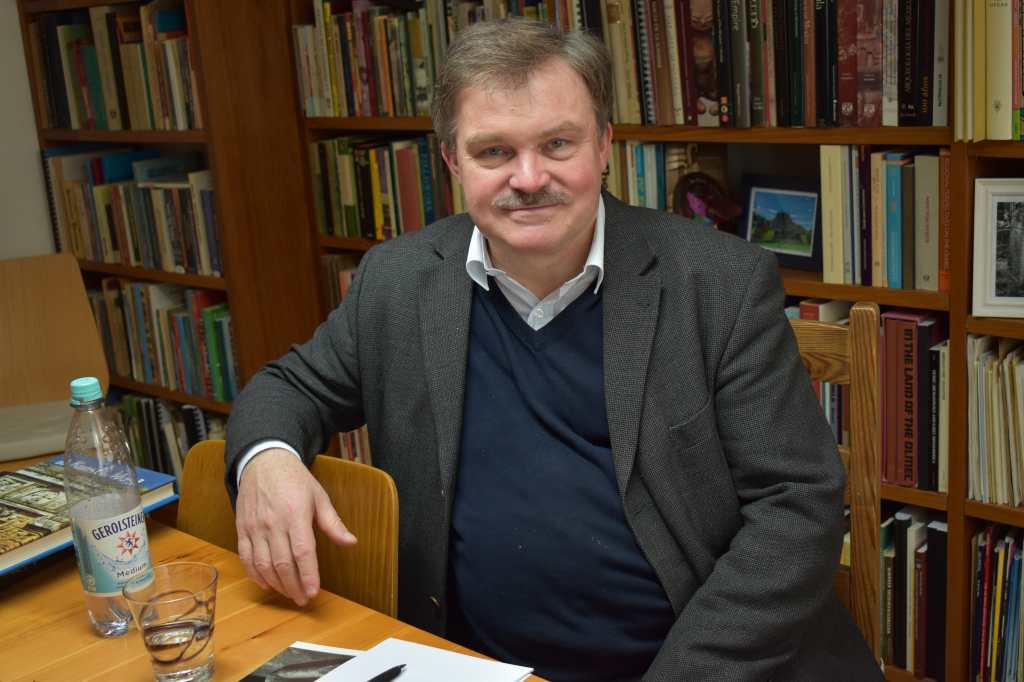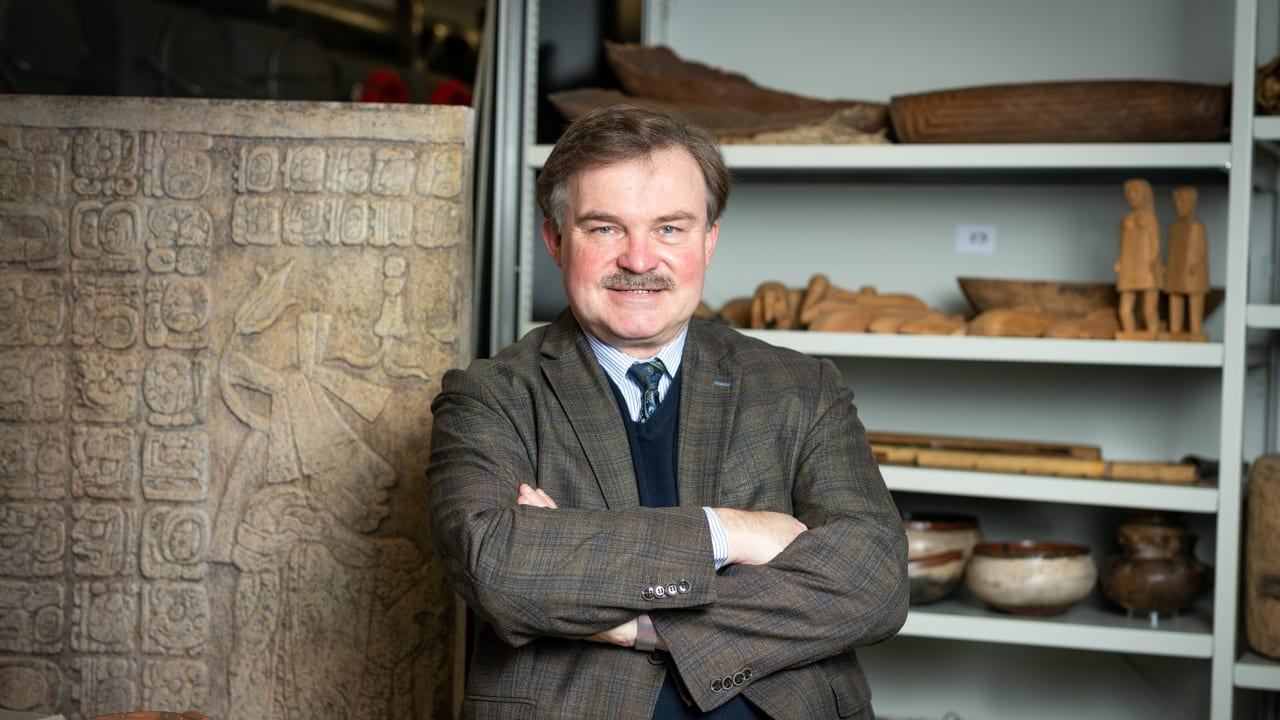
In love with the Mayan culture, The German epigrapher Nikolai Grube has been dedicated to the study of history and epigraphic and archaeological research to decipher Mayan writing for more than 50 years.
For four decades he has been constantly traveling to Guatemala to delve into the jungle and study the hieroglyphic texts of archaeological sites. of the country. To do this, he has even learned Mayan languages.
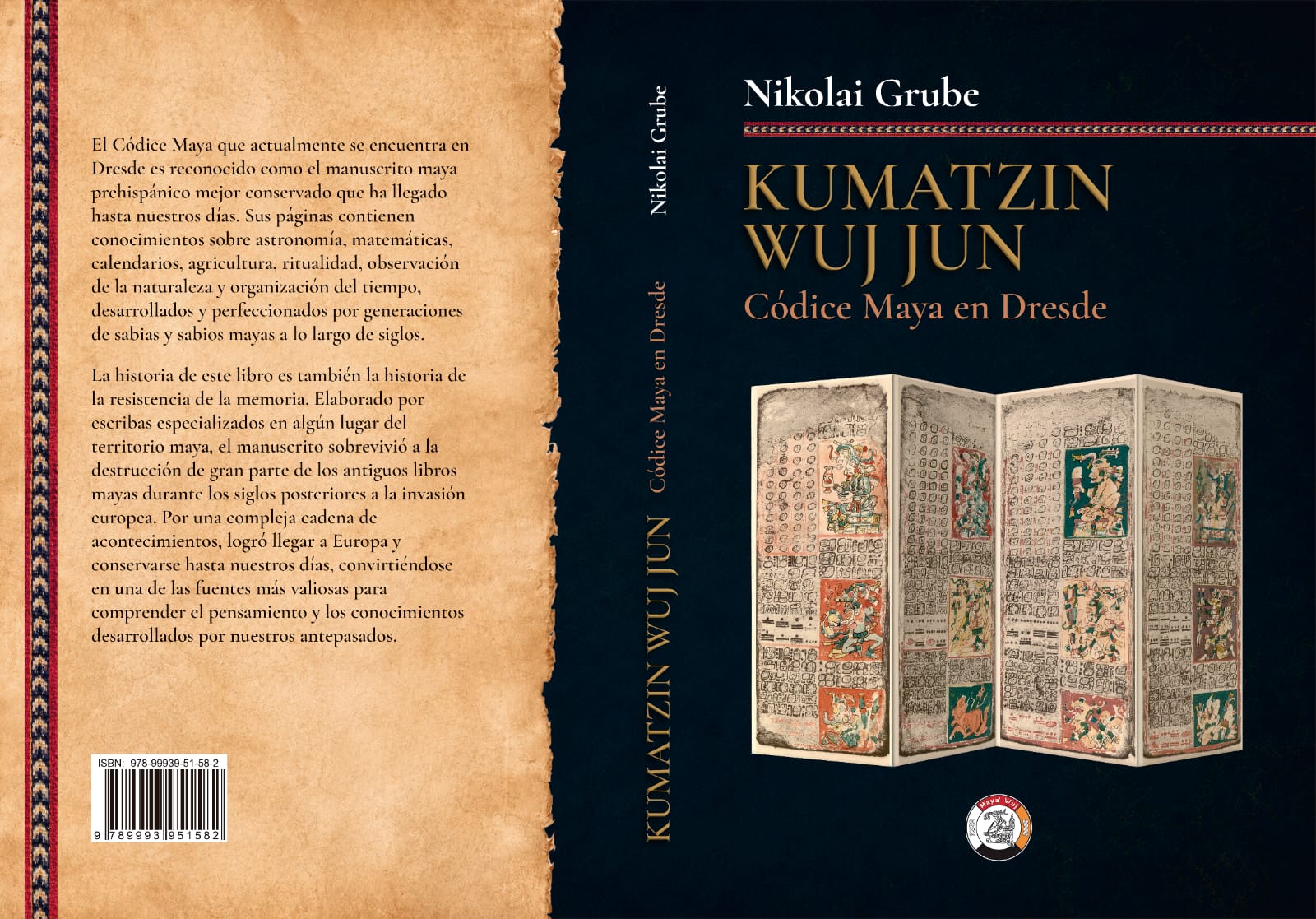
Among his most recent studies is that of the Dresden Codex, recognized as the best preserved pre-Hispanic Mayan manuscript. Grube dedicated himself to translating it and bringing it to the public through his new book Kumatzin Wuj Junpresented on Tuesday, July 14 at Filgua 2026.
In an interview with Prensa Libre, from Germany, Nikolai Grube tells his storyhow his connection with the Mayan culture arose and why Guatemala always occupies a special place in his life.
How did your interest in epigraphy arise?
Epigraphy has interested me since my youth; Since I was a child, it caught my attention. I read several books on archeology and then I started reading about the Mayans and hieroglyphic writing, which had not yet been deciphered, but the first steps were already taken. So I wanted to contribute to the decipherment of this writing and, when I was about 14 years old, I published my first article on hieroglyphic writing.
What attracted you to the Mayan culture?
I fell in love with Mayan culture in all its aspects: archeology, the history of the Mayan people in colonial times, anthropology and Mayan languages. Everything interests me. That’s why I traveled a lot to Guatemala, where I have colleagues and friends, some of whom speak K’iche’ and other Mayan languages. That gave me more initiative and more strength to learn Mayan languages.
Why did you find it necessary to learn Mayan languages?
I started learning Mayan languages because I realized that you cannot decipher the writing without linguistic knowledge. A good knowledge of at least one Mayan language is needed to understand how writing works. At first I learned Yucatec Mayan, the language of the Yucatan Peninsula. I lived there for almost two years. Then I started with kaqchikel.
How has the experience of doing your studies in Guatemala been?
I travel to Guatemala several times every year. The first time was in 1984, when it was still a bit difficult because of the violence. I traveled to Petén and it was not so easy to get around: there were many patrols that controlled the few travelers there were at that time. It was difficult to reach archaeological sites that were difficult to access in the jungle. But I have always liked walking in the jungle and seeing hieroglyphic texts in Mayan cities that have not yet been studied or do not appear on maps.
Of all your findings, is there one that surprised you the most?
What strikes me most to see, for example, in relation to the codices, is that in the Dresden Codex, and also in the Madrid and Paris codices, there are chapters on the year chargers. Those are the days in which a year can end, according to the Mayan calendar. There is a lot of information about the sacred Cholq’ij calendar, the 260-day calendar. There you can show quite well what is still practiced today and what the calendar ritual was like in the centuries before the invasion. That is why it is very interesting to do this work and show that current Mayan culture has a lot in common with what is written in those texts.
Just his new book Kumatzin Wuj Jun It’s about the Dresden Codex. What does it contain?
What I present is a translation, page by page, of the Dresden Codex, also called the Mayan Codex. It is located in Germany, in the Saxony State Library, and is one of the four Mayan codices that exist. Of them, it is the most beautiful, sophisticated and best preserved. It has 78 pages. Kumatzin means snake and wuj It is the word for book in Kaqchikel. The title refers to the way a codex is folded. A Mayan book is like a screen: a long strip of paper that is folded. It does not have leaves that can be opened, but must be unfolded.
What is the Dresden Codex about?
It deals with astronomy, agriculture, rains, diseases and rituals for the gods. It is a book for a priest to consult on good or bad days, perform rituals, cure diseases and predict lunar and solar eclipses. It also contains a chapter on the planet Venus. A priest who knew how to consult the codex could tell when Venus would be visible in the east, when it would disappear, and when it would be seen again.
Your book was presented at Filgua 2026. Why is it important that we can access it?
Because it is a key document for the Mayan culture. It is one of the most important books of pre-Hispanic America and connects directly with Mayan identity, spirituality, the calendar, and ancient and modern Mayan thought.
Could we understand it, even if we do not have basic knowledge of epigraphy?
Exactly. It is not a book dedicated to a specialized audience, because my idea was to explain the codex not only to scientists, but also to interested readers, without much prior knowledge, who simply want to know more about Mayan culture, the calendar and the way in which the Mayans wrote their cultural memory and knowledge.
After so many years studying the Mayan culture and traveling to Guatemala, what does this country represent to you?
It is a country that I love very much. Despite the problems, conflicts, violence and poverty, the people of Guatemala always welcome me well and with an open heart.