
International Soccer
In the last six World Cups, Costa Rica, Honduras, Panama and now Canada have assumed, in different cycles, the role of third regional force. None has managed to convert that prominence into sustained dominance.

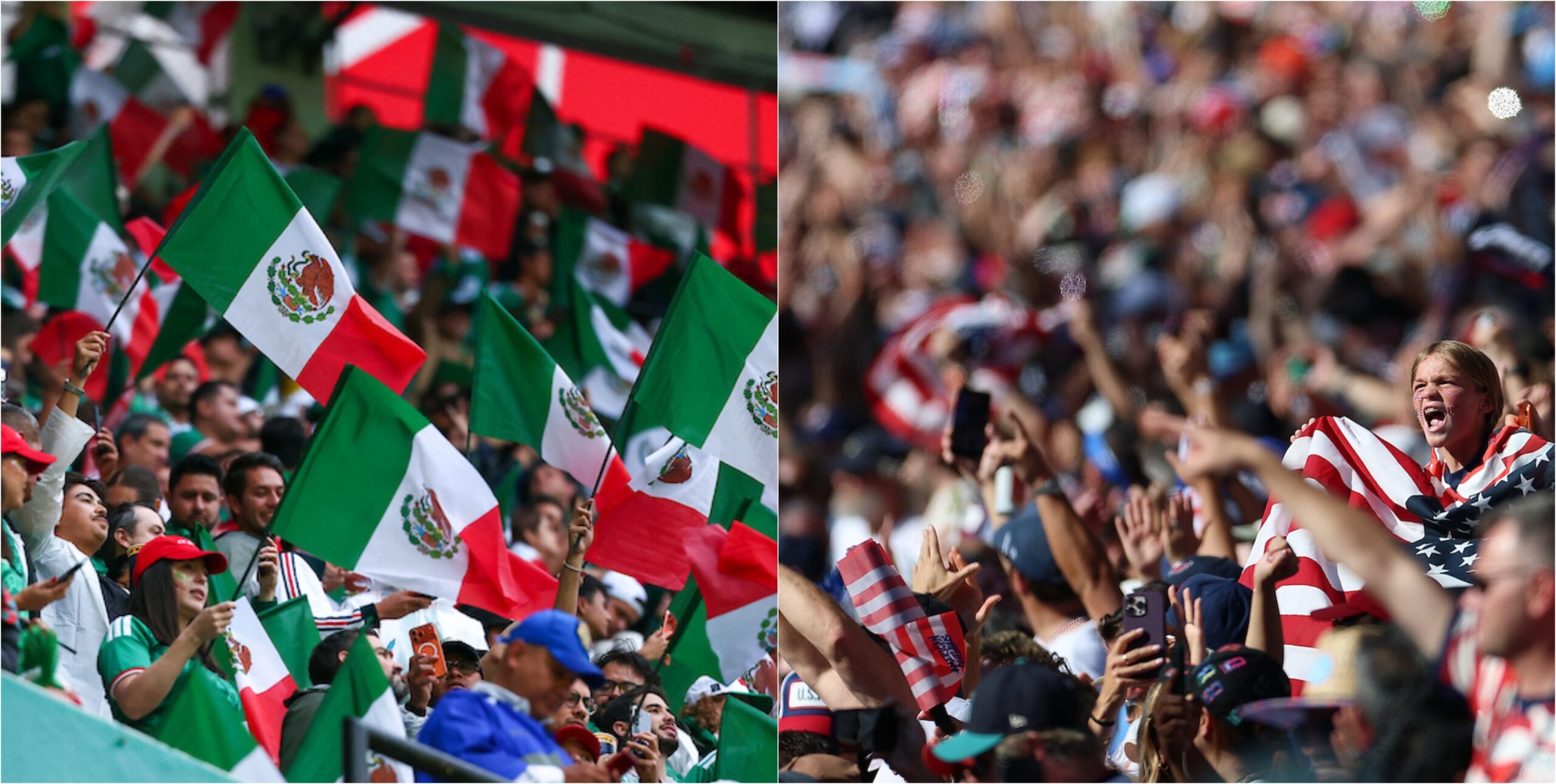
Fans from Mexico and the United States during the 2026 World Cup. Both teams have maintained their position as Concacaf leaders over the last two decades, while other teams have tried to occupy third place in the region. Free Press Photo: Straffon Images.
Mexico and the United States have maintained the leadership of Concacaf for the last two decades. Behind them, however, no one has managed to stay in third place permanently.
Costa Rica, Honduras, Panama and Canada They occupied that space at different times, but no team managed to turn it into a stable position.
That is perhaps the most significant transformation of football in the region between Germany 2006 and North America 2026. More than a linear evolution, Concacaf has experienced a constant redistribution of prominence. The names changed, the cycles too, but the hierarchy behind its two historical references remains open.
North America 2026 confirmed that the debate is still open
The 2026 World Cup represented Concacaf’s largest presence in World Cup history. For the first time, six teams from the region participated in the final tournament. Mexico, the United States and Canada advanced to the knockout round, while Panama, Haiti and Curacao were eliminated in the group stage.
The tournament confirmed a growth in regional representation, but also left a conclusion that goes beyond the results. Mexico (fifth place) and the United States (12) maintained their status as leaders, while Canada (16) took a step forward in its candidacy to become the third power of the confederation.
Even so, the debate remains open.
To understand why, you have to go back two decades..
The mirage of a third power
For several years, everything indicated that Costa Rica had resolved that debate.
After qualifying for Germany 2006 and South Africa 2010, the Costa Rican team achieved in Brazil 2014 the greatest achievement of a Central American representation in the history of the World Cups. Finished first in a group made up of Uruguay, Italy and England, eliminated Greece in the round of 16 and led the Netherlands to a penalty shootout in the quarterfinals.
Brazil 2014 made us think that Concacaf He had finally found his third best team.
It was not an exaggerated perception. Costa Rica became the only Central American team capable of surpassing the group stage in more than one World Cup and seemed to have reduced the distance that separated it from Mexico and the United States.
However, that momentum was not sustained.
Russia 2018 marked the beginning of a change of cycle and, twelve years after that historic performance, Costa Rica was left out of the 2026 World Cup.
The team that seemed destined to consolidate left vacant, once again, third regional place.
Third place changes candidates
Costa Rica’s departure did not mean that another team automatically inherited that space. What happened was the appearance of new candidates.
Honduras managed to qualify consecutively for South Africa 2010 and Brazil 2014a rare example of continuity in Central America. However, that consistency never translated into World Cup results. In three participations, the Honduran team is still looking for its first victory in a World Cup.
Meanwhile, Panama began its own cycle with the historic debut in Russia 2018 and confirmed that it was not an isolated episode by returning in North America 2026. Its growth has been sustained over the last decade, but it has not yet reached the competitive weight that allows us to speak of a new regional power.
The most recent case is Canada.
After staying out of a World Cup for 36 years, he returned in Qatar 2022 and confirmed its growth with a new classification in 2026. In the tournament played at home, it was the Concacaf team that went the furthest and reinforced the impression that it is going through the best moment in its recent history.
Canada is today the best candidate to occupy that place. However, two consecutive World Cup cycles are still insufficient to affirm that it has consolidated a leadership comparable to the stability that Mexico and the United States built over decades.
A repeating pattern
In six World Cups, The role of third regional force has changed several times.
Costa Rica occupied that place during the cycles of Germany 2006 and, above all, Brazil 2014. Honduras gained prominence with its consecutive qualifications for South Africa 2010 and Brazil 2014. Panama opened a new stage with its debut in Russia 2018 and its return in 2026. Canada, for its part, linked the Qatar 2022 and North America 2026 World Cups and became the strongest contender of the moment.
The sequence leaves an obvious conclusion: each cycle produced a new candidate, but none managed to remain long enough to definitively close the debate.
That is the difference with Mexico and the United States. Both maintained a constant presence in the World Cups and maintained their status as leaders of the confederation. Behind them, however, the third step remains open.
More places, the same unknown
The expansion of the 2026 World Cup to 48 teams allowed Concacaf to bring six representatives for the first time.
Greater representation, however, did not change the competitive order.
Mexico, the United States and Canada advanced to the knockout phase, while Panama, Haiti and Curacao were eliminated in the group stage.
The increase in positions confirmed that the region has more representatives, but not necessarily a more defined hierarchy.
A place that no one has made their own
For twenty years, Mexico and the United States maintained their status as Concacaf leaders.
Behind them, the third echelon changed its protagonist again and again.
Costa Rica seemed to appropriate that place after Brazil 2014. Honduras built a cycle of continuity without consolidating. Panama confirmed sustained growth and Canada now leads the strongest candidacy.
None, however, has managed to transform that impulse into lasting leadership.
Perhaps that is the most revealing conclusion of Concacaf’s recent evolution. The history of the region is not only about identifying who occupies third place, but about understanding why, for two decades, no team has managed to truly make it their own.