
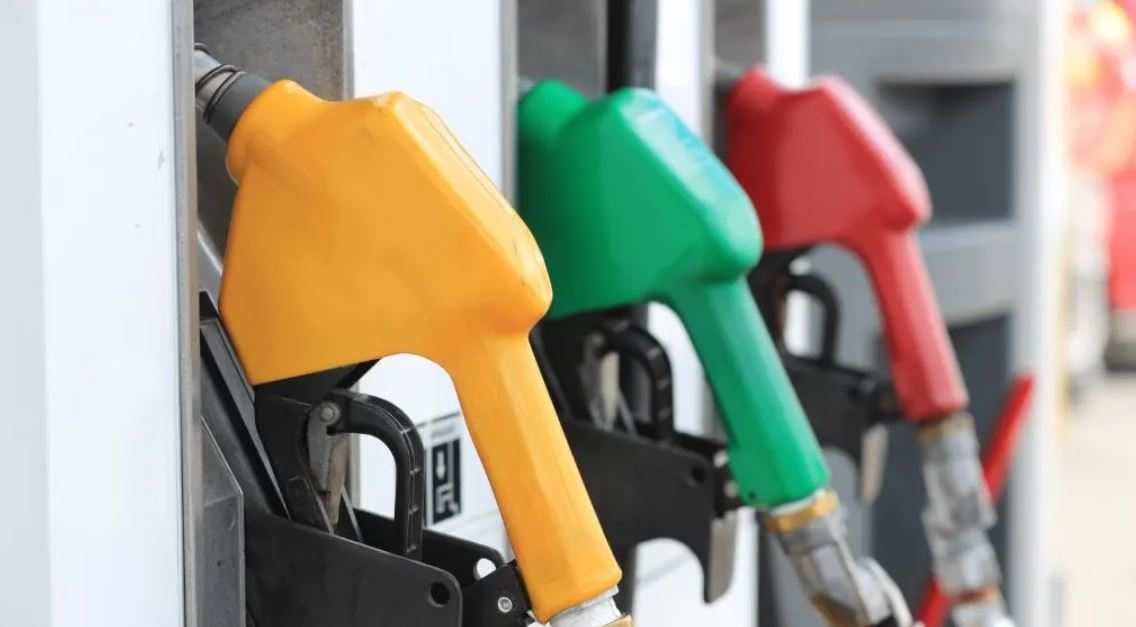
Last July 2 ended the subsidy from the government to fuels and that is why starting July 3, gas stations began to raise the prices of gasoline and diesel.
Regular and premium gasoline had a subsidy of Q5 per gallon, but now another Q4 increase is accumulated derived from subsequent increases, including the most recent one on July 20, of Q1.50. With this, the gallon of superior and regular reached Q41.09 and Q40.09 respectively this Tuesday.
Meanwhile, diesel is the most impacted, since it reports a Q15 increase in consumer prices, upon reaching Q42.29 for the final consumer in the period mentioned this Tuesday.
Of this figure, Q8 is derived from the end of the per gallon subsidy on July 2 and, after that, Q7 more increases are accumulated, including Q2.70 on Monday, July 20.
What are the reasons
Experts in oil, foreign trade and economics, such as Jorge García Chiu, former vice minister of Energy and Mines; Enrique Lacs, former Minister of Economy; and Fernando Spross, economic analyst at the Foundation for the Development of Guatemala (Fundesa), explain that the increases are derived from several factors.
They mention, separately, at least three international factors that currently affect prices in the country, including lthe geopolitical conflictswhich have effects on supply and refining, as well as the increase in freight services.
They also agree that, because Guatemala does not produce or refine fuels for local consumption, the country depends 100% on imports and is subject to international dynamics.
While the end of the government subsidy influenced the country.
Geopolitical conflict in the Middle East
The MEM: variations reflect international market conditions
CONTENT FOR SUBSCRIBERS
The MEM reported in a bulletin that it observed that the prices published at some service stations in Guatemala City, in self-service mode during the afternoon of July 20, “presented the following increases: Q41.09 per gallon for premium gasoline, Q40.09 for regular gasoline and Q42.29 for diesel, reflecting the variations in international market conditions according to the reference price structure, in obedience to article 49 of the Law of Marketing of Hydrocarbons”.
He argued that Guatemala has a free competitive market for the commercialization of fuels, so prices respond mainly to international supply and demand conditions, as well as import and distribution costs.
He also stated that the recent geopolitical tensions derived from the conflict between the United States and Iran continue to generate uncertainty in international markets, with high volatility in oil and refined fuel prices. He added that, in recent days, strong variations have been experienced in response to the evolution of that conflict, and that Guatemala is a 100% hydrocarbon importing country.
Analysts: stability was lost due to the resumption of attacks
Meanwhile, analysts state that after almost five months, the confrontation in the Middle East between the United States and Iran persists. Although The price had already stabilized after the signing of an agreement between both countrieswhen the attacks by the United States and the counterattacks by Iran resumed, stability was lost and the price began to rise again, according to García Chiu, who attributes part of the most recent increases to that situation.
Lacs added that, due to these new war events in the Persian Gulf, international oil prices increase and there is a lot of volatility and as the Strait of Hormuz is constantly closed, the transportation of 20% of the world’s oil that uses that route is stopped, so supply drops and prices are put under pressure, adds García.
Refinement
Persian Gulf countries have faced attacks on oil facilities, including refineries, which also puts pressure on the prices of petroleum products such as gasoline and diesel.
Spross explains that These aspects generate increases in the international price of a barrel of refined oil. As demand increases or supply decreases in refining countries, with the United States being Guatemala’s main supplier, the cost rises directly in the market. spothe expressed.
“There is high stress in the hydrocarbon supply chain because there have already been almost five months of conflict in the Middle East with no hope of resolution and this cumulative effect on the chain and inventories generates uncertainty,” comments Lacs. He added that gasoline and diesel follow the international market price.
Price and offer
Asked if there could be price speculation, Lacs commented that it is not pure speculation and that there are recent changes in the price of oil, which is the raw material for gasoline, diesel, fertilizers, plastics and various chemicals.
He explains that Guatemala depends on gasoline from the United States and that it is the WTI price that sets the national price. The current price is US$83.6, but since it is a future price, this may indicate that both oil and its derivatives will continue to rise, Lacs believes.
García says that most of the fuel import to Guatemala comes from Houston and that the oil consumed there is probably from the United States, Canada or even now from Venezuela. For this reason, he considers that production is apparently guaranteed, but not the price, because he begins to compete with the demand of other countries that are looking for suppliers to replace oil or fuels from the Persian Gulf as long as the situation persists, which is why he considers that it could continue to affect the price.
García explains that oil can increase not due to lack of stocks and availability, but because it becomes a bit speculative due to prices on the stock exchanges, since purchases are in the future and, to guarantee them, you must pay more and they become more expensive.
Sea freight
Another factor that Spross detected is that maritime freight and cargo insurance have registered significant increases, which makes imports more expensive before the product is unloaded and distributed.
Russia-Ukraine conflict
A fourth international factor is the destruction of Russian energy assets by Ukraine, a country that is a major supplier to several markets.
At the moment, García and Lacs agree that this possible international impact is not yet reflected in the country; However, they believe that if the problem continues in the long term, it could lead to lower global supply. Countries that buy from Russia would look for other suppliers and supply in other regions would be reduced.
Subsidy
At the national level, the end of the subsidy at the beginning of the month is another reason mentioned, as the approved amount has been exhausted. However, Spross states that increases have been evident at service stations before inventories purchased at previous subsidized prices were exhausted.
The end of the subsidy included complaints about price increases at gas stations before depleting inventories with the subsidy, an aspect that, according to authorities, is still being analyzed through different verifications.
Importing country and prices
The MEM explained that being a 100% importing country, “variations in international prices represent a determining factor in the formation of internal fuel prices” and that “any sustained increase in acquisition costs can be reflected in consumer prices, depending on factors such as available inventories, logistics costs, the exchange rate, insurance and the dynamics of the national market,” the ministry explained.
CONTENT FOR SUBSCRIBERS
Gas stations: suppliers adjusted upwards
Enrique Meléndez, executive director of the Guatemalan Association of Gasoline Retailers (Ageg), indicated that The stores are receiving the adjustments that began on Monday from the different suppliers July 20 and they are reflecting them this Tuesday on the billboards. He added that he believes that importers are transferring the behaviors that both gasoline and diesel have had in the international market.
Regarding the factors that have influenced the increase last week and the current one, the executive mentioned the restart of the conflict in the Middle East and that, Once again, the Strait of Hormuz was interrupted, which has had an impact on the price of oil. Furthermore, in the case of derivatives, he pointed out limited refining capacity, low inventories of both gasoline and diesel and that “we are seeing that these adjustments have a greater impact on clean products compared to what oil is rising.”
Asked if the transfer of the international increase to local prices is immediate or takes a few days, he said that this is a management that importers make based on their pricing policy.
Regarding price behavior, García Chiu stated that, if the geopolitical conflicts continue, in the following weeks there could be “a significant increase” and that, if the price of a barrel of oil remains high, this would continue to be reflected in fuel prices, above Q40, in Guatemala.
However, he opined that the increases on July 20 could be due to the fact that money is beginning to be raised for future purchases, because the fuel that many gas stations currently have arrived at a lower price.
He added that this is how the market works, since, when they observe the increase with which the new shipments will arrive, they immediately increase the price in the country. However, even if the international price decreases later, local prices do not drop until the fuel they already have runs out.
When García Chiu was consulted about whether these measures are permitted by law in Guatemala, he commented that “unfortunately that is the way the market is and there is no more efficient way to regulate it, because it would be less convenient for the Government to intervene trying to set prices, since there could be a shortage.”
Consider that, even if they start procedures with the MEM and the Diaco to file claims against some businessmen, with the argument that the price is higher, they will not prosper because the setting of prices is free.
What the law requires of gas stations is to have the price visible to the public, and the public decides where to buy, he added. Therefore, what should be worrying is the competition between gas stations so that people look for the ones with the lowest prices and stop buying at the most expensive ones, he said.