
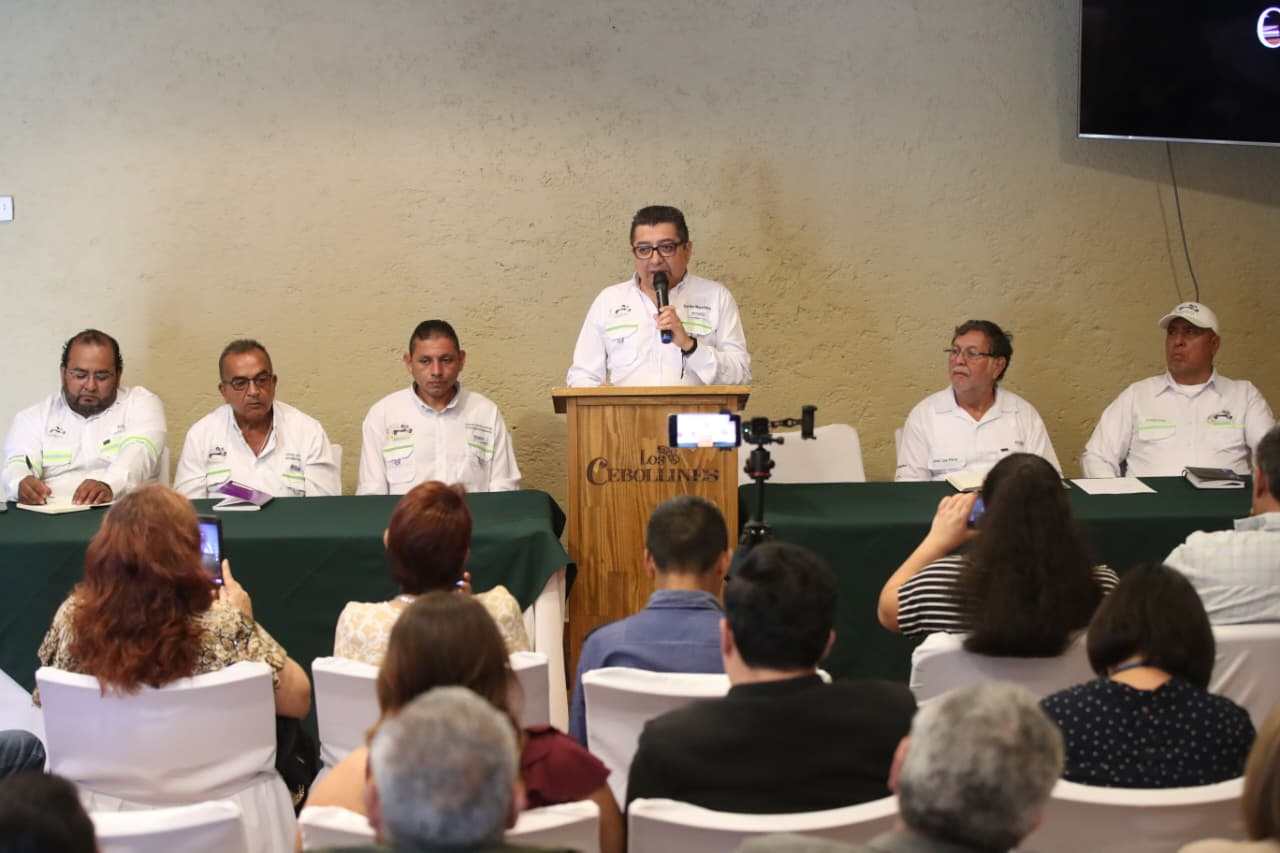
As a solution to the closure of landfill located at kilometer 22 of the route to the Pacificthe Guild of Solid Waste Collectors of Guatemala announced this July 22 that it will build a solid waste treatment plantwhich would begin operating 18 months after the first stone was laid.
The facility would receive the garbage from the 32 municipalities that currently reaches the landfill managed by the Authority for the Sustainable Management of the Basin and Lake of Amatitlán (Amsa), as well as that which is deposited in the landfill in zone 3 of the capital.
Carlos Eduardo Marroquín, spokesperson for the union, points out that since 2019 they have been working to obtain financing for the construction of the garbage treatment plant, which would be the first in the country. The project will cost US$1.2 billion.
“The State Procurement Law does not allow the Executive or municipal governments to go into debt for more than four years. So, as a union, we made the effort to contact a financial company that can finance the project,” says Marroquín.
They need, at a minimum, 25 blocks of land to install it and spaces in two municipalities are evaluated: Palencia and Amatitlan.
The technical closure of the landfill at kilometer 22 of the route to the Pacific is scheduled for August 31; however, the Ministry of Environment evaluates extending the term for another two years.
But, even if this extension occurs, the union points out that neither the central government nor the municipal governments have an immediate solution to the problem of the final deposit of waste.
“They can close tomorrow, but the day after, where are they going to deposit the garbage? We are providing the final solution, which is the creation of this treatment plant, but we need the municipal governments to get involved,” says Marroquín.
To the Amsa landfill, which has been operating for 30 years, they enter daily more than 3,500 tons of garbage coming from 32 municipalities. The concern of some mayors is that, at the time of closing it, the costs will increase. illegal dumps in public spaces.
Process
It is planned to place the first stone in November next and, 18 months after, the plant would begin operating.
“After so many years that the population has fed our families, we want you to have confidence that we will have this garbage treatment plant. We also invite the authorities of the community to approach us so that together we can provide a solution to this problem,” says Marroquín.
The plant will receive garbage from the 32 municipalities; will be classified material for recyclingyou will get compost —organic fertilizer—and the waste will also be transformed into energy. In addition, there will be a machine that will transform used tires into asphalt for road construction.
“In the 25 blocks there will be the oven infrastructure, everything that is gray work, patios, parking lots and spaces for truck maneuvers. It will have a shower area for workers and a rest area for pilots while their truck is emptied,” he adds.
In addition, the plant will be a source of work, since it is expected to create 2,400 jobs, which will cover the grassroots recyclersknown as guajeros.
The union is made up of 17 collector associations and hopes to have a meeting with the members of the association. Great Southern City Commonwealth —made up of Amatitlán, Escuintla, Fraijanes, Guatemala, Mixco, San Miguel Petapa, Villa Canales and Villa Nueva— to join forces and install the plant. If they do not find that support, they will carry out the project in the same way.
Marroquín explains that they hope to carry out the procedures for environmental licenses and construction permits between August and October to begin building it in November, for which they expect the support of the Executive.
Ideally, the solid waste treatment plant is operational six months before closing from the Amsa landfill.
The project cost also includes the change of the 1 thousand 100 trucks yellow ones currently used by garbage collectors compactor trucks. This would happen within six months.