
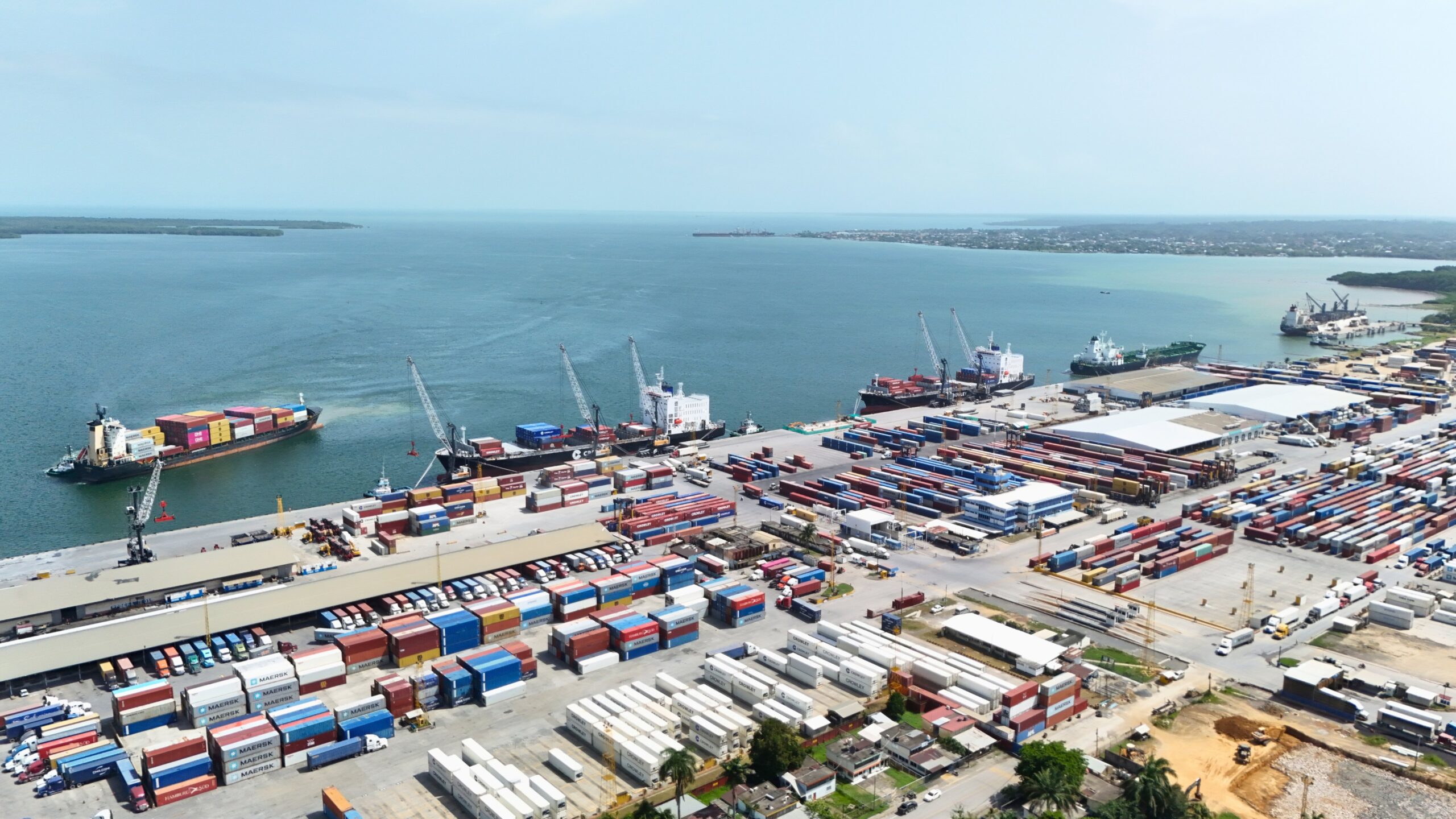
The period for analyze the 32 amendments proposed to the initiative of the General Law of the National Port System It began on Monday, July 21, and the legislative blocks have the previous document of the proposals.
The organized private sector is awaiting the progress that the approval of the bill may have, and the urgency of reforming the national port system.
The document still does not include the articles proposed by the members of the Board of Directors of the Congress of the Republic, and the objective is that, at the next meeting of the block heads, on Monday the 27th, this issue will be addressed.
New port authority defined
The draft proposals include partial replacement amendments to articles as well as definitions. It also contemplates changes in the selection procedure for appointees to the new board of directors of the National Port Authority (APN), but not an update if the number of members is increased.
CONTENT FOR SUBSCRIBERS
He APN board would be made up of a representative of the Superintendency of Tax Administration (SAT), the Ministry of Communications, Infrastructure and Housing (CIV), the Ministry of Economy (Mineco), the Ministry of the Interior (Mingob) and the Council of Users of the Port System (Cusport), representing the business chambers.
The amendment clarifies the impediments to being appointed to the new board of directors, and establishes the prohibition of being or having been a director or employee of a port administrator or operator, public or private, during the year prior to their appointment and up to one year after the end of their management.
The article that referred to being or having been a member of a union of port company workers during the four years prior to their appointment is deleted.
With the creation of the Port Protection Inspection Managementthis will have the functions of verifying compliance with the regulated entities and the respective regulations regarding protection, security and compliance with the Ship and Port Facilities Protection Code (ISPS Code).
According to the amendment, the APN will establish through regulations the deadlines, minimum technical standards and regime of consequences for failure to comply with the obligation to acquire and implement non-intrusive technologies and equipment, under the responsibility of this management.
Amendments redefine port committees
Regarding the Port System Support Committee (Codas), a chair is added for a representative of the Guatemalan Chamber of Cargo Transportation, and a representative of the port labor sector to replace a port labor representative of each of the public port companies.
The APN board would be made up of a representative of the Superintendence of Tax Administration (SAT), the Ministry of Communications, Infrastructure and Housing (CIV), the Ministry of Economy (Mineco), the Ministry of the Interior (Mingob) and the Council of Users of the Port System (Cusport).
Mineco will be in charge of the National Trade Facilitation Committee, and will coordinate the different actions with a state vision to avoid duplication of efforts in Codas.
APN will lead security coordination
The APN will coordinate the National Port Protection Committee (Conaprop), made up of representatives of the Mingob, the SAT and the ministries of Defense, Public, National Civil Police and the Guatemalan Migration Institute. For matters within their jurisdiction, the ministries of Health will participate; Environment and Natural Resources; and Agriculture, based on its essential function in the control and inspection of the logistics chain.
Conaprop will have the functions of designing and approving the Port Security Protocol and related tools. In addition, it will generate coordination and protocols with the corresponding authorities and competent bodies to mitigate and confront transnational threats, such as terrorism, drug trafficking, smuggling and other crimes linked to the port area, including the illicit trafficking of people and wildlife, among others.
APN will monitor port protection equipment
The amendments add that the acquisitions of port protection equipment and technologies will be subject to audit by the Comptroller General of Accounts. Equipment donations will be published on the APN portal, indicating the donor, estimated value and destination. In addition, it is established that port protection equipment and systems will be monitored and ensured that they operate in accordance with the standards and criteria issued by the APN.
CONTENT FOR SUBSCRIBERS
It must be guaranteed that port administrators and operators do not have access to the information generated by the protection and non-intrusive inspection equipment or the power to intervene in the operation of said systems.
New unit for port health control
Regarding quarantine control measures, Maga, in coordination with the APN, must create a unit specialized in phytosanitary and zoosanitary control measures, which must promote risk management, technological modernization, standardization, automation, digital transformation, competition and efficiency in the provision of said services.
The port tourist fee will be US$2 per disembarking passenger and not US$1.
New contracts to modernize ports
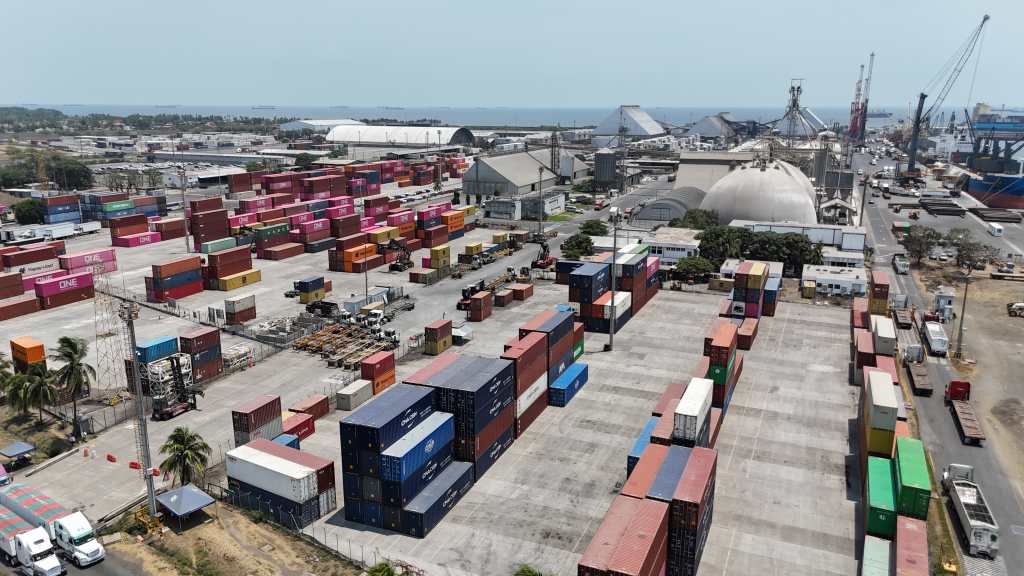
For the port contracting modalitiesthe use, management, operation or development of port assets and facilities may be authorized through the Alliance Contract for the Development of Economic Infrastructure (APP) and the Port Administration Contract (CAP).
This last modality includes the execution of port infrastructure or superstructure works, as well as the operation, management, acquisition, exploitation or modernization of new or existing port equipment, infrastructure or superstructure, and the constitution of a Port Onerous Usufruct (USOP) for the development of new infrastructure or superstructure or expansions.
The amendments clarify that, when a CAP is carried out by a public company, the fee collected will be distributed as follows: 75% for the corresponding public port company; 15% for the Departmental Development Councils corresponding to the departments directly linked to the area of influence of the port facility; and 10% for the municipalities in whose territory the port facility is located.
CIG sees opportunity in port reform
The organized private sector maintains expectations that the initiative will advance as scheduled in the sessions of July 28 and 29.
Enrique Font, president of the Chamber of Industry of Guatemala (CIG), stated that it is positive that the Congress of the Republic continue to advance this initiative.
“We hope that the consensus that is being built will allow the approval of a modern law that strengthens the port system and contributes to improving the country’s competitiveness,” he added.
CONTENT FOR SUBSCRIBERS
Regarding the content, he assured that, like any initiative, there are always aspects that can be perfected during the discussion, but that, in general terms, they consider that, if approved, it can become an important tool to modernize the port system and generate the conditions to strengthen and expand the port infrastructure.
Industry asks to modernize port system
The industrial sector foresees a scenario on the validity and execution of the bill.
“Ports are much more than infrastructure; they are the entry and exit door for commerce. It depends on their efficiency that raw materials, inputs and products reach industries in a timely manner, strengthening production, employment and the country’s supply,” Font stressed.
He added that Guatemala needs a comprehensive vision for the development of its port system, articulated with road and logistics infrastructure, which allows facilitating trade, reducing costs and increasing competitiveness.
“We trust that the implementation of the General Law of the National Port System marks the beginning of a transformation that strengthens the logistics competitiveness of Guatemala. Its success will depend on coordinated execution between institutions and promoting the projects that the country needs to strengthen its logistics competitiveness,” said the president of the CIG.