
The World Bank projects to see the first results of the state Routes for Development project towards the end of 2027 or beginning of 2028.
“I hope that we will increase the pace of execution of these works and that we will see the fruits of the first roads built, reinforced or rehabilitated in 2028,” said Pierre Graftieaux, Resident Representative in Guatemala of that multilateral bank.
Graftieaux participated last Monday in La Charla, a segment of the program Guatemala No Se Detiene that is broadcast on Guatevisión every Monday after the main newscast (at 10 p.m.). Henry Sáenz, Minister of National Defense, was also part of the conversation, interviewed by the presenter and journalist Rocío Lazo.
The representative of the World Bank pointed out that, currently, the studies are being put out to tender in a loan whose execution could last five or six years, according to his estimate.
What is Routes for Development?
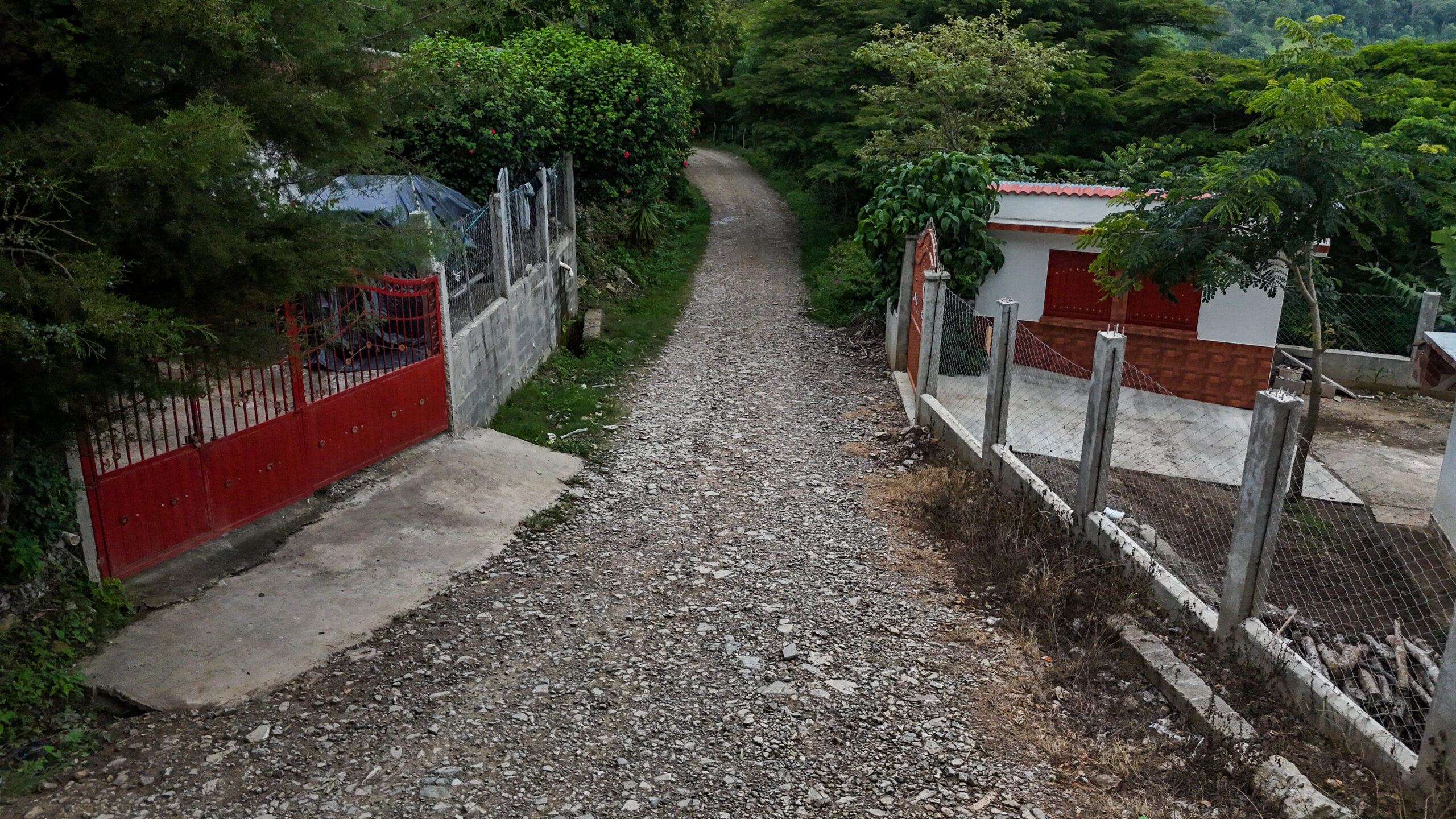
Routes for Development is a program that seeks to become inter-institutional to recover and connect rural roads in Las Verapaces, with a special focus on Cobán; the Western Highlands (Huehuetenango, Totonicapán, Quiché and San Marcos), and the Dry Corridor, in communities prioritized by their levels of poverty and exclusion.
The Development Routes program announced last February a global goal of 4,820 kilometers in three years: 1,820 kilometers of secondary roads and 3,000 kilometers of rural roads. Between 2024 and 2025, about 1,405 km are reported. of improved roads.
The operation financed by the World Bank for a section of the program, contemplates the rehabilitation and improvement of 640 kilometers of rural roads and highways. The World Bank financing consists of a US$400 million loan from the IBRD, approved by the World Bank in July 2025. In Guatemala, Congress approved Decree 25-2025, which authorizes the Loan Agreement.
Project challenges
Minister Sáenz confirmed that last year more than 700 kilometers were delivered in the Program and more than 1 thousand kilometers in general of tertiary routes. “This year we have completed approximately 300 kilometers and we are going to deliver approximately 800 kilometers in the Routes for Development Program. The biggest challenge has been precisely the lack of roads, where the Corps of Engineers has literally had to open a gap in some cases and not only open it, but bring it to the level of a third-order road, where the terrain moves, the mountain moves, the terrain is stabilized and the appropriate ballast with the cant for these roads is put in place,” he indicated.
“We designed this project in coordination with the Government, using the statistics we had at our disposal to identify the places and regions where poverty is precisely the most acute, with the hope that these rural roads, by providing access to health and education and allowing agricultural productivity to rise, will allow people to be lifted out of poverty,” Graftieaux contributed.
Generate profitability
Graftieaux acknowledged that “the challenge for the private sector is to see these works, and that applies to health centers or schools in isolated towns. It is difficult to get there, they are low-value contracts and there is a bit of uncertainty.”
Given this scenario, Graftieaux stated that “in order for the private sector to become more interested in these issues, we would have to ensure that the bidding project is well organized and that there is no uncertainty about deadlines or payments.”
Graftieaux highlighted that “they are multi-year maintenance contracts; it is something that we have to push through that loan. A company that knows that it has a five or ten year contract to maintain a road has a certain visibility that allows it to invest in equipment and an already assured income flow. That makes it more attractive. The infrastructure law that was recently approved makes it possible for us to have multi-year maintenance or rehabilitation and maintenance contracts, which I see as a promising tool.”
Territorial and productive impact
Graftieaux estimated that the project will benefit roughly five million people.
The minister illustrated that they were able to quantify in some regions that a child went to school and could walk up to four or six hours from their home. “Now we can say that you can go out on a motorcycle or in a vehicle and shorten that time to half an hour or 20 minutes.”
The World Bank official warned that “the expected benefits in education and health will, perhaps, have to wait five or ten years for the fruits to be seen, but I think it is worth investing so that the populations of these towns do not feel excluded and abandoned.”
Regarding the economic impact, Graftieaux indicated that “we can also see the impact on the agricultural sector: that productivity increases thanks to easier access to fertilizers and that they reach the towns in a safer way.”
He pointed to the need to build capacity locally, both in the municipalities and among the population, “so that the maintenance of rural roads is not so complex and can be done with local labor.”
Regarding the adaptation of the infrastructure, Graftieaux explained that they are “pushing studies to define engineering design manuals.”
Find more Guatemala Doesn’t Stop on our video channels Free press and Guatevision, alliance content focused on solutions journalism.